
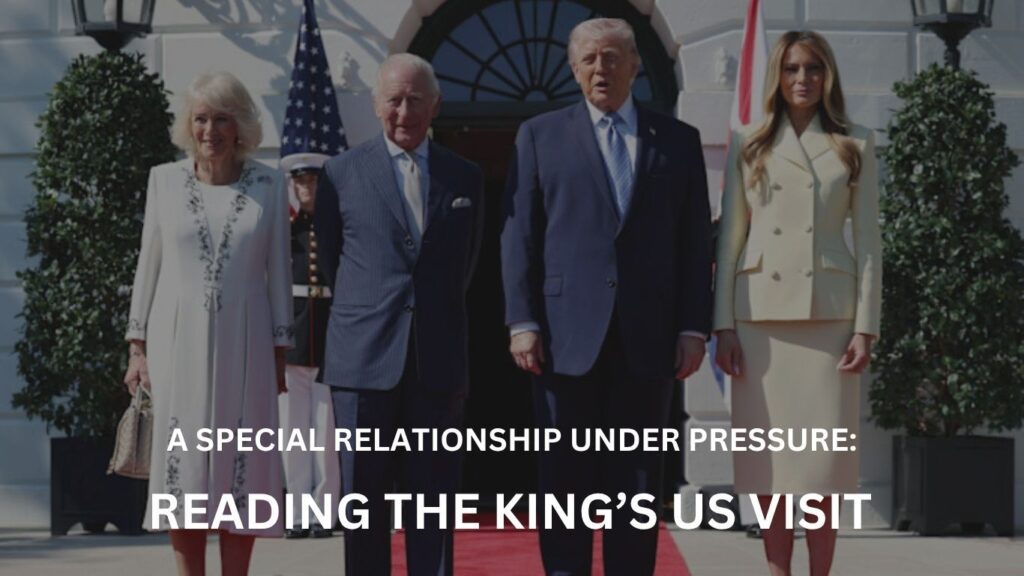
Western unity, considered a balancing pillar of the global order, is very much conditional in nature. It expands when interests align and shrinks sharply when the cost of coordination increases. Keeping this in view, the state visit of King Charles III holds a symbolic significance beyond mere ceremonial diplomatic handshakes. The British monarchy, above the electoral cycles and detached from the executive decision-making, is on a mission to apply a bandage to the diplomatic fractures and bridge the trust deficit.
However, Symbolism can hide the divergence for a while, but it cannot resolve policy disagreements. The visit might soothe diplomatic optics, but it cannot change the fact that London and Washington are at variance on the Middle East policy. On the surface, this visit is being presented as a renewal of special relationship. But reality reveals otherwise as Washington and London are no longer operating from a shared interpretation of global conflicts. The challenge confronting Western governments is the combination of external rivals and internal rift.
At the heart of this divergence lies Iran, a country serving as a mirror reflecting the contradictions of Western foreign policy. Washington’s repeatedly propagated objectives of containment and regime change do not align with the cautionary steps of several European governments. Britian, known as the United States closest partner in Middle Eastern affairs, appears to be hesitant to agree with Washington’s more confrontational compaigns.
In this fragile environment, King’s visit is an effort to project continuity and unity, where political consensus is diluting. His meetings with President Donald Trump, private engagements, and public addresses are merely intended to reinforce shared narratives, history, and sacrifices. There appears deeper strategic anxiety behind carefully staged diplomatic symbolism The reliance on ceremonial diplomacy manifests the cracks in contemporary Western coordination mechanisms. While policy consensus weakens, the royal visits, high-profile summits, and careful statements are rescue efforts to preserve the appearance of alignment.
In conclusion, the King’s visit is less about diplomatic positioning, more about managing the cohesion at a time when it is weakening. It is a Western foreign policy tradition reliant on ceremonial activities to compensate for strategic divergence. Beneath the apparently intact image of unity, lies an uncomfortable reality. The true test of Western foreign policy is not how it drives the global order, but how long it holds its assumptions together. The assumptions that the Western unity still exists It does, but it is no longer automatic, it is transactional and frequently strained under weight of domestic political pressures and national interests.