
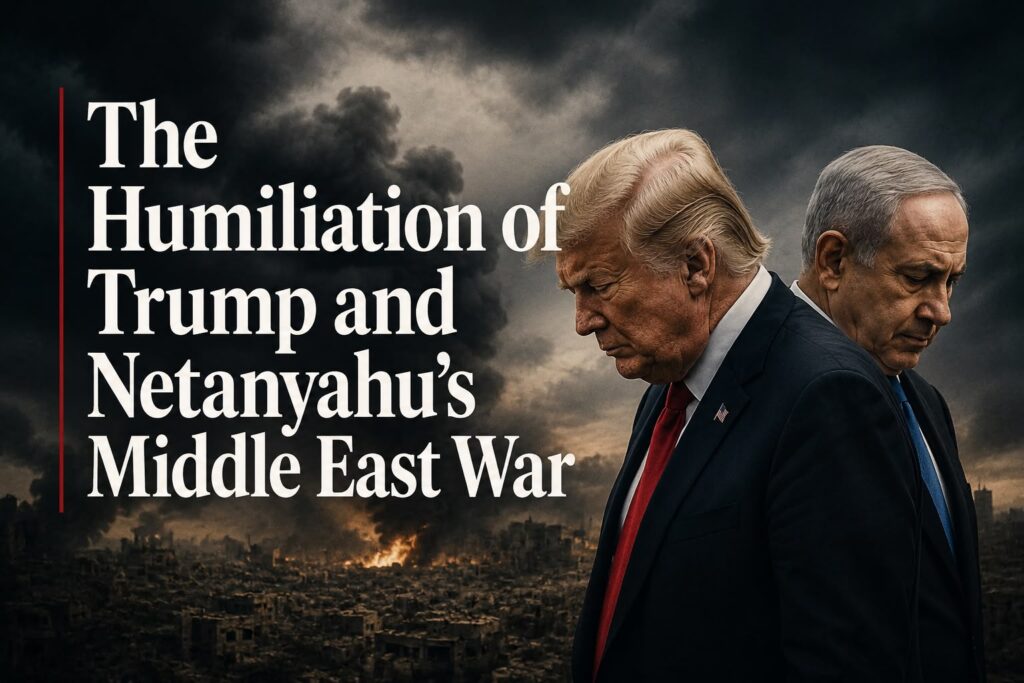
The theater of geopolitical hubris rarely delivers such an unambiguous punchline, but the mid-June framework designed to halt the disastrous three-month war with Iran leaves no room for diplomatic nuance. What began as a muscular, chest-thumping campaign of maximum pressure and anticipated regime change has dissolved into a stark, undeniable capitulation for Washington and Israel. For Donald Trump and Benjamin Netanyahu, the newly minted 60-day interim agreement is not a triumph of strategic deterrence; it is a profound, self-inflicted humiliation. The simple, inescapable truth of the matter is that Tehran ran the table, exposed the severe limitations of Western military leverage, and is now dictating the terms of its own victory while the architects of the war desperately scramble to spin a catastrophic failure as an act of statesmanship.
When the first joint U.S.-Israeli airstrikes lit up the skies over Iran, the administration’s narrative was as predictable as it was arrogant. The world was assured that this campaign would be a swift, surgical affair lasting a few weeks at most, engineered to easily crush the Islamic Republic’s regional posture and bring the regime to its knees. Instead, the conflict dragged past the three-month mark, transforming into a grinding quagmire that systematically dismantled every strategic assumption held by the White House and the Israeli security establishment. Rather than collapsing under the weight of the assault, Tehran demonstrated a ruthless capacity for asymmetric resistance, implementing a devastating counter-strategy that successfully choked the global economy by closing the Strait of Hormuz. By turning off the world’s primary energy tap, Iran effectively transformed a localized military confrontation into an existential crisis for global financial markets, driving crude oil and domestic inflation to terrifying heights and forcing a desperate U.S. administration to finally cry uncle.
The leaked parameters of the agreement read less like a negotiated compromise and more like a list of concessions yielded by a cornered superpower. Under the provisions of this 60-day pause, the United States has agreed to unfreeze a staggering $25 billion in Iranian assets, alongside granting sweeping, immediate sanctions relief. More critically, the deal forces an end to the U.S. naval blockade, while leaving the strategic Strait of Hormuz under a maritime transit framework explicitly dictated by Iran and Oman. For all the rhetoric of forcing Iran to permanently dismantle its nuclear infrastructure, the reality is that Tehran enters these upcoming negotiations with its regime intact, its regional influence verified, and its hand firmly on the tollbooth of global commerce.
The cost of this strategic miscalculation is measured in a horrifying trail of human devastation across the region. The initial wave of U.S.-Israeli strikes, characterized by the catastrophic failure to minimize collateral damage, claimed thousands of lives inside Iran, including the heartbreaking deaths of more than one hundred schoolgirls on the very first day of the war. In Lebanon, where Israeli forces launched an extensive campaign of leveling towns and villages under the pretext of neutralizing Hezbollah, the human toll has been catastrophic: over 3,700 people killed, including more than 240 children, and upwards of a million civilians forcibly displaced from their homes. Dozens of lives were cut short inside Israel by retaliatory strikes, and the Pentagon has confirmed the deaths of at least thirteen U.S. service members. All this blood was spilled for a war that left the adversary stronger, more wealthy, and more strategically entrenched than before the first bomb was dropped.
Yet, the most glaring spectacle of this unfolding peace process is the toxic, unraveling partnership between Trump and Netanyahu. Behind the scenes, the relationship has collapsed into bitter recriminations and expletive-laden shouting matches, with Trump reportedly berating the Israeli prime minister for trying to deliberately sabotage the negotiations to prolong his own political survival. Netanyahu’s recent escalation, launching brutal, unprovoked airstrikes on civilian areas in Beirut just as negotiators were finalizing the text, was a transparent, desperate gamble to blow up the peace deal and drag Washington back into a full-scale regional conflagration. It is a profound irony that Netanyahu’s overreach backfired so spectacularly; instead of scuttling the framework, his reckless behavior solidified the administration’s resolve to bypass Israeli obstinacy, expanding the scope of the ceasefire to mandate a complete Israeli withdrawal from Lebanese territory.
The political spin emanating from the White House would be comical if the stakes were not so tragically high. White House aides and senior officials are already executing a coordinated echo chamber, leaking plans to relentlessly declare victory in the hopes that sheer repetition will transform a strategic retreat into a foreign policy masterstroke. J.D. Vance’s aggressive defense of the deal from the White House briefing room reveals the deep panic gripping the administration in a critical midterm election year. They understand all too well that an indefinite closure of the Strait of Hormuz would send domestic fuel reserves plunging to crisis levels, triggering an economic implosion that would decimate their party at the ballot box. Confronted with the harsh realities of mathematical necessity and economic survival, the administration chose to swallow a bitter pill from Tehran rather than watch their domestic political fortunes burn.
Naturally, the far-right factions within Netanyahu’s fragile coalition are already screaming betrayal, lambasting the deal as a capitulation that endangers the state of Israel and benefits the entire axis of resistance. This internal fury highlights the fatal flaw that could still cause this fragile architecture to collapse before the 60 days expire. Trump remains an incredibly volatile and mercurial figure, easily swayed by the last voice in his ear, while Netanyahu has routinely demonstrated that he does not feel bound by agreements brokered by his American patron. If the Israeli leadership chooses to actively violate the security zones in southern Lebanon or resume covert operations inside Iran, this entire framework could disintegrate within hours, plunging the Middle East right back into open warfare.
For now, the global markets have reacted with a collective sigh of relief, as crude prices plunge and stock indexes surge on the prospect of an open waterway. But the structural lessons of this conflict will reverberate for a generation. The war proved that the traditional playbook of shock-and-awe militarism is utterly useless against an asymmetric adversary capable of holding the global energy supply hostage. By attempting to play the role of global enforcers without a viable exit strategy or a realistic appreciation of geography, Trump and Netanyahu did not weaken the Islamic Republic; they legitimized its power, enriched its treasury, and handed it a historic diplomatic veto over the security architecture of the Middle East. No amount of manufactured triumph or loud, repetitive public relations can obscure the raw reality written across the text of this agreement: the West marched to war demanding total surrender, and returned home offering billions of dollars just to keep the lights on.