
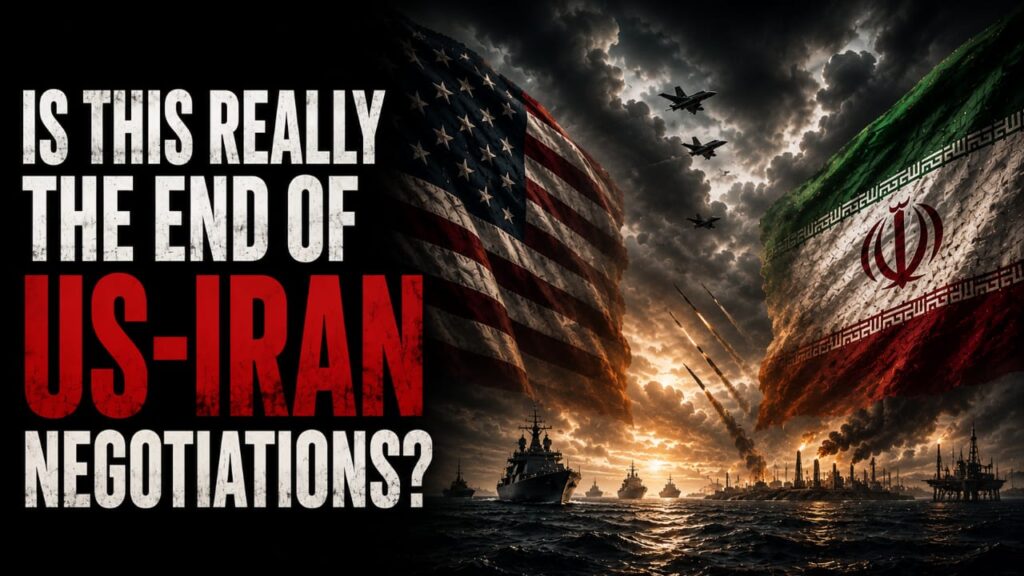
So, the June 17 memorandum of understanding fell apart, and now everyone is saying the ceasefire is officially over. Sure, on paper. But if you look past the press releases and the tough talk, what’s actually happening is a lot more calculated than it looks. Neither Washington nor Tehran can actually stomach a full-blown war because the costs are just too brutal for both sides. What we’re watching isn’t the death of diplomacy. It’s more like the opening move in a much rougher negotiation, with the White House trying to rewrite a deal it never really liked the terms of.
The spark this time was Iran hitting commercial ships in the Strait of Hormuz, which, again, shows just how much leverage Iran has simply by sitting on top of the world’s oil chokepoint. US Central Command hit back hard, striking more than 90 Iranian military and infrastructure sites. But here is the interesting part: a lot of those targets were not just military bases. The Pentagon went after the Aq Tappeh Khan Bridge near the Turkmenistan border, a key piece of the International North-South Transport Corridor that links Iran to Central Asia, Russia, and China, and a major rail line connecting Tehran to Mashhad. That is not random. That’s the US saying, “we can reach your economic lifelines too, not just your military.”
Despite the fireworks, there is no real appetite in Washington for turning this into a regime-change campaign, and there is a pretty simple reason why: the midterms are coming in November, and Trump cannot afford a war that sends energy prices through the roof. Yes, the US pumps more oil than anyone else on Earth, but American shale is light, sweet crude, and the country’s refineries still need heavier crude from places like Canada, Mexico, and Iraq to actually run. If the flow of that heavy crude gets disrupted, those refineries cannot easily swap it out for light shale without facing massive operational slowdowns. A drawn-out blockade anywhere in the region would send prices spiking fast, and that is exactly the kind of pain that keeps the administration from pushing this further than tough talk. Former Israeli foreign ministry official Alon Liel has pointed out as much, emphasizing that this economic reality is basically a leash on Washington’s ambitions, tethering political rhetoric to the hard realities of global supply chains.
Then there is the reserves problem. The Strategic Petroleum Reserve has been getting drained hard since the fighting started, used to smooth out price shocks and keep domestic markets from panicking. Every time the market flinches, millions of barrels are released just to keep gas prices stable at the pump. Economist Rasim Ozcan at Istanbul University makes the obvious point: every time oil access gets restricted and prices climb, the US has to dip into its reserves to soften the blow. Problem is, those reserves are now sitting about 23% below where they were before the war, the lowest they have been since Reagan created the SPR back in the early ’80s. That is not a cushion anymore. That is running on fumes, leaving the US highly exposed if a second, unrelated energy crisis were to hit somewhere else in the world.
And then there is the plain military math. Iran’s terrain is famously brutal, mountainous, defensible, a nightmare to fight through. It is an natural fortress that makes any traditional ground campaign look like an absolute logistical impossibility. Analysts like Dania Koleilat Khatib keep bringing up Kharg Island, which handles the overwhelming majority of Iran’s oil exports, as a case study in why a ground assault would be catastrophic. Kharg Island is heavily fortified, surrounded by treacherous waters, and fiercely defended. Khatib’s blunt take: trying to take Kharg Island could cost more American lives than Iwo Jima did. That is not a comparison people throw around lightly, and it serves as a stark reminder of the sheer human cost that a hot war would demand.
Behind all the noise, there is an entire diplomatic machine working overtime to keep this from spiraling. Qatar, Saudi Arabia, Egypt, and Pakistan have all been burning up the phone lines with both Washington and Tehran, trying to lock in some kind of local de-escalation before setting a date for the next round of nuclear talks. These regional players know they will be the first to suffer from the fallout, so they are acting as shock absorbers. And even with all the public hostility, the speeches calling Iran an unreliable regime and whatever else, the actual backchannel contact between the two governments has not stopped. Secure Swiss channels and intelligence sit-downs are still functioning normally, which tells you everything: Washington knows it doesn’t really have another play here besides eventually cutting a deal.
For years, Iran’s big bargaining chip was its uranium enrichment program, using the threat of centrifuges spinning to force concessions. That’s shifting. More and more of Iran’s security establishment now sees control over the Strait of Hormuz as the real deterrent, arguably a bigger one than any nuclear program could ever be. A bomb is a political weapon, but shutting the Strait has an immediate, devastating impact on the entire global economy. Analyst Ricardo Martins calls it Iran’s “golden weapon”: the ability to choke off global energy shipping whenever it wants. That’s a tangible, immediate threat, and it makes Tehran a lot less willing to give up anything for free, especially with hardliners inside Iran pointing to America’s constant political whiplash as proof the US cannot be trusted to honor a long-term deal anyway. They argue that any agreement signed today could easily be torn up by the next administration.
One of the weird side effects of all this chaos is that it is pushing old rivals together. Turkey, Saudi Arabia, Egypt, and Pakistan are forming an unusual four-way partnership, and it looks a lot like the early groundwork for a Middle East that is not centered on Washington anymore. They are realizing they need to manage their own neighborhood rather than relying on an unpredictable superpower. This shift is picking up speed thanks to reports that the US might just permanently move its main military assets out of the damaged Gulf bases and over to Israel instead of paying to rebuild it. If that happens, expect regional powers to start figuring out how to actually coexist with Iran long-term, probably through Gulf money flowing into Iranian infrastructure in exchange for real, verifiable promises that Tehran will rein in its proxies across Yemen and Lebanon.
Bottom line: all the aggressive rhetoric right now is basically theater, a negotiating tactic, not a war plan. Joost Hiltermann from the International Crisis Group put it well: the loud public anger is a way to strengthen your bargaining position when the other side won’t budge. But neither country can actually afford to keep this up. The US cannot burn through what is left of its oil reserves, and Iran cannot survive indefinitely under this level of economic strangulation. Once the theater runs its course, both sides are going to end up back at the table, not because they want to, but because there is genuinely nowhere else for this to go.