
Direct Strikes, Regional Escalation, and the Breakdown of Asymmetric Deterrence
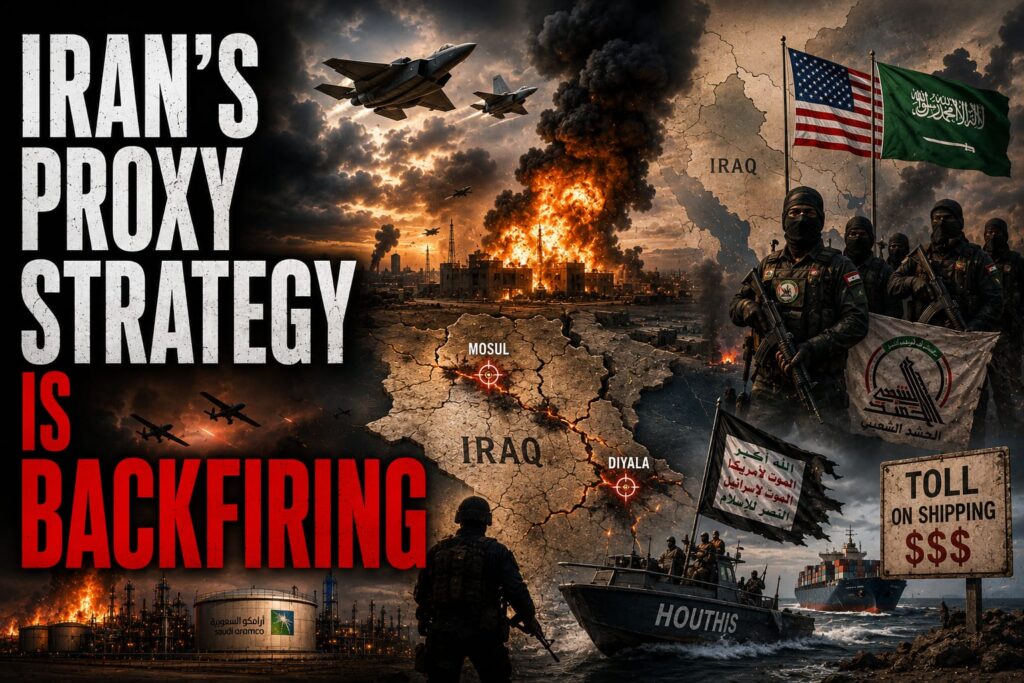
The joint American and Saudi military strikes against Iran backed Popular Mobilization Forces in Iraq mark a genuinely major turning point for Middle Eastern security. By directly bombing PMF bases in Mosul and Diyala, Riyadh abandoned its long standing habit of holding back and acting indirectly. This public military move exposes real cracks in Iran’s whole Axis of Resistance strategy. For decades, Tehran leaned on regional militia networks to hit opponents while keeping plausible deniability intact. That approach depended on foreign powers staying reluctant to hit state aligned paramilitaries directly inside sovereign host countries. These strikes in Iraq prove that assumption doesn’t hold anymore.
For Saudi Arabia, this was really born out of necessity. Over just seventy two hours, pro Iran groups carried out more than thirty drone attacks against Saudi energy facilities and American military posts. Riyadh had previously absorbed proxy harassment for years just to keep regional tensions from boiling over, avoiding direct strikes on Iraqi soil even as drone attacks threatened its northern border and oil production. Letting this latest barrage against vital energy infrastructure go unanswered would have wrecked the kingdom’s strategic deterrence entirely.
Riyadh’s willingness to strike inside Iraq doesn’t mean Saudi leadership actually wants an unrestricted regional war. Crown Prince Mohammed bin Salman understands the severe economic risk of an open ended conflict all too well. Saudi Arabia’s Vision 2030 development plans depend entirely on attracting foreign capital, growing tourism, and keeping energy exports flowing without interruption. This military action was a targeted show of force meant to restore boundaries, not launch a broader campaign. By striking alongside American forces, Saudi Arabia drew a firm line, signaling that targeting Gulf energy infrastructure is going to bring immediate military consequences from now on.
“Under that kind of pressure, the Coordination Framework dropped Maliki and accepted al Zaidi as prime minister instead.”
The political fallout from these airstrikes hit Baghdad almost instantly. Iraq’s Prime Minister Ali al Zaidi finds himself trapped in a genuinely unforgiving regional conflict. Al Zaidi is a forty one year old former banker with no real political background who took office as a compromise figure, following an intense political struggle between Washington and the Shia Coordination Framework in Baghdad.
The parliamentary majority had originally backed former Prime Minister Nouri al Maliki, a seasoned political figure closely aligned with Iran. Trump treated the idea of Maliki’s return as an outright red line for American engagement. To force a change, the United States suspended security cooperation and froze Iraq’s access to state oil funds sitting at the Federal Reserve Bank of New York. That financial squeeze threatened to collapse Iraq’s domestic banking system and public payrolls within days.
Now al Zaidi has to govern a divided country that’s basically become a battleground for outside powers. During recent trips to Washington and Tehran, he tried hard to hold a neutral stance. He assured American officials his government would disarm armed factions and bring all weapons under state control. At the same time, he traveled to Tehran to sign economic agreements and keep working relations with Iranian leaders intact too.
These joint strikes inside Iraq badly undermine al Zaidi’s standing at home. Following the attacks, he cancelled a planned summit with the Saudi Crown Prince. His office condemned the strikes as an unacceptable assault on Iraqi sovereignty, even as Washington insisted Baghdad had actually approved the operation beforehand. The Iraqi prime minister is trying to balance relations with both Washington and Tehran, but militia leaders are already demanding immediate retaliation against American and Saudi assets.
While Iraq struggles with all this political instability, the situation in Yemen threatens to spiral even faster. The Houthis present a genuinely different kind of challenge than the PMF in Iraq. Iraqi militia units are folded into state payrolls and parliamentary politics, which gives Iraqi politicians at least some leverage over their behavior. The Houthis face no such constraints. They govern northern Yemen independently and don’t really operate with any concern for formal diplomatic structures.
“If the Houthis actually try to impose maritime tolls, they’ll hand Saudi Arabia a huge amount of diplomatic cover.”
Reports that the Houthis are planning to impose a toll system on shipping through the Bab al Mandeb strait represent a genuinely dangerous escalation. Demanding payment from commercial vessels in international waters mirrors exactly what Iran has tried doing to restrict movement through the Strait of Hormuz. Major trading nations view that kind of move as straight up piracy and an unacceptable threat to freedom of navigation.
Western capitals had previously pushed Riyadh to stay restrained in Yemen to protect local ceasefires. But a Houthi attempt to tax global maritime commerce would alienate European nations, Asian energy importers, and global shipping firms all at once. That would give Saudi Arabia broad international backing to launch decisive military strikes against Houthi positions. What used to look like a regional conflict would turn into an internationally supported effort to protect global trade instead.
Iran’s whole strategy of managing escalation through proxy warfare is breaking down. Tehran built these militia networks specifically to project power across the Middle East without exposing the Iranian homeland to direct military strikes. But as proxy attacks keep getting more aggressive, the distinction between Iran and its partner forces is basically evaporating. Adversaries just aren’t willing to keep fighting proxy wars under Tehran’s old rules anymore. They’re holding militia groups and their backers directly accountable now.
Saudi Arabia’s willingness to strike PMF bases inside Iraq shows that proxy sanctuaries are losing whatever protective value they used to have. The kingdom made clear that its tolerance for strikes on its own energy infrastructure has run out. Meanwhile, the political space for neutral leaders like al Zaidi keeps shrinking fast. If the Houthis actually go through with taxing Red Sea trade, military action is going to expand across multiple maritime corridors at once. The era of shadow wars looks like it’s ending, replaced by direct state confrontation playing out across the Middle East.