
By Ketty L.
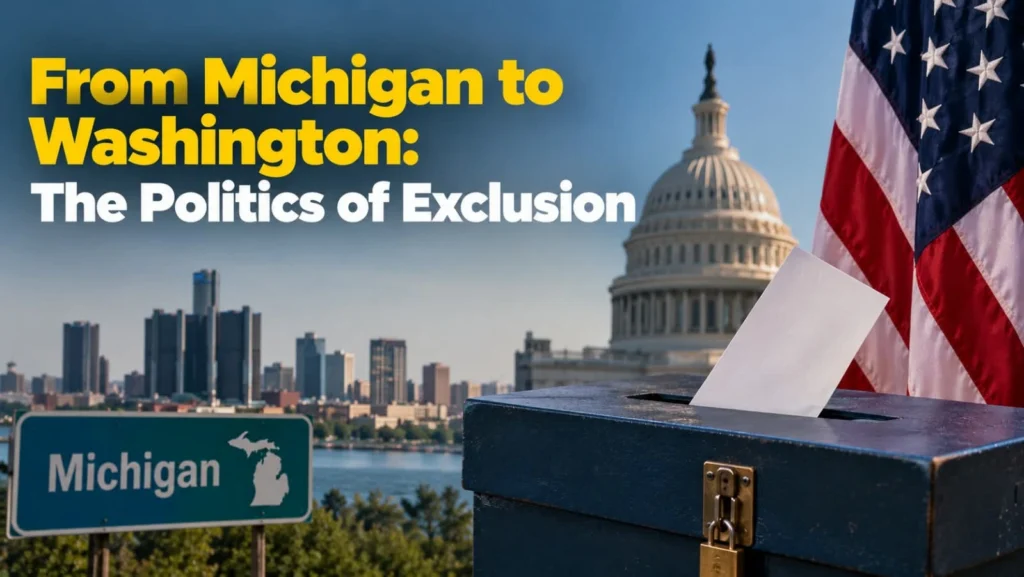
Electoral politics in America have a way of dragging the country’s biggest cultural and partisan fears out into the open. Local races get blown up into national showdowns, especially when something’s at stake. This time, heading into the November 2026 midterms, all eyes are locked on Michigan’s Senate race. Analysts, party strategists, and officials way up in the White House are glued to the action. The figure stirring up all this heat? Abdul El Sayed, the Democratic nominee who could crack history wide open by becoming the first Muslim senator. Trouble is, this race feels way bigger than just one seat from the industrial Midwest. The attention from the executive branch says so, this isn’t just a routine contest, it’s a battle for the future.
The campaign itself has gotten aggressive, almost theatrical. The administration’s strategy, especially President Donald Trump’s, feels strikingly calculated. Over and over, Trump refuses to use El Sayed’s chosen name, instead hammering his middle name in speeches and online posts. It’s not subtle. He’s deliberately painting El Sayed as an outsider, signaling to conservative voters that backing him would be a break from what they’re used to. Civil rights groups, activists, and Democratic leaders aren’t letting this slide; they’ve gone after the president’s language, calling it blatant bigotry and accusing him of relying on old school xenophobia to fire up an already polarized base before November.
But let’s be honest, this obsession from the White House goes way beyond the kind of trash talk you expect on the campaign trail. It’s fueled by genuine anxiety about power in Washington. Right now, the Senate’s balance is razor thin, and every seat matters; winning or losing Michigan could decide the president’s whole legislative agenda. For the administration and its allies, the fear is real: if Democrats take control of the upper chamber, gridlock follows, oversight investigations ramp up, and the president’s ability to push bills through shrinks to almost nothing. Polls don’t help, showing Democrats with strong leads on generic congressional ballots, while approval for the administration sinks. The stakes? Massive.
This obsession from the White House goes way beyond campaign trail talk, fueled by genuine anxiety over a razor thin Senate balance that could decide the legislative agenda.
Then there’s the money. Michigan’s airwaves are drowning in political ads, tens of millions spent to sway locals. Republican linked PACs are spending wildly, outpacing Democrats, trying to brand El Sayed as an extremist who’s way out of touch with working folks. The ads are relentless. They twist his past, as a doctor, a public health leader, a Rhodes Scholar, and throw him in with controversial online personalities, hoping labels stick even when normal policy attacks haven’t. No surprise, despite the avalanche of ads, the polls are stubbornly close. El Sayed still holds a thin lead, showing up strong in multiple credible surveys and outpacing early momentum from Republicans.
Inside Michigan, party politics are shifting and messy. El Sayed’s journey to the nomination wasn’t smooth; he had to navigate through tricky faction lines, fight establishment pushback, and deal with heavy outside spending during the primaries. Some moderate voices, behind closed doors, worry whether his progressive platform can actually win over undecided suburban voters outside Detroit. Still, support from all corners of the Democratic party has solidified his base. The divides in Michigan haven’t softened: urban areas are progressive strongholds, while rural counties stick hard to his opponent, former Congressman Mike Rogers.
But this election isn’t just about Michigan or about one candidate. It’s become a test for how politicians handle foreign policy, identity, and cultural baggage in today’s campaigns. Issues tied to international conflict, Middle Eastern alliances, and human rights keep leaking into the local debates, forcing candidates to grapple with how immigrant backgrounds and faith are either weaponized or defended in political conversations. El Sayed’s found ways to steer the talk back, making economic issues, healthcare, reproductive rights, and infrastructure the focus, instead of letting opponents reduce his story to identity politics or foreign ties.
When working class families see organizers addressing everyday concerns like clean drinking water and union jobs, nationalized culture wars start losing their punch.
Beyond the immediate battle over Senate control, this contest highlights how grassroots organizing in Rust Belt communities can challenge traditional party playbooks. In places like Wayne County, Macomb County, and the working class suburbs surrounding Flint and Grand Rapids, volunteers aren’t just knocking on doors for one election cycle; they’re building lasting networks that reshape civic engagement. This bottom up mobilization brings younger, more diverse voices into precinct leadership, forcing both major parties to rethink their strategies across the industrial Midwest. When working class families see organizers addressing everyday concerns like clean drinking water, good union jobs, and affordable prescriptions, nationalized culture wars start losing their punch. That grassroots momentum doesn’t just boost voter turnout on election night; it creates a blueprint for how future candidates across the nation can bridge deep ideological divides and build enduring coalitions.
In the end, Michigan’s Senate race pretty much sums up America’s deep political divide. When a president fixates on a candidate’s name and millions are dumped into local advertising, it’s clear the balance of power teeters on the edge. Whether voters decide to back a historic first or stick to traditional messaging about security, what happens here won’t stay in Michigan. The outcome sets off shockwaves, shaping how politics play out for the rest of the president’s term.
About the Author
Ketty L. is a Columnist writing on politics, and international affairs.