
Strategic Realignment, Pragmatic Cooperation, and Pakistan’s Pivot in West Asia
The formalization of defense cooperation between Islamabad and Gulf capitals marks a genuinely pivotal shift in Middle Eastern security. For decades, Pakistan kept an unwritten, transactional security relationship with Arab monarchies going, Pakistani officers trained local forces, pilots flew in joint exercises, and ground troops routinely deployed to Saudi Arabia on technical and advisory missions. But through all of that, Islamabad stayed on the periphery of the broader Gulf defense architecture rather than at its center.
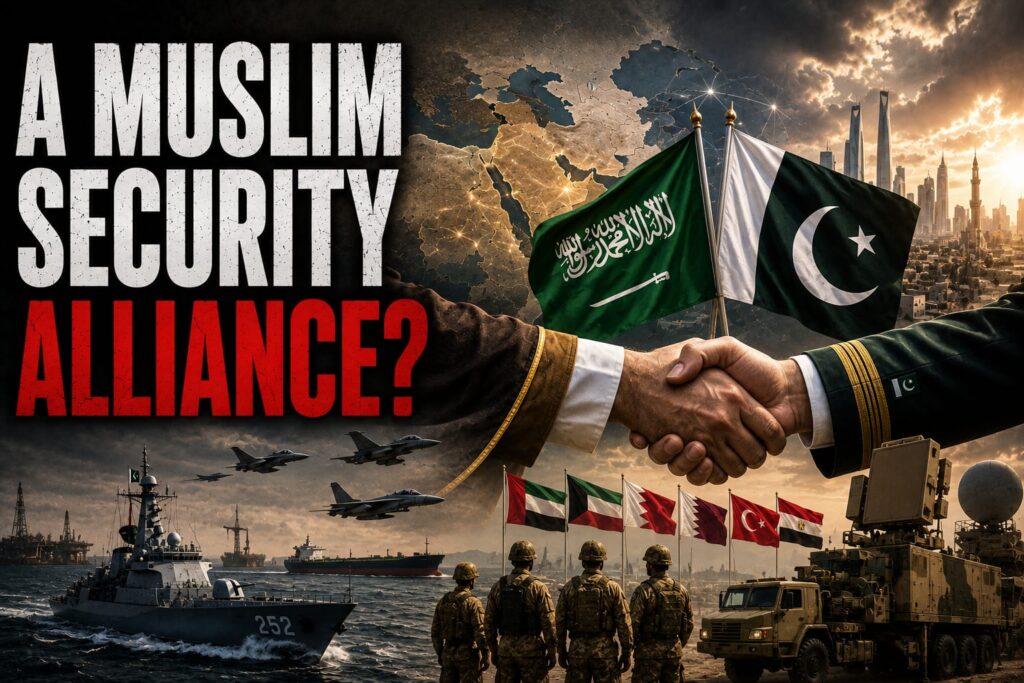
That changed in a real way with the signing of the Strategic Mutual Defense Agreement between Pakistan and Saudi Arabia on September 17, 2025. By explicitly stating that aggression against either country would be treated as an attack on both, the pact brought mutual defense obligations into Pakistan’s regional posture for the first time. This isn’t the sudden birth of some rigid, NATO style bloc, though. What it actually looks like is the emergence of a more flexible, hub and spoke security network spreading across West Asia.
A lot of the speculation about a monolithic Muslim NATO tends to misread how the Middle East actually works strategically. Western alliances like NATO run on integrated military commands, standardized hardware, and above all, a shared, widely accepted sense of who the threat actually is. The Muslim world doesn’t have anything close to that kind of consensus. Gulf monarchies prioritize countering regional missile proliferation and protecting trade routes. Turkey’s defense priorities center on Syria, the Eastern Mediterranean, and Kurdish insurgencies. Egypt stays consumed with instability in Sudan, Libya, and Gaza. And Pakistan’s own strategic focus remains firmly anchored toward India, even as it navigates a complicated 900 kilometer border with Iran on the side.
Instead of one giant military bloc, what’s actually forming across West Asia looks more like a pragmatically layered defense framework. At the core sits the bilateral Saudi Pakistan defense pact. Around that center are expanding conversations with Turkey, Egypt, and neighboring Gulf states like Kuwait and Bahrain. But whether this whole structure actually holds together long term comes down to one crucial variable, resolving the deep rivalry between Iran and its Arab neighbors.
“Instead of one giant military bloc, what’s actually forming across West Asia looks more like a pragmatically layered defense framework… By acting as an intermediary, Pakistan can help build a regional security architecture with actual mechanisms for resolving conflict, rather than one built for perpetual confrontation.”
And this is exactly where Pakistan holds a genuinely unique advantage. Unlike Western powers or other regional rivals, Islamabad maintains real, functional diplomatic and military trust with both sides of the Persian Gulf divide. Pakistan shares deep religious, cultural, and economic ties with Saudi Arabia, while at the same time keeping a critical land border and real diplomatic channels open with Tehran. During recent regional escalations, Pakistani shuttle diplomacy actually proved crucial in preventing things from spiraling into total conflict. By assuring Tehran that Gulf territory wouldn’t be used as a launchpad for offensive strikes, while simultaneously reassuring Riyadh of its conventional defense commitments, Islamabad showed it could genuinely function as a trusted circuit breaker.
If a broader Muslim security alliance is ever going to move from theoretical concept to actual functioning reality, Pakistan needs to use this trust to actively bridge the gap between Tehran and the Gulf states. An alliance built explicitly to isolate or encircle Iran would inevitably fail, splitting the region into hostile camps and turning Pakistan’s own western border into an active front line in the process. A security framework built instead on diplomatic mediation, joint maritime security, and non aggression protocols offers a much more realistic path toward genuine stability. By acting as an intermediary, Pakistan can help build a regional security architecture with actual mechanisms for resolving conflict, rather than one built for perpetual confrontation.
What’s driving this whole evolving security order is a growing regional doubt about traditional Western guarantees. Recent conflicts and direct attacks on vital shipping lanes proved that outside security umbrellas don’t actually guarantee protection for regional infrastructure anymore. In response, regional capitals have started hedging their bets. Saudi Arabia and its neighbors are looking for reliable defense capabilities of their own to protect vital airspace and energy corridors.
Pakistan brings genuinely serious, concrete assets to this whole equation. With an active military force of roughly 660,000 personnel, real battle tested counterinsurgency experience, a growing defense manufacturing base, and the only declared nuclear weapons capability anywhere in the Muslim world, Islamabad offers credible deterrence that few others in the region can match. Joint production of military hardware, like the JF-17 multirole combat aircraft developed alongside China, lets Gulf nations diversify their arsenals without total reliance on Western supply chains.
For Pakistan, playing both defense provider and regional bridge builder pays off in real economic and diplomatic terms. A cash strapped Islamabad can leverage its defense capabilities to secure crucial financial backing, energy arrangements, and trade guarantees from resource rich Gulf states. At the same time, keeping constructive relations with Tehran protects Pakistan’s own energy transit routes through the Strait of Hormuz and helps prevent destabilizing spillover along its own border.
“Formalizing defense commitments makes holding onto neutrality a lot harder going forward. If regional negotiations ever collapse, Islamabad could find itself under real pressure to choose between its defense obligations in the Gulf and its peaceful relationship with Tehran.”
That said, this balancing act comes with real long term risk. The biggest danger is overextension, getting locked into entangling commitments that are hard to walk back from. Historically, Pakistan has protected a delicate diplomatic posture through Middle Eastern conflicts. Back in 2015, Pakistan’s parliament famously voted to stay neutral in the Yemen war, turning down requests for combat deployments specifically to protect its mediating role. Formalizing defense commitments makes holding onto that kind of neutrality a lot harder going forward. If regional negotiations ever collapse, Islamabad could find itself under real pressure to choose between its defense obligations in the Gulf and its peaceful relationship with Tehran.
There’s also real ambiguity around nuclear deterrence that presents another serious challenge. Official statements about mutual defense pacts tend to avoid any explicit mention of nuclear sharing, but language about all military means keeps fueling speculation anyway. Extending even an implicit nuclear umbrella raises genuinely dangerous questions about command and control structures and what would actually trigger a response. Pakistan’s nuclear doctrine was built specifically to deter threats from India, and diluting that focus risks compromising its own national defense priorities at home.
To actually navigate this evolving role successfully, Pakistan needs to set clear institutional boundaries. Future defense arrangements should prioritize defensive capabilities, maritime security, counter drone technology, and pilot training over sending troops into expeditionary combat. Strategic decisions need to stay under strict civilian and parliamentary oversight to prevent any executive overreach down the line. And most importantly, conventional defense exports and training programs need to stay clearly separated from anything touching nuclear doctrine.
This emerging security alignment across West Asia isn’t a pan Islamic military bloc, and it isn’t just a continuation of old training missions either. It’s a pragmatic, multi tiered response to a genuinely shifting global order. By acting as both a defense partner to the Gulf and a diplomatic bridge to Iran, Pakistan holds real leverage over whether a functional, inclusive security architecture actually comes together. Whether Islamabad ultimately succeeds is going to depend on whether it can help build lasting regional peace while still protecting the strategic independence that its own national interests genuinely depend on.