By Ketty L.
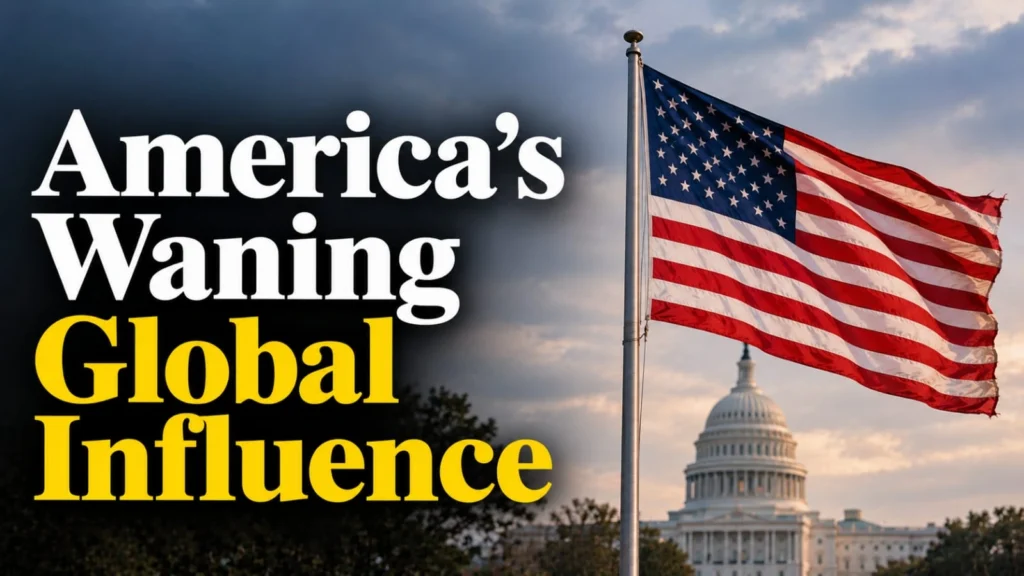
The limits on America’s ability to act alone in the world are not just theoretical anymore. They have become pretty clear in practice. When Donald Trump took office for his second term, he promised to shake up Washington’s approach to global politics, basically, to push for the best deals with as few obligations as possible. His plan was straightforward: use America’s massive market, unmatched military strength, and the leverage of its institutions to pressure both allies and rivals into giving in to U.S. demands, all on America’s terms. But as the administration heads toward a critical test in the upcoming midterm elections, the gap between America’s enormous power and its ability to shape global politics is bigger than ever.
Washington’s problem is not a sudden collapse, it is more about friction inside the system. America still has plenty of tools to force others’ hands, but they do not work as smoothly as they used to. The administration can launch headline grabbing military strikes, though those rarely translate into lasting peace or stable political outcomes. Economic sanctions are piled on both friends and foes, but countries are figuring out how to sidestep them: building new trade routes, payment systems, and financial frameworks that do not rely on the dollar. Even longtime allies, pressed into spending more on defense, are quietly making sure they have other options, reaching out to new partners and hedging their bets.
This all comes back to a fundamental misunderstanding of how today’s multipolar world operates. The global system is not centered on a single country anymore. You cannot just dictate terms from Washington and expect everyone to fall in line. If the U.S. tries to enforce its will using economic or security threats, there are ways around it now. China keeps building supply chain connections and pouring money into projects like the Belt and Road Initiative, all while advancing its own tech capabilities. Russia, for its part, uses its energy resources and raw materials to beat Western sanctions through friendly third party channels. Regional powers, like Türkiye and Gulf states, have stopped tying their security completely to America’s changing political winds and are looking out for their own interests.
The U.S. has more capacity than ever, but it is getting less return on it as sovereign nations build independent trade and security alternatives.
This shift is not just theoretical, it shows up in hard numbers. Take the Lowy Institute’s Asia Power Index. The U.S. still scores high for overall power, but its influence in Asia has taken a hit, dropping to historic lows. The survey points out a growing power gap, the widening space between America’s vast resources and its ability to actually use them to sway politics and diplomacy. That is really the heart of the matter: the U.S. has more capacity than ever, but it is getting less return on it.
Looking ahead to the November midterms, the dilemma gets sharper. The political base holding up Washington’s global stance is buckling under financial and institutional pressure. The U.S. Treasury says federal debt is now over 40 trillion dollars, and yearly interest payments have blown past 1 trillion dollars, costing more than the defense budget itself. That is almost 20 percent of government income eaten up by interest alone, a choke point nothing the president says can erase. If Congress swings to the other side, the White House’s options will shrink fast. Oversight, budget cuts, and legal limits will hem in the administration, forcing a real rethink on American commitments abroad.
Joseph Nye, the political scientist, nailed it when he said, “Power is the ability to affect others to get the outcomes one wants.” He pointed out that soft power, things like alliances and legitimacy, are just as important as military or financial strength. Treating alliances like business deals and ignoring global rules has hammered those multipliers. When America starts leaning only on coercion and alienates friends, it costs a lot more to keep its influence, but the payoff keeps shrinking.
When America leans only on coercion and alienates friends, it costs a lot more to keep its influence while the payoff keeps shrinking.
It is tempting to think that a shift in domestic politics, or a new president, will magically take America back to its old role. But that is wishful thinking. The main forces undermining U.S. supremacy are bigger than any one leader or party. If a Democrat takes office and promises to fix alliances or restore multilateral norms, they will face the same realities: a tired industrial base, voters sick of foreign wars, and a world where other countries have learned there are real benefits to going their own way.
The real mistake was believing that breaking the global rules would scare everyone back into America’s orbit. Robert Gates, a former Secretary of Defense, warned that America cannot bully its way to lasting stability. The evidence in this era has proved him right. Unilateral moves, trade threats, and sanctions have sped up the independent strategies the U.S. hoped to slow down. Now, sovereign nations are not waiting for Washington’s sign off, they are handling their own security and forging their own trade deals.
In the end, the legacy of this era will not come down to whether Trump shook up the world order. The big question is whether his confrontational tactics kept American influence intact, or just helped speed up a world where America is not the center anymore. As Washington faces a more splintered planet, it has got to face something tough: if you cannot make others obey abroad, and you cannot manage your finances at home, you are not a superpower standing tall. You are an empire learning firsthand just how far its reach really goes.
About the Author
Ketty L. is a Columnist writing on politics, and international affairs.