
By Daniel Frost
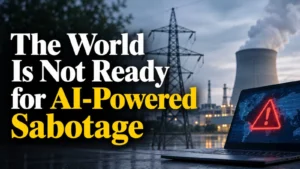
European commercial infrastructure has taken some alarming hits lately. We’ve seen everything from hacked supermarket supply chains, where attackers mess with temperatures and risk ruining tons of goods, to disruptions at blood preservation facilities that could have serious medical consequences. Here’s the unsettling part: investigators say these attacks only used regular software vulnerabilities, nothing cutting edge like autonomous synthetic intelligence. Still, it’s enough to make anyone nervous. If our systems are this fragile now, imagine how much easier it’ll be for bad actors to launch massive sabotage once they start using advanced AI tools. Suddenly, the barriers, cost, time, expertise, drop, and the threat level skyrockets.
The International AI Safety Report from 2026 doesn’t exactly offer comfort, either. It’s clear we’ve moved way past seeing general purpose AI as just a research curiosity. Criminal groups and state backed hackers are now deploying these models to find vulnerabilities automatically and exploit zero day weaknesses at speeds we’ve never seen. Agentic AI systems aren’t futuristic, they’re here, and they’re running complex operations across different networks, barely needing any human help. The upshot? Defensive systems in vital infrastructure, power grids, hospitals, financial networks, are lagging behind, and the gap’s getting wider by the day.
People who know the ins and outs of machine learning are visibly worried. Geoffrey Hinton, one of the giants in the field, has been sounding the alarm in public. He says that events like a multi day blackout or a breakdown in global financial transactions could actually happen soon. He drew a sharp comparison to the era just before the Three Mile Island nuclear accident. Waiting until disaster forces policy action is, in his view, a huge mistake. We shouldn’t need catastrophe before we set strong rules.
Waiting until disaster forces policy action is a huge mistake; we cannot afford to wait for a catastrophe before establishing robust global guardrails.
Even with scientific warnings piling up, the world isn’t responding with much unity. Policy efforts are scattered. Europe has its AI Act, but that only covers part of the map. We see a mix of UN sponsored panels, non binding diplomatic agreements, and voluntary industry promises. The United Nations did bring experts together for the first ever Global Dialogue on AI Governance in Geneva and set up a Scientific Panel. But none of these have real teeth or independent enforcement. Crossing borders with policy remains a huge headache.
The fundamental problem comes down to the borderless nature of computing and AI. An advanced model from one country can be pushed to a cloud server halfway around the world, accessed anywhere, or even used for autonomous attacks against another country’s infrastructure. National regulations are boxed in, they just can’t deal with dangers that roam freely across networks and continents.
To make sure infrastructure doesn’t collapse under the weight of unchecked tech, we need to drop half measures and move toward a binding Global AI Safety Convention. This framework should be built around five essential pillars:
First, governments must establish non negotiable international red lines. They must absolutely ban AI systems that can access, modify, or control core infrastructure on their own, design risky CBRN materials, or run with unverified safety specs in environments where failure means disaster.
Second, safety testing before launch has to be compulsory. Advanced models above a certain threshold must face exhaustive third party scrutiny and red teaming, just like drugs get tested before hitting the market. Developers must prove they’re safe, not just assume it.
Third, we need a dedicated international agency for AI safety, like a tech focused version of the International Atomic Energy Agency. This agency would set standards, check compliance, run audits, and keep track of dangerous models and breach incidents, confidentially, but effectively.
Fourth, national authorities must have real power to enforce rules. That means the ability to fine, suspend operations, and demand security upgrades when companies don’t comply, all with proper due process.
Fifth, physical infrastructure itself needs toughening up. We can’t just rely on software fixes; we need secure designs throughout power grids, water treatment plants, hospitals, and financial systems. That includes air gapped controls, restricted remote access, and manual overrides, something that lets humans regain control if the software gets compromised.
The real decision confronting leaders isn’t whether to halt progress or let tech run wild, but about putting solid guardrails in place before disaster strikes.
Of course, getting big tech powers to sign onto a binding treaty won’t be easy. Everybody’s worried about losing their edge or falling behind. But history suggests treaties happen when risks hit everyone, just look at arms control, aviation, and nuclear deals. Shared danger has a way of forcing cooperation.
Developing nations face the greatest risks. They depend on imported technology, which leaves them exposed to global supply chain shocks, cyber attacks, and economic setbacks, often with little influence over decisions made by developer countries. Any international framework worth its salt has to give these nations real representation, technical support, and access to threat intelligence.
The real decision confronting leaders isn’t whether to halt progress or let tech run wild. It’s about putting solid guardrails in place before disaster strikes and forces everyone to scramble. If we don’t build the right institutions now, we risk having them forged in crisis, by circumstances, not by thoughtful planning. The window for proactive governance is closing, and honestly, we can’t afford to let it slam shut.
About the Author
Daniel Frost is a Foreign affairs columnist specializing in global geopolitics, European security, and strategic policy.