
By Adam Reed
The world’s balance of power is not just shuffling, it is breaking apart, shifting under us as major institutions freeze up, blocked by stubborn vetoes and deep divisions. Nobody is global in charge now, and you can see it most clearly in the way middle powers are taking matters into their own hands. Pakistan is diving right into this new era. At the latest Margalla Dialogue, Islamabad put forward a bold story of strategic confidence, highlighted by a new security partnership with Saudi Arabia and Turkiye. It is not just rhetoric, a realignment like this is deliberate. When the old global guardians do not have your back anymore, you stop waiting for big players to solve your problems. Instead, you find friends at your level and build coalitions for survival and stability.
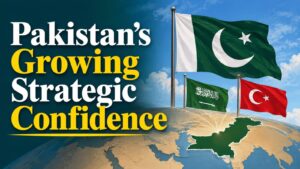
Central to this new chapter is the Makkah Joint Defence Agreement. As soon as it hit the news, critics pounced, calling it the birth of a new regional power bloc. Islamabad pushed back, insisting it is all about defense, no one is ganging up or looking for a fight. The idea is simple deterrence: if anyone picks a fight with one country in the deal, they are taking on all three. No one single member stands alone; an attack on one is an attack on all. That is not posturing. That is classic deterrence and, honestly, it makes sense with the region on edge. The pact does not name enemies, it does not rattle swords. It is defensive through and through and gets paired with relentless diplomacy. The agreement came together as the Gulf and Red Sea were churning with tension and the United States and Iran were trading threats. By tying Riyadh, Ankara, and Islamabad together, the deal basically puts anyone considering mischief on notice: the region’s patience now comes with a price. It is smart, sending a clear sign that, if anything, this alliance is about stopping conflicts before they spiral.
When old global guardians no longer watch your back, middle powers stop waiting for big players and build regional coalitions for survival.
What makes the partnership stand out isn’t just muscle, it is the blend of force and finesse. Go all in on hard power, and you end up isolated. Lean only on soft talk, and you risk being pushed around. Pakistan walks a line between those extremes, showing you can be strong and still willing to negotiate. Just a look at earlier this year tells you a lot. Washington and Tehran could not meet face to face, so Islamabad hosted secret talks in April. Prime Minister Shehbaz Sharif didn’t just play host, he signed the Islamabad Memorandum of Understanding right alongside Donald Trump and Masoud Pezeshkian. That is rare company, a sign of trust you cannot fake. To be the go between for two archrivals and walk away as a guarantor says Pakistan has earned a seat at the table of trusted mediators. Even the Saudis took notice. Their foreign minister called out how much Riyadh appreciates Pakistan, not just for its military strength, but for its ability to bring people together.
Of course, you do not get that kind of reputation unless things are solid at home. For years, people whispered about Pakistan’s instability and economic struggles. Instead of just talking, Islamabad got to work. When tensions heated up with India in May 2025, Pakistan’s response was measured, not reckless. Operation Bunyan un Marsoos showed the world Pakistan could live up to its promises and safeguard its borders without plunging the region into chaos. The economic reforms back home have been tough, but they are starting to pay off, restoring credibility and shoring up institutions. A country that can handle its business both at home and on the border gets listened to. Power alone isn’t enough, you need stability and credibility for your diplomatic voice to matter.
But Pakistan isn’t getting tunnel vision about the big picture. It is very aware that South Asia is still a powder keg. At the Margalla Dialogue, Pakistan used the global stage to focus on the region’s chronic threats, zeroing in on unresolved disputes and an unsteady military balance made worse by some countries’ unilateral moves. Pakistan didn’t invent new grievances, it stuck to international law, pressing for a solution on Kashmir under longstanding United Nations Security Council resolutions. Water security got a spotlight, too, with Islamabad drawing a hard line on the Indus Waters Treaty, warning against any attempt to weaponize vital rivers, and staking its claim with the weight of legal agreements behind it. These aren’t throwaway lines, they are grounded in treaties, giving the world clear reasons to back Pakistan’s position without ambiguity.
Power alone is never enough; true diplomatic influence requires domestic stability, institutional credibility, and firm adherence to international law.
Then there is Pakistan’s western front, where trouble from Afghanistan hasn’t let up. Islamabad’s approach here is as tough as it is practical. It vows unwavering protection against militants crossing the border, yet keeps its hand extended for economic cooperation. The logic is simple, stable, connected neighbors make for lasting peace, while unending conflict benefits no one. By pairing strict border security with offers of collaboration, Pakistan makes it clear, it is interested in partnership, not perpetual tension.
In the end, what Islamabad signaled at the Margalla Dialogue was bigger than any single deal. Global power isn’t just spreading out, it is up for grabs, but that alone won’t keep anyone safe. The real test is whether countries stick to shared rules and engage in honest multilateralism. That is the promise behind the Makkah pact. Built to welcome new members, complete with joint exercises and defense industry projects, it has the potential to show how middle powers can team up to strengthen, not overthrow, the international order. For Pakistan, after decades of dealing with rough geopolitical waters, this moment feels like a turning point. Backed by real diplomatic wins and disciplined defense, it is stepping up as a country ready to both stop conflict and broker peace. Now, it isn’t just reacting to the world, it is helping shape the structure that keeps the next crisis from happening at all.
About the Author
Adam Reed is an International affairs analyst focusing on geopolitics, defense strategy, and global security trends.