
By Daniel Frost
When Molotov cocktails smashed against the front of the Ministry of Interior in Tirana and over 270 people were left injured, more than 150 of them police, it was almost automatic for European news outlets to fall back on old Balkan clichés. To them, it looked simple: the opposition, still stinging from Edi Rama’s overwhelming win at the polls where his Socialist Party took 83 out of 140 seats, had taken to the streets because they couldn’t beat him at the ballot box. But if you listened to the protest chants in Skanderbeg Square, the slogans cut much deeper. This wasn’t just another round of grumbling about the government. What you heard was anger over foreign meddling, fear for the loss of national sovereignty, and a fierce backlash against what people saw as their country being carved up and auctioned off, that wasn’t just typical political noise.
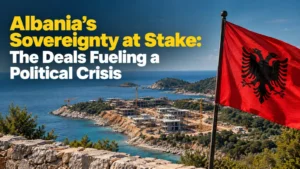
At the heart of all this rage stood a handful of luxury real estate projects on Sazan Island and the Zvërnec peninsula, right on Albania’s untouched Adriatic and Ionian seaside. These weren’t minor developments. They were worth more than a billion dollars, led by Jared Kushner’s Affinity Partners and a maze of outside investors. For many Albanians, these deals looked like a betrayal: instead of tourism helping locals, it was foreign investors snapping up protected coastline and old military sites. People accused the Rama government of acting like a middleman, selling out national treasures to rich outsiders while regular families were left battling soaring prices, flat paychecks, and watching their children leave the country behind for good.
What you heard in Skanderbeg Square was anger over foreign meddling, fear for national sovereignty, and a backlash against a country being carved up and auctioned off.
Instead of facing the criticism head on, the government reached for a familiar scapegoat, foreign interference. Rama and his officials tried to flip the script, pointing the finger at Iranian intelligence for stirring up violence. They claimed they’d intercepted a drone loaded with explosives near his office, weaving a story that meshed perfectly with fears that Albania, still reeling from an Iranian cyberattack in 2022 that paralyzed government systems, was in the crosshairs again. By painting the protests as an Iranian plot, Rama’s team tried to strip the movement of legitimacy, dodging real questions about corrupt land deals, rampant favoritism, and growing discontent.
But blaming outside troublemakers misses what’s really wrong. There’s a growing disconnect between who the government is trying to please and what the public actually wants. Rama has taken Albania away from its traditional balancing act and thrown in his lot with Israel, hard. As Gaza’s suffering moved people to protest across Europe and the Global South, Rama never budged from his pro Israel line. Things got stranger still when his government proposed creating an autonomous Bektashi micro state inside Tirana, something local communities and experts saw as an outlandish move to please Western and Israeli allies and plant their influence deep in the heart of Albania.
These choices aren’t just diplomatic footnotes, they’re causing rifts at home. For a lot of Albanians, seeing luxury compounds rise on Sazan Island isn’t just an eyesore. It’s a daily reminder of how their leaders have traded away national assets for handshakes and headlines with influential friends abroad. The sense that national security and economic hopes have been handed to outsiders is sparking real tension in the streets.
Using national security to silence dissent only pulls the country further apart and makes people trust their leaders less, not more.
Globally, partners are treading carefully. The EU in Brussels mostly sticks to safe talking points about democracy and order, nervous about sending the wrong message to a country it still hopes will join its club, and wary of threats to regional stability. Türkiye, which has deep roots and interests in the Balkans, is just as cautious. Ankara supports calm and public order but can’t ignore the rising anger over land sales and outside political games creeping into Albania.
If Rama manages to survive this wave of protests, he’ll have to confront a tough truth: winning an election doesn’t give anyone free license to sell off public property, shut down debate, or ignore what people care about, especially on issues as explosive as foreign policy. Using national security to silence dissent only pulls the country further apart and makes people trust their leaders less, not more. If Albania wants lasting stability, the government has to stop cutting solo deals with foreign investors, deal with the struggles its citizens face every day, and craft a foreign policy that matches real national interests. Until Tirana recognizes that lasting security comes from within, not from foreign sponsors or quick diplomatic wins, angry crowds in the streets will keep reminding them just how fragile public trust really is.
About the Author
Daniel Frost is a Foreign affairs columnist specializing in global geopolitics, European security, and strategic policy.