
By Daniel Frost
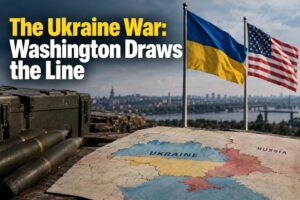
Steve Witkoff and Jared Kushner’s shuttle diplomacy through Europe stands out as a real inflection point for the West. These American envoys did not waste time, one day, they are locked in with Putin for hours inside the Kremlin, and the next, they are huddling with Zelenskyy in Kyiv. Their message? Brutally clear. The days of America backing Ukraine with unlimited cash and weapons are over. Washington just drew a line in the sand.
You can see this is not just a policy tweak. It is a whole new mindset taking hold in D.C., driven by honest limits. The United States simply cannot keep propping up Ukraine’s war machine at full tilt without putting its own global security at risk. People in Washington know it, and the numbers are not lying. Years of grinding combat in Ukraine have put an unbelievable squeeze on the U.S. defense industrial base. Missile stockpiles are low. Patriots, ATACMS, anything high end and advanced is getting dangerously scarce. Military planners are sweating as inventories drop to levels that are not just uncomfortable but outright alarming.
The days of America backing Ukraine with unlimited cash and weapons are over. Washington just drew a line in the sand.
At the same time, U.S. forces and equipment are stretched across the Middle East and the Indo Pacific, so it is not just Ukraine sapping American strength. The Pentagon cannot magic up replacement weapons and gear out of thin air. Now there is a zero sum game in play: keep arming Ukraine or make sure America is ready if things spiral in the Pacific. At this crossroads, the White House has chosen to safeguard global balance. No more bottomless support for what is becoming an endless slugfest in the trenches of Eastern Europe.
What did Witkoff and Kushner actually put on the table? While they are keeping official details under wraps, the main idea is already out in the open: Washington wants to freeze the current front lines before another winter turns the battlefield into another bloodbath. The terms take a hard look at reality, Russian troops hold firm control over almost all of Crimea, Luhansk, and big chunks of Donetsk, Zaporizhzhia, and Kherson. The U.S. proposal does not try to force the impossible. Instead, it is about drawing a line, building in buffers, and figuring out economic arrangements to head off further disaster.
But here is the kicker, this new pressure from Washington is crashing right into Ukraine’s own internal politics. Zelenskyy keeps saying he will not accept giving up one inch of land, no matter the cost. For him, anything less means the end of Ukrainian statehood. Except, on the ground, things look different. Ukraine still asks for more and more advanced Western weapons, especially air defenses to keep Russian drones and missiles from smashing its cities. The disconnect between Kyiv’s public position and what is left in the Pentagon’s arsenal is getting impossible to ignore. Leaning entirely on foreign support while setting maximalist goals risks putting Ukraine in a spot where its ambitions outstrip any realistic means of achieving them.
The disconnect between Kyiv’s public position and what is left in the Pentagon’s arsenal is getting impossible to ignore.
That is not Ukraine’s only diplomatic gamble, either. Kyiv is also trying to narrow the negotiating table, inviting just the big three Europeans, France, Germany, and the UK, into the highest levels of peace talks. It leaves out Poland, Finland, Sweden, and the Baltics, all of whom are right on Russia’s doorstep, armed to the teeth, and facing the consequences firsthand. By excluding these frontline nations, Ukraine risks sparking divisions among countries that need to be united; ironically, this happens just when European solidarity is needed most.
If there is a fundamental tragedy in all this, it is the way Europe is not remotely prepared to fill the gap if America steps back. Years of underfunded militaries, mothballed equipment, and slow moving arms production leave European powers outmatched for a full scale land war. Western Europe’s armed forces are short on troops and ammo; their navies can barely keep ships in the water without delays and breakdowns. European leaders offer plenty of reassurances, but their own industries cannot pump out enough tanks, artillery, or air defenses anytime soon. Pledges are one thing. Actual backup? It is years, maybe decades, away.
Beyond hardware, Europe lacks the strategic coherence to act as a unified military bloc. Decades of relying on the American security umbrella have left European capitals accustomed to debating policy rather than executing force projection. While Warsaw and Tallinn view the war as an existential fight for survival, capitals further west balance their defense commitments against domestic economic strains and soaring energy costs. Without Washington forcing consensus or providing the operational backbone, European leadership fragments into competing regional interests, leaving the continent incapable of orchestrating a sustained, long term war effort on its own.
That is the fragility shadowing NATO right now. If the U.S. walks away because talks hit a dead end, and Washington cuts off the pipeline of American weapons and support, Europe will face a reckoning it has dodged for decades. Suddenly, European capitals would have to manage a crisis at home, without Uncle Sam on call. The protective shield that defined European security for over three generations would effectively dissolve, forcing individual nations to make stark choices between massive defense spending cuts in domestic programs or seeking private accommodations with regional adversaries.
Kyiv and Europe have to grapple with the world as it is: a world where U.S. military muscle cannot backstop everything, but must look out for itself first.
Nothing would look the same after that. It would flip the script for NATO, pushing it away from an American centered alliance and towards a more fragmented, resource strapped coalition led by Europeans. The message from Witkoff and Kushner is bigger than a ceasefire proposal. It is the opening move in a huge shift for American foreign policy, one where America’s promises abroad are not limitless blank checks. Now, Kyiv and Europe have to grapple with the world as it is: a world where U.S. military muscle cannot backstop everything, but must look out for itself first.
About the Author
Daniel Frost is a Foreign affairs columnist specializing in global geopolitics, European security, and strategic policy.