
By Adam Reed
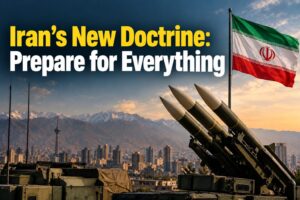
When Major General Ali Abdollahi handed down a nationwide 10-article directive outlining orders for three possible scenarios, full-scale war, a shaky ceasefire, and the aftermath of conflict, the Iranian military command wasn’t just updating its annual rulebook. This move went much deeper. Tehran was sending a clear signal: it’s reshaping how the entire country thinks about war. Now, instead of seeing conflict as a short-term emergency that interrupts the normal flow, Iran is treating it as the new normal, something built into the fabric of everyday life, something prepared for at every level, from top generals to local civil servants. The directive shows a country doing the math and concluding that peace is pretty unlikely. They’re bracing for a long haul, years of messy, on-and-off fighting.
What stands out in the 2026 guidelines from the Armed Forces General Staff is the complete shift in attitude, especially around the scenario of all-out war. There’s no sugar-coating here. Suspending big public events and gatherings, switching the focus of the whole government to keeping essential services running and agencies working together, these steps are a blunt admission: Iran’s infrastructure is vulnerable. The experience of facing off with American and Israeli firepower, especially during those first joint strikes on February 28, 2026, showed just how outgunned Iran’s conventional military is by advanced technology. In that kind of fight, “passive defense” suddenly carries all the weight. Shields go up, not just on the battlefield but also behind the scenes, by moving crucial operations underground, making sure supply lines are tough to break, and getting regular people ready for isolation. That way, when the airstrikes hit, the state can keep running. The new priority isn’t just stopping bombs from landing; it’s making sure the government survives, society holds together, and Iran doesn’t unravel, even under massive outside pressure.
The new priority isn’t just stopping bombs from landing; it’s making sure the government survives, society holds together, and Iran doesn’t unravel under pressure.
Now, look at how the guidelines address the middle ground, a ceasefire without a real peace deal. Instead of treating any pause in the bombing as a chance to breathe easy, the directive sees it as an especially risky moment. War doesn’t really stop, at least not the kind Iran expects. The military leadership figures that when missiles fall silent, other battles get louder: hackers get to work, enemy media spreads lies, and spies hunt for cracks to widen. For Iran, a ceasefire isn’t a chance to relax but a time to stay sharp, close digital loopholes, and make sure the public is alert. They’re trying to patch up the very weaknesses the bombs and chaos just exposed.
The directive doesn’t just look forward, it points back, too, drawing a line from present crisis to past trauma. By referencing “second and third imposed wars,” Tehran isn’t just talking about recent flare-ups, like the week-and-a-half of fighting in June 2025 or the post-February 2026 air battles. They’re rooting current strategy in the story of the first “imposed war”, the brutal 1980s conflict with Iraq that forced Iran to rely on its own ingenuity and dig deep for survival. By saying today’s fights are just new chapters in an ongoing struggle, Iran is telling both its citizens and its enemies: this is about history and identity, not just tactics. For the leadership, resistance isn’t a phase. It’s a duty, a central piece of their sense of nationhood.
For Iran’s military leadership, a ceasefire isn’t a chance to relax—it’s a period where cyber attacks, disinformation, and espionage intensify.
There’s an international side to all this, too. Announcing this three-tier plan in public isn’t just about logistics; it’s about messaging. While diplomats keep talking, looking for a way out, Tehran is making it clear, it won’t be pushed into giving up simply because the pressure is relentless. The aim is obvious: let Washington and Tel Aviv know that, even if the bombs keep falling, it won’t be enough to break Iran. With local governments, utilities, and civil defense on a war footing, Iran wants the world to see that dragging this conflict out will come at a huge cost.
But here’s the flip side: ramping up this “passive defense” approach means Iran must draw even more from a society already strained by years of sanctions and repeated military flare-ups. Everyday life has been tough, jobs, inflation, and basic infrastructure have all taken hits. Asking people to live under endless wartime rules, canceling public life, rationing supplies, never really getting a break, carries big risks. You need the public on board, or the whole thing falls apart. When the basics, food, water, electricity, start to wobble, no official directive will stop frustration from boiling over.
This shift isn’t just about the military either. Tehran is folding the whole bureaucracy into its defense plans. Ministries that once focused on health, energy, communications, and transport are now functioning as part of a broader security network. Their main job is to manage emergencies, not drive growth or protect civil liberties. This shows how security-first thinking has sunk its roots deep into everyday governance, and probably will stay that way, even after the shooting stops.
The nuts and bolts of the directive get technical, too. Iran is spreading out its key assets, command centers, supply stockpiles, communications hubs, so they’re not all in big cities like Tehran. When primary networks take a hit, back-ups are ready. This scattered structure matches the way Iran’s irregular forces operate, letting local leaders keep the wheels turning, distribute essentials, and enforce authority, even if the capital is dark or silent.
Tehran is preparing for an era where the line between war and peace is thin, treating ongoing friction as the new baseline for governance.
In the end, this 10-article directive lays bare a defense establishment facing reality without illusions. Tehran is preparing for an era where the line between war and peace is thin, maybe even gone. By locking in plans for every stage of conflict, from uneasy ceasefires to all-out war, Iran’s military command is making sure the state can adapt, survive, and keep moving forward, no matter how messy or drawn-out the fight gets. The way they responded to the February 2026 strikes shows exactly what’s pushing this shift toward layered, scenario-based planning, setting a powerful new precedent that will leave its mark on the security landscape of West Asia for years.
About the Author
Adam Reed is an International affairs analyst focusing on geopolitics, defense strategy, and global security trends.