
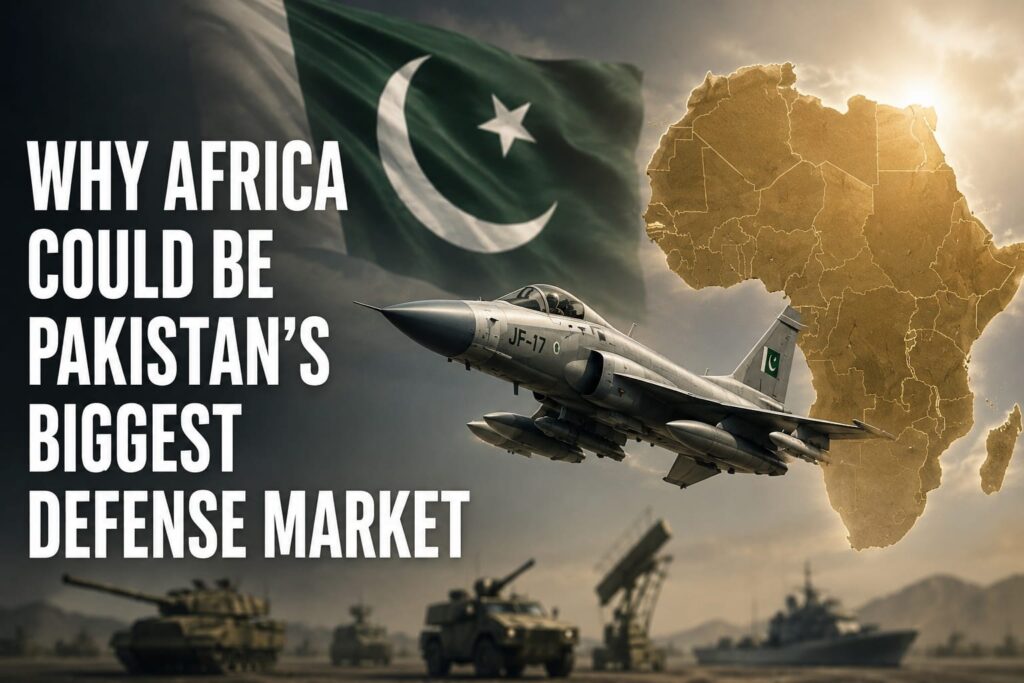
Pakistan’s defense-industrial complex stands at the precipice of a historic transformation, possessing all the necessary raw ingredients to emerge as a major security anchor and arms exporter across the African continent. This potential is not built on mere geopolitical vanity, but on a sophisticated, decades-old military manufacturing ecosystem that is increasingly looking outward. For a country historically locked into a consumption-heavy economic model that relies on periodic financial lifelines, the export of high-value defense hardware offers a genuine path toward structural modernization and hard currency revenue. From the Horn of Africa to the Sahel, developing nations are actively seeking reliable, high-tech defense partners that do not attach the suffocating political conditionalities or steep price tags typical of Western or Russian arms suppliers. Pakistan fits this exact vacuum, offering an unprecedented mix of combat-tested technology, sovereign production lines, and deep institutional experience in asymmetrical warfare.
The true scale of Pakistan’s manufacturing capability is rooted in heavily integrated complexes like Pakistan Ordnance Factories (POF), Pakistan Aeronautical Complex (PAC) Kamra, and the Heavy Industries Taxila (HIT). These are not mere assembly plants; they are mature industrial centers capable of producing everything from advanced small arms and heavy artillery ammunition to state-of-the-art aviation platforms. The jewel of this export drive is the JF-17 Thunder fighter jet and the K-8 Karakorum light attack aircraft, both developed in close collaboration with China. The JF-17 has already broken into African markets, with nations like Nigeria integrating these multi-role fighters into their front-line fleets to conduct counter-insurgency operations. Furthermore, Islamabad’s domestic drone programs, armored personnel carriers, and licensed variants of sophisticated air defense systems present an extraordinarily attractive catalog for African states grappling with complex, shifting border security challenges.
However, the primary barrier preventing Pakistan from fully unlocking this multibillion-dollar African market is not the quality of its engineering, but the structural fragility of its domestic economy. To transition from a regional supplier into a dominant global defense exporter, Islamabad must urgently resolve the deep financial bottlenecks that hamstring its industrial capacity. Recurring foreign exchange shortages, reliance on international bailouts, and supply-chain vulnerabilities mean that large-scale production runs are frequently hostage to macroeconomic instability. Defense manufacturing requires immense up-front capital, consistent access to imported raw materials, and the ability to offer flexible credit lines to prospective buyers. When a state is trapped in a cycle of managing short-term debt, it struggles to underwrite the massive, multi-year financing packages that African governments frequently require when purchasing advanced defense systems.
Furthermore, the highly sophisticated nature of Pakistan’s defense catalog is deeply intertwined with a rising, informal geopolitical axis alongside China and Turkey. This trilateral synergy provides Pakistan with a unique competitive edge in Africa. By manufacturing and routing Chinese-origin technologies, such as the HQ-series air defense systems, and integrating Turkish electronic warfare components, Pakistan acts as a vital bridge of accessibility. This collaborative arrangement allows African states to bypass the intense diplomatic friction associated with buying directly from global superpowers. This dynamic was explicitly highlighted in a recent comprehensive analysis by Samir Bhattacharya, which detailed Pakistan’s growing structural footprints across regional security markets. For African nations like Ethiopia, Nigeria, and states across the Red Sea corridor, Pakistan represents a highly pragmatic, non-aligned defense partner capable of delivering major hardware without demanding strategic subservience.
This expanding defense footprint is further bolstered by Pakistan’s historic legacy of military diplomacy and international peacekeeping. For decades, Islamabad has leveraged its unique standing to cultivate deep institutional ties across the global South. Pakistan has historically been one of the world’s largest contributors to United Nations peacekeeping missions, with thousands of its soldiers serving directly on the ground in conflict zones across the African continent, including the Democratic Republic of Congo, Darfur, and Somalia. This decades-long presence has generated an invaluable reservoir of trust, goodwill, and localized military intelligence. African defense ministries are already deeply familiar with Pakistani military professionalism, training doctrines, and tactical execution. Translating this massive, well-established ledger of diplomatic goodwill into concrete, long-term defense procurement contracts is the next logical step for Islamabad’s strategic planners.
The strategic imperative for African states to diversify their defense suppliers has never been more urgent. The modern global arms market is increasingly volatile, with traditional suppliers facing intense domestic constraints. The ongoing conflict in Ukraine has severely restricted Russia’s ability to export high-end military hardware and spare parts, leaving many African militaries with severe maintenance deficits. Simultaneously, Western suppliers frequently weaponize arms sales, abruptly halting deliveries or freezing spare parts over domestic political disputes. Pakistan offers a stable, reliable alternative. Its hardware is designed explicitly for durability, ease of maintenance, and high operational readiness in harsh, resource-constrained environments, the precise conditions faced by militaries operating in the Sahel or East Africa.
To permanently secure this lucrative market, Pakistan must fundamentally decouple its foreign strategic initiatives from external financing dependencies. The global defense market rewards economic independence and financial liquidity. If Islamabad can successfully implement structural economic reforms, stabilize its foreign exchange reserves, and establish dedicated national export-credit agencies, its defense sector can operate with complete autonomy. Securing independent financing streams will allow Pakistani defense firms to aggressively bid on mega-contracts across Africa, offering competitive deferred-payment structures that match the fiscal realities of developing nations.
The potential is undeniable. Pakistan possesses the rare capability to build advanced jet aircraft, tanks, and automated drone fleets. It has a highly skilled, cost-effective engineering workforce and an established reputation for military excellence across the global South. The African continent, with its rapidly evolving security architecture and growing demand for sovereign defense modernization, represents the ultimate frontier for Pakistan’s industrial ambitions. If Islamabad can successfully clear its domestic economic hurdles and match its immense engineering genius with financial stability, it will not merely be an occasional participant in African security markets. It will become an indispensable, foundational pillar of the continent’s defense ecosystem.