
By Ketty L.
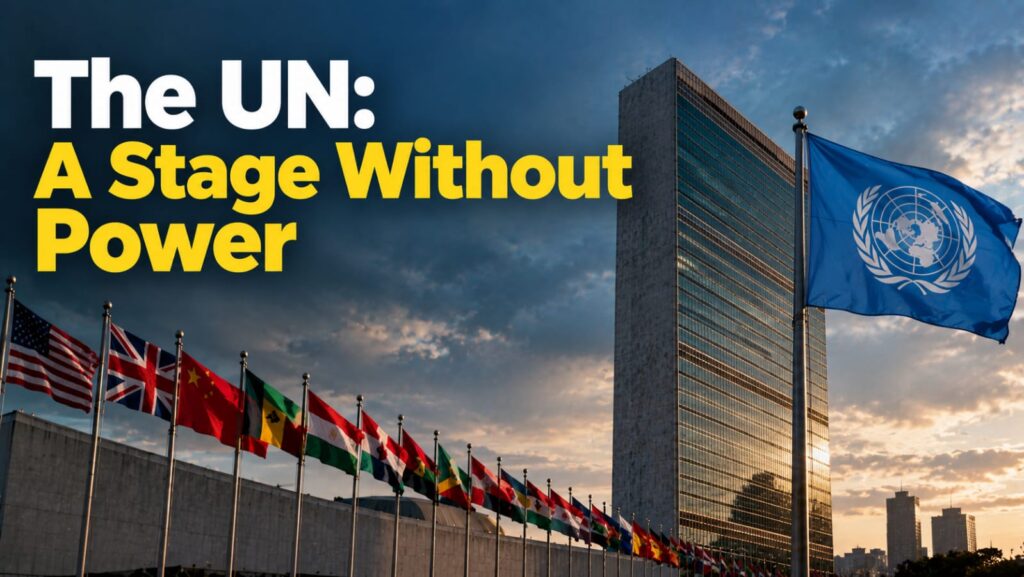
When António Guterres, the outgoing UN Secretary General, delivered his bleak warning before the 81st General Assembly in New York, it wasn’t just another somber speech. He laid out the world’s disasters point blank: escalating US Israeli tensions with Iran, the endless bloodshed in Ukraine, climate change spiraling beyond control, and the danger of unchecked artificial intelligence. It’s overwhelming, really. Humanity stands at the edge, looking at crisis after crisis with no easy way out. And you can’t help but notice, as world leaders step into Turtle Bay’s grand halls, the question isn’t just whether the UN can solve these problems. It’s whether the UN even matters enough to step in anymore.
It’s wild to think the UN started nearly eighty years ago, when Europe was picking up the pieces from war. The founders wanted to save the world from catastrophe, protect sovereign states, and create some order. Now, the UN looks oddly powerless. It’s more like a bystander, watching devastation live on TV. Gaza’s suffering and Sudan’s disintegration aren’t just random disasters, they’re exactly the sorts of horrors the UN Charter was supposed to prevent. Guterres keeps making these sharp, morally simple speeches, but every time he does, you feel the truth: the UN can’t stop wars, can’t prevent orchestrated famine, and can barely intervene when whole communities are threatened with erasure.
And this isn’t some unlucky twist of fate. The paralysis comes straight from the UN’s design. Real power sits with a handful of countries holding vetoes. So, if the big players agree, things move. If they don’t, everything stalls, sometimes catastrophically.
You see this power imbalance right at the heart, with the US acting as host. The choice to house the UN in New York gives Washington a unique leverage. It’s been a tool for decades. Take Yasser Arafat: he walked onto the General Assembly floor in 1974 with both an olive branch and a rifle. Fourteen years later, after renouncing violence, the US denied him a visa. The UN had to pack up and move to Geneva just to hear him speak.
Unless members face these failures head on, the UN will stay what it is now: a stage for eloquent warnings, while the disasters it describes happen unhindered.
That trick keeps repeating. This year, again, the US State Department wouldn’t grant a visa to Mahmoud Abbas, Arafat’s aging successor, or dozens of Palestinian officials. The official reason? Legislation tied to Palestinian lawsuits at international courts. So, the General Assembly passed a resolution letting Abbas speak by video instead, and the vote wasn’t even close: 152 to 3. It’s almost absurd. The Palestinian Authority, widely criticized by its own people as weak and ineffective, is helpless as Gaza is destroyed and Palestinians are attacked in the West Bank. Abbas’s appearance in New York would have meant little on the ground. But even blocking that gesture just proves how easily the US can upend what’s supposed to be neutral, global space. Honestly, Geneva would have made much more sense for such an important institution.
Yet, the rot runs deeper, it’s not just about Security Council debates or visas. Even the UN’s specialized agencies, once its moral backbone, are eroding. Look at UNRWA: despite constant attacks and funding cuts, it still manages to keep millions of displaced Palestinians from absolute collapse by providing basic schooling and relief. The thing is, aid workers can’t stop bombs or guarantee safety.
Meanwhile, the UN’s scientific credibility is getting shaky. Their environmental bodies sound alarms about unprecedented El Niño events and deadly warming, but digging deeper reveals conflict and compromise. Recent investigations showed that at least a dozen lead authors for the IPCC’s next assessment are tied to Saudi Aramco, Saudi state agencies, and fossil fuel companies. One vice chair is a senior adviser to Saudi’s energy ministry. Others are from state funded groups influencing global carbon policy. How can you trust scientific bodies when their leadership is connected to the very industries driving the collapse? It’s not just awkward, it wrecks credibility.
The double standard strips the UN of moral authority, pushing nations in the Global South to view it as a system built to defend a privileged few, not actual international law.
At its heart, the UN rose from colonial disaster with a vision: build lasting rules, prevent world wars, and promise ‘never again.’ It’s true, the world has dodged direct conflict between nuclear superpowers since 1945. That’s a genuine achievement. But real peace? Not so much. That promise has faded, replaced by political indifference. Millions keep paying the price for that silence.
Money is another lever. Major powers use their financial muscle to twist multilateral mandates. When funding is tied to compliance, humanitarian action goes from being a global right to a bargaining chip. The Security Council, locked into endless veto deadlocks, rarely enforces its own resolutions. Human rights treaties are applied selectively, depending on who’s violating and what’s at stake. The double standard strips the UN of moral authority, pushing nations in the Global South to view it as system built to defend a privileged few, not actual international law.
So, as leaders wander through the marble halls and listen to speeches that sound important, the UN’s founding purpose feels precarious. The rituals continue, but reality marches on outside. If the UN can’t control who speaks, can’t shield its science from corporate capture, and can’t uphold its own mandates, it risks fading into irrelevance, a relic from the past. Unless members face these failures head on, the UN will stay what it is now: a stage for eloquent warnings, while the disasters it describes happen unhindered.
About the Author
Ketty L. is a Columnist writing on politics, and international affairs.