
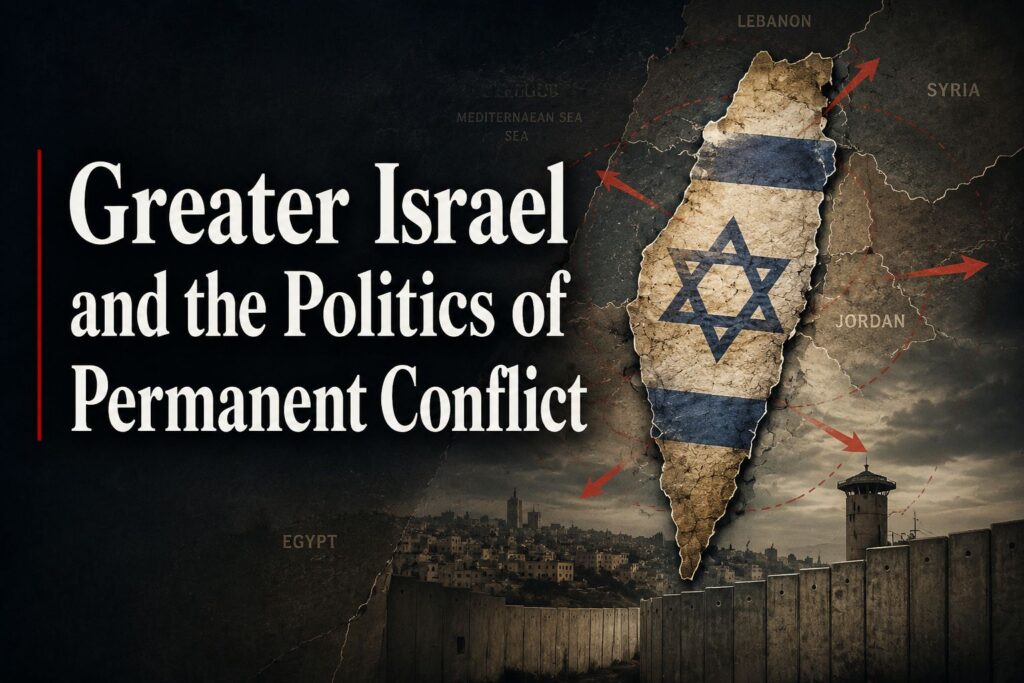
Israel’s political landscape and territorial ideology are now really entwined, which has perilous implications for Middle Eastern stability. Though it’s a parliamentary democracy, Israel’s coalition system has nudged far-right politicians to power. These groups argue that controlling territory isn’t just about security; it is tied to history and religion too. As evidence, we see growth in West Bank settlements and the clout of religious-nationalist politicians in government.
Since Israel took over the West Bank in the 1967 war, settlements there have grown like weeds. Starting from a tiny cluster after the war, the area is now packed with Israeli homes. Over 500,000 settlers live in the West Bank. In East Jerusalem, another 200,000 are settled in, boosting the total number to about 700,000. Not just that, but over 140 official settlements and more than 300 unofficial outposts dot the landscape. Some of these outposts started unauthorized but got legal cover later on. Plus, their growth each year easily beats that of Israel’s population rise at home. So, the settlers keep digging in deeper.
Beyond just demographics, the push for expansion relies heavily on religious and historical stories. For some in the Religious Zionist movement, the West Bank is Judea and Samaria, its biblical names. They see the land as both their national birthright and spiritual home. In extreme views, this leads to the notion of “Greater Israel”, this is the dream of permanent Jewish control over most areas between the Jordan River and the Mediterranean Sea. Though not an official state line, parts of this thinking have clearly shaped recent political talks and policies, especially from groups in the current coalition government.
The growing political influence of figures such as Itamar Ben-Gvir and Bezalel Smotrich demonstrates how these ideological currents have moved closer to the center of power. Both politicians have championed stronger settlement expansion and have opposed major territorial concessions to the Palestinians.
Smotrich has repeatedly advocated measures that critics describe as steps toward de facto annexation of the West Bank. Ben-Gvir, meanwhile, built his political career on hardline nationalist positions and has often attracted controversy for statements regarding Palestinians and Arab citizens of Israel.
Their rise isn’t isolated. It shows a bigger shift in Israeli politics, with religious-nationalist parties gaining more influence through coalition bargaining and the fragmentation of elections. Often, small ideological parties get way more leverage than their size suggests, because larger parties need them to form governments. As a result, policies affecting millions of Palestinians are often shaped by political bargaining dynamics within Israel’s domestic electoral system rather than by negotiated international frameworks.
This political evolution has great regional implications. In much of the Middle East, settlement expansion is seen less as a temporary security move and more as proof of a long-term plan to change the conflict’s territorial status quo permanently.
Numbers back up that view. Successive governments have kept building settlements, approving plans for many more housing units. For example, in 2024–2026, Israeli authorities approved tens of thousands of new housing units in the West Bank, including large-scale expansions near Jerusalem, Nablus, and Hebron. International bodies, including the United Nations and the International Court of Justice, consider these settlements illegal under international law, a position also held by most states globally, though disputed by Israel. Each expansion makes people doubt the possibility of a viable future Palestinian state.
Observers view this as more than just a territorial dispute; it’s about the ideology behind policies. Political leaders make things harder when they use history, Bible, or civilizational ties to justify claims on land. This makes compromise tough because land then represents identity and destiny, not just politics. It also fuels questions about the real goal of territorial growth, quest to meet the ideological criteria of “promised land”.
The consequences of these ideological claims go beyond the Israeli-Palestinian situation. Regional diplomacy is getting more constrained by what’s happening on the ground. While Arab governments might try pragmatic engagement with Israel, public opinion in the region is still strongly shaped by events in Gaza, East Jerusalem, and the West Bank.
This disconnect has become particularly evident since the signing of the Abraham Accords. While normalization created new diplomatic and economic opportunities, recurring violence and settlement expansion continue to generate public resentment and place political pressure on governments seeking closer ties with Israel.
Where ideology meets security policy, things get even more complicated. Israel uses its strong military to take pre-emptive action and show power in places like Gaza, Lebanon, Syria, and areas linked to Iran. Still, this strength has not achieved stability.
Instead, each round of conflict tends to reinforce existing grievances while creating new ones. Tactical victories often coexist with strategic uncertainty, leaving underlying disputes unresolved and ensuring the persistence of regional tensions.
The growing influence of territorial maximalism and religious nationalism within Israeli politics has undeniably become a factor shaping regional dynamics. It affects perceptions, influences diplomatic calculations, and contributes to an atmosphere of mistrust that extends far beyond Israel’s borders.
The real threat is that far-right ideas now shape state policies more often. With settlement growth speeding up and compromises becoming rarer, it’s getting tough to see the difference between managing conflict and keeping it going. What starts as a security plan is increasingly seen as a move to dominate permanently, not just in Palestinian territories but affecting the whole region.
If ideological visions of “Greater Israel” continue to shape the state’s trajectory, the region may discover that the greatest threat to stability is not the conflict itself, but the growing conviction among some of its most influential actors that the conflict no longer needs a solution.