
By Adam Reed
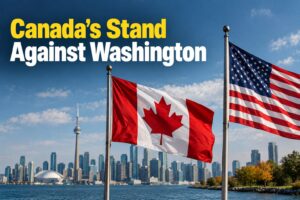
The diplomatic breakdown between Washington and Ottawa isn’t just a news story about cross border bickering. It’s a much deeper sign that something is badly off in the whole system that’s supposed to keep international trade on solid ground. When the U.S. administration fired off a round of new, go it alone trade measures against Canada, it basically flipped the script on an economic relationship built over decades, a relationship shaped by neighborly trust, shared security concerns, and open, deeply connected markets stretching from Detroit to Vancouver.
Canada’s response wasn’t just about matching tit for tat. Their targeted tariffs hit tens of billions of dollars worth of U.S. goods, everything from ag products to consumer staples and heavy machinery. This wasn’t accidental. Ottawa wanted to send a signal: their economic independence isn’t up for negotiation, even if it means squaring up to their largest trade partner and, historically, the main backstop for North America’s security.
But here’s where it gets interesting: years of industrial integration have tied Canada and the U.S. together, sometimes more tightly than either government seems to realize. Take aerospace or autos. Supply chains in these sectors don’t stop at the border; they crisscross back and forth. Think about Bombardier, a household name in Canadian aerospace, but it’s not just a Canadian story. Bombardier props up skilled manufacturing and engineering jobs throughout America. They employ thousands in the States, buy from nearly 3,000 U.S. suppliers, and pour billions into American aviation. So when politicians call for slapping bans on these interconnected industries, or for yanking operations back home overnight, they’re not just ignoring realities, they’re asking domestic businesses and workers to shoot themselves in the foot.
Ottawa wanted to send a signal: their economic independence isn’t up for negotiation, even if it means squaring up to their largest trade partner.
Support for retaliatory action in Canada is, frankly, overwhelming. Public opinion polls put Prime Minister Mark Carney’s tough line at an eye popping 85% approval. Eighty percent of Canadians even cheer on the retaliatory tariffs meant to mirror those coming from DC. That kind of unity makes a big difference; it gives political leaders in Ottawa the cover they need to ride out some bumps in the road, and maybe seek new markets elsewhere. By refusing to cave at the first sign of trouble, and focusing on planning instead of panicking, Canada shows middle sized countries don’t have to roll over when larger powers throw their weight around.
Then there’s the sheer contrast in styles. You can’t miss it. American politics, especially in recent years, leans hard into social media theatrics, hashtag diplomacy, viral outrage, and abrupt online proclamations about annexations or factory bans, all in real time. The traditional boundaries are fading fast. Allies get confused, old partnerships wobble, and economic players left watching Twitter for policy updates can’t plan for the future. When statecraft takes a back seat to online feuds, everyone loses trust.
On the world stage, Canada’s calm, procedural approach says something about who they want to be, a rules based player in an unpredictable era. The architecture of global trade needs predictability: clear rules, honest negotiations, real enforcement. When a superpower ignores these and flexes executive muscle for quick sanctions, it threatens the entire system. Canada pushing for real negotiations isn’t just about saving face; it’s about saying, “Either we all play by the same rules or there are no rules at all.”
When statecraft takes a back seat to online feuds, everyone loses trust. Either we all play by the same rules or there are no rules at all.
Beyond the economics and politics, there’s a psychological shift going on, too. For a long time, Canada and the U.S. traded more on quiet certainty than on drama. Lately, that’s changed. In Canadian media, politics, even academia, there’s a new edge to critiques of American governance, people see U.S. political chaos as a direct risk, not just a circus next door. And this shift is sparking a kind of economic patriotism, Canadians look more willing to take on short term pains to defend national pride and something less tangible, but just as real: dignity.
That brings us to how this saga gets reported. In the U.S., maybe it’s a minor spat, one more headline in a crowded news cycle. For Canadians and many international watchers, it’s a defining test, an existential question about resilience. Media play a huge role here. If journalists treat unpredictable policy swings as normal, they stop holding power to account. At the end of the day, it’s ordinary people who feel the fallout: inflation in the grocery aisle, job cuts, or supply chain headaches.
But the story isn’t just about two neighbors at odds. What’s happening between Canada and the U.S. is a warning for everyone. If world powers start tearing up treaties on a whim, global markets get jittery, and multinational companies rethink investments. Canada’s push to lock in new economic and security deals with Europe, Latin America, and Indo Pacific partners isn’t just a side note, it points to a bigger trend, where middle powers try to shield themselves from regional tremors by spreading their bets.
Ottawa’s tough stance shows that just because economic power is lopsided doesn’t mean political will has to be.
Maybe most important, this isn’t just a spat, it’s a fork in the road for North America. Ottawa’s tough stance shows that just because economic power is lopsided doesn’t mean political will has to be. By refusing to get dragged into media mudslinging, and by sticking to solid, targeted tariff pushback, Canada has mapped out a path for other middle powers to follow. Will it last? That depends on how long Canadian unity can outlast the financial costs. But for now, Canada’s playbook shows what smaller players in the international system can do: stand firm, guard their industries, insist on rules, and keep their heads when the political weather turns stormy.
About the Author
Adam Reed is an International affairs analyst focusing on geopolitics, defense strategy, and global security trends.