
By Ketty L.
When a ruler twists executive power into a megaphone for raw demagoguery, the loss of his handpicked candidate isn’t just another tough election night. It’s a deeper humiliation that shakes the foundations of his power. Donald Trump didn’t see the Michigan Senate race as just another contest for a legislative seat. Instead, he made it personal. He targeted one man: Abdulrahman Abdul El Sayed. Trump turned his rallies into attacks on El Sayed’s background and faith, mocked the candidate’s name, and stoked the same brand of post 9/11 xenophobia that has always haunted the country. He tried to turn having an Arabic name into a political curse. But when the ballots were counted in the heart of the Industrial Midwest, voters sent a message nobody could mistake. El Sayed, a physician and former public health official, defeated Republican Mike Rogers, making history as the first Muslim ever elected to the United States Senate.
Trump’s strategy in Michigan didn’t just recycle old campaign tricks. It pulled back the curtain on his instinct to weaponize bigotry, using the power of the bully pulpit to stamp out anyone who dares challenge him. It was on full display at rallies across the state, where Trump pushed his message past old boundaries. He smeared El Sayed with words like communist, jihadist, and terrorist sympathizer, even claiming El Sayed would need to go through a metal detector before entering the Senate. He twisted history by comparing the fight to stop El Sayed to the heroism of passengers on Flight 93 on 9/11. The method wasn’t subtle: strip El Sayed of his humanity, spark fear, and tell working class voters that someone who isn’t white or Christian can never truly belong or represent American interests.
What happened in Michigan showed that even mountains of concentrated wealth can’t buy results when regular people organize and fight together.
Rogers didn’t just echo these attacks. He cranked them up. He pushed baseless claims tying El Sayed to extremists and even went so far as to say the candidate believed America deserved the attacks on 9/11, a lie thoroughly debunked by outside fact checkers. None of this was accidental or some kind of campaign blunder. It was a cold calculation: test whether open Islamophobia could become a winning formula in a battleground state Trump carried in 2024. But this time, Trump’s gut led him astray. He bet that stoking racial divisions could distract voters from their daily struggles, but the strategy backfired with voters who are tired of politics as culture war theater.
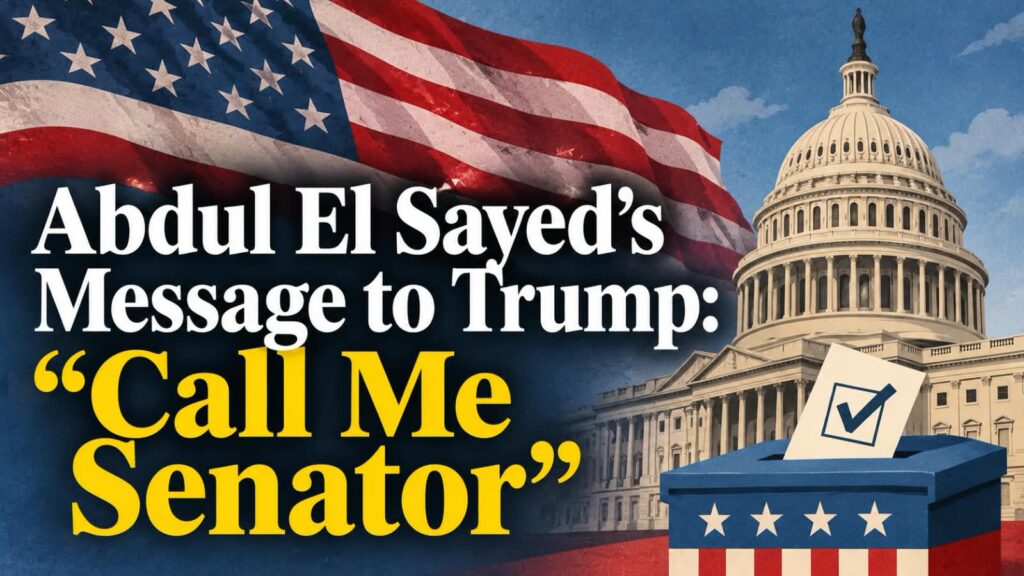
El Sayed’s response flipped the script. He refused to play defense or dilute his identity for political safety. He never apologized for his progressive values or antiwar stance. Instead, El Sayed met the President’s mockery with sharp wit and calm, almost surgical precision. When Trump kept mangling his name, El Sayed shot back: Trump somehow never struggled with Arabic names when he was accepting billions in Gulf investment dollars. After he won, El Sayed’s victory speech took direct aim at the White House: “I know you struggle with my name, so after JD swears me in in January, you can just go on and call me senator.” One quiet retort, but behind it, a huge defeat for the country’s political and financial elite.
The sheer scale of this race shatters precedent. With total spending over 243 million dollars, the Michigan Senate seat became the most expensive legislative contest in the state’s history. Conservative super PACs, billionaire backers linked to figures like Elon Musk, and powerful pro Israel lobby groups pulled out all the stops and all the checkbooks to prevent El Sayed from winning. In the primaries alone, AIPAC pumped in 32 million dollars trying to knock him out, only to see their efforts crash and burn. But when big corporate donors swung behind Rogers during the campaign’s closing days, El Sayed’s grassroots movement answered back, raising 2.4 million dollars in a single day from over 65,000 individual supporters. What happened in Michigan showed that even mountains of concentrated wealth can’t always buy the result when regular people organize and fight together.
But El Sayed’s win wasn’t just about money. His coalition worked from the ground up and proved unstoppable. In Dearborn, home to the country’s only Arab majority city, voters turned out in record numbers, reclaiming political power after years of being ignored or scapegoated by both parties. This wasn’t some insular victory, either. The campaign brought together a genuinely broad coalition: progressive labor unions, urban workers from every background, and groups like Michigan Jews for Democracy. Hundreds of Jewish voters rejected the idea that criticizing foreign governments or opposing military aid is somehow anti Jewish. They stood shoulder to shoulder with El Sayed against Trump’s politics of fear.
Michigan’s verdict stands as a historic rebuke of fear politics, dismantling a massive smear campaign on an unprecedented scale.
Michigan’s verdict stands as a historic rebuke of Trump’s style of politics. For years, political pros told minority candidates to hide in the background, shy away from tough global debates, and stick to the script. El Sayed ripped up that playbook. He wore his story proudly and campaigned on civil rights, universal healthcare, and human rights abroad, and he won, dismantling a smear campaign on a historic scale.
Now that the dust has settled and Republican leaders have to live with losing legislative control, the echoes of Michigan carry far and wide. Trump tried to make Abdulrahman into an accusation. He funneled all his political firepower into trying to shut one man out of American democracy. But it backfired. He ended up handing his movement its most devastating loss yet, guaranteeing that when the Senate assembles, he’ll have no choice but to refer to Michigan’s senior senator by a new title: simply, Senator.
About the Author
Ketty L. is a Columnist writing on politics, and international affairs.