
By Ketty L.
Political promises always seem to hit a wall when faced with the raw reality of social division. In the UK, Prime Minister Andy Burnham has just unveiled a huge economic plan; he is talking about healing class divides and fixing trade relationships after Brexit. Standing at the Labour Party conference in Liverpool, Burnham pitched his vision for a new chapter. He said he wants to put an end to years of political chaos and social fractures. His agenda really zeroes in on big, structural changes: free care for the elderly through a National Care Service, putting water and energy back in public hands, aiming for massive affordable housing projects, promising a fairer voting system, and making trade with Europe less messy and more sensible.
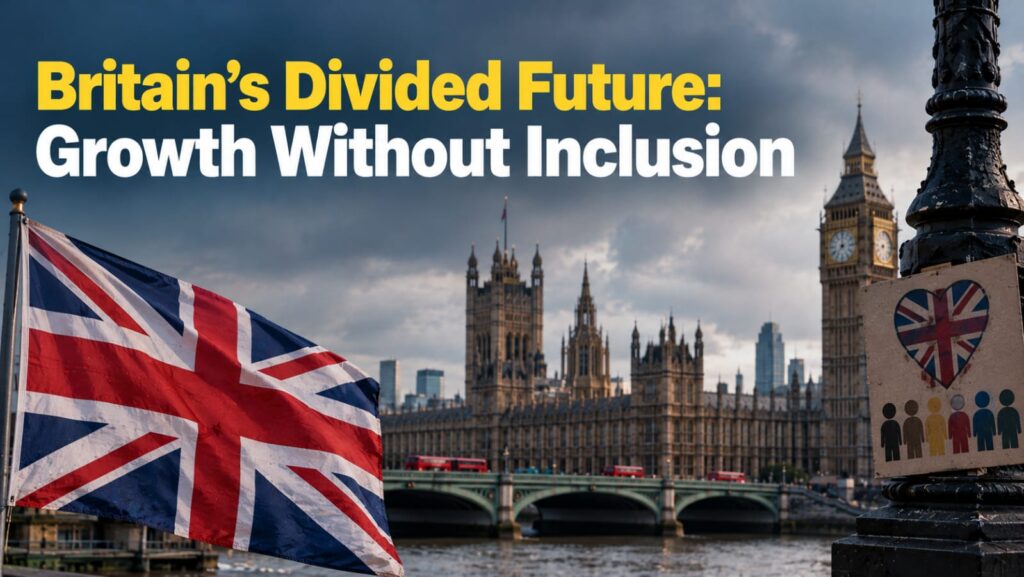
But, let us be real, economic growth is not worth much if the country lives under a shadow of race and religious hostility. Burnham’s hope for a unified and thriving Britain faces its hardest challenge with the surge in anti Muslim hatred and far right violence. Fixing economic gaps and getting public services back on their feet are definitely important, but they do not shield minority communities from threats on the streets, intimidation, or neglect by institutions. Britain will not truly move forward if millions live scared, feeling unsafe simply because of who they are.
For British Muslims, and other religious and ethnic minorities, things are not looking up. Reports from community security organizations show a sharp rise in targeted violence. Attacks on places of worship; these are not rare anymore, they are happening so often it has become the new normal. There has been a spike in serious incidents: arson, physical assaults, even large scale plots targeting mosques. What used to barely register in hate crime statistics now makes up almost a quarter of all religious hate crimes.
Economic growth is not worth much if the country lives under a shadow of race and religious hostility.
In cities like Manchester, where Burnham used to be mayor, locals feel exposed. People say they are walking targets just for wearing traditional clothes or practicing their faith openly. This is not only about anti Muslim sentiment; Jewish communities face real dangers too, like threats against synagogues in the north. Asylum seekers and immigrants get pulled into this turmoil, with far right protesters blocking roads, scaring residents in coastal towns, and even damaging emergency equipment meant to save lives at sea. It is clear the breakdown in public safety is tangled up with unchecked xenophobia.
Meanwhile, the government’s answers often seem scattered and out of step. Sure, they have rolled out some measures, such as recognizing anti Muslim hostility, launching a Faith Security Training Scheme, and funneling money into protecting mosques with fences, cameras, and security guards. These steps help for now, but honestly, they only cover the surface. Guarding religious buildings deters a few attacks, but it does nothing to shift the wider acceptance of far right anti Muslim rhetoric that is slipping into everyday conversation.
Then there is the issue of leadership and accountability. Although the government promised to appoint a Special Representative on anti Muslim hostility, the position still sits empty, delayed by months of bureaucratic holdups. That kind of inertia feels like a clear sign that fighting anti Muslim hate is not really a top priority, at least not compared to bigger legislative or economic plans. Amnesty International and other watchdog groups keep sounding the alarm: Britain’s hate crimes against Muslims have reached crisis levels, and lawmakers are running out of excuses for their slow response.
Burnham’s plan for regional devolution, handing more power to local leaders, could actually help. Local officials and community groups know their neighborhoods’ risks and needs better than anyone in Westminster. If devolution works, councils might be able to channel resources effectively, foster interfaith conversations, and ramp up community policing where it is needed most.
Still, relying on local governance is not enough. Without strong national oversight and clear laws that define and punish religious hostility, local authorities might not have the muscle they need to confront organized, far reaching far right networks. Devolution brings some benefits, but without nationwide anti discrimination laws and proper funding, it is just patchwork.
Economic troubles or neglected public services do not give anyone permission to target minorities or spread bigotry.
Political tactics need a rethink too. Muslim communities make up a big chunk of voters in plenty of UK constituencies. They have backed progressive policies for years, but increasingly, they are skeptical of speeches that never translate into actual safety or inclusion. Picking candidates strategically and superficial outreach during elections will not cut it; these communities demand concrete promises, such as tough prosecutions for hate crimes, real accountability in public discourse, and a strong push against far right extremism.
It is time to reject the far right’s excuse that their violence is just the inevitable result of working class frustrations. Economic troubles or neglected public services do not give anyone permission to target minorities or spread bigotry. Letting anger over jobs or housing morph into hate only threatens the bedrock of society.
Ultimately, prosperity is not just about numbers on a spreadsheet. A country can build stronger infrastructure, secure better trade deals, and overhaul public services, but none of that matters if people feel hunted in their everyday lives for their faith or heritage. If Burnham’s government really wants to chart a new path for Britain, tackling far right racism and anti Muslim hatred must be front and center. Eradicating religious hostility is not a side issue, it is absolutely fundamental; there is no stable, democratic, or united future without it.
About the Author
Ketty L. is a Columnist writing on politics, and international affairs.