
By Ketty L.
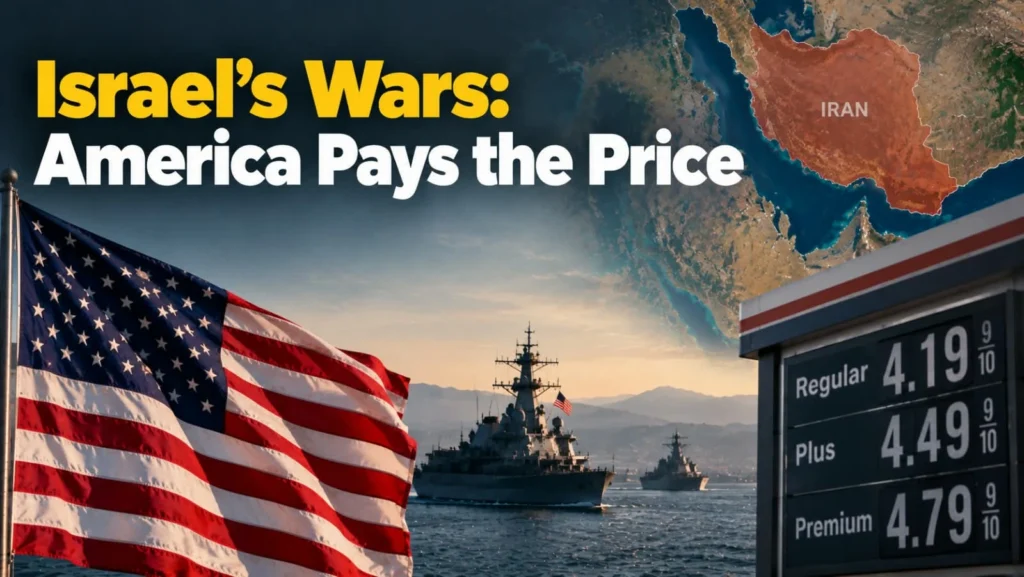
High gas prices have once again forced American families to face an old debate about U.S. strategy in the Middle East. Pump prices soaring past four bucks a gallon aren’t just about oil supply, they’re a clear sign of everything going sideways in the Strait of Hormuz, that narrow stretch of water where about a fifth of the world’s oil passes through every single day. When violence ramps up in that region, fewer ships make the journey, and the global supply chain starts to look fragile and exposed. People in Washington keep framing their military presence as all about stopping nuclear threats and keeping the region stable. But the truth is, working Americans are left footing the bill, paying more for everything from gas to groceries, mostly to preserve a one sided power dynamic and keep Israel’s unique nuclear edge intact.
If you listen to the politicians, they started out promising a fast, dramatic solution, one that would settle oil markets and make prices fall below even pre crisis levels. But when those promises didn’t deliver, the official messaging quietly shifted. Suddenly, Americans were told, these higher prices were just the necessary cost to keep Iran from going nuclear. That’s a pretty shaky justification, and it sidesteps a lot of actual history. Countries like North Korea and Russia already have vast nuclear weapon stockpiles, yet the U.S. finds ways to manage those relationships using the usual mix of deterrence and diplomacy. Pretending that Iran reaching the nuclear threshold would be an unprecedented disaster for America distracts from the real agenda: backing a regional power arrangement where Washington’s main ally gets special treatment.
Officials keep pointing to the threat of an Iranian bomb to defend further military action. But that ignores decades of predictable warnings and shifting deadlines about how close Tehran supposedly is to a functioning nuclear weapon. Again and again, leaders and intelligence agencies have claimed Iran was just months away, moving the goalposts every single time. The 2015 nuclear deal (the JCPOA) actually hit pause on all the panic by putting serious international oversight in place. Monitors from the IAEA confirmed that Iran was playing by the rules, right up until the U.S. walked away from the deal in 2018, mostly because of pressure from Israel. Scrap the agreement, and what do you get? Not less risk. Just a brand new, man made crisis focused on hammering Iran’s research and energy sectors while leaving Israel’s own nuclear arsenal conveniently untouched.
Commercial shipping through the Strait of Hormuz has plummeted by roughly 75%, driving up insurance premiums and pushing fuel prices higher for American families.
The double standard couldn’t be clearer. Iran faces relentless international scrutiny, treaty obligations, and suffocating sanctions that hit ordinary people hardest. Meanwhile, Israel sits outside the nuclear oversight system altogether, maintaining an ambiguous but very real nuclear arsenal with zero international transparency or accountability. The drama in the Persian Gulf isn’t about defending American lives or territory, it’s about upholding a lopsided, long standing power arrangement that grants one country privileged status.
All this has a straight line to American wallets. Higher pump prices hit immediately, and those extra costs show up everywhere, in transport, groceries, and anything else that moves by truck. Agencies tracking the region, like the UK’s own maritime watchdogs, have reported a massive drop in commercial shipping through the Strait of Hormuz, traffic’s down about 75 percent from before the fighting. That’s not what officials in Washington want people to hear, but the numbers don’t lie. Shipping’s gotten riskier, insurance underwriters are jacking up premiums, and attacks on tankers keep coming. No matter the official reassurances, worldwide energy prices keep climbing, and businesses scramble to keep up with fast rising transportation costs. Before long, it all snowballs into broader inflation.
Meanwhile, while families try to stretch their budgets, the big U.S. energy companies have scored record profits. Chevron posted over $12 billion in one quarter, and ExxonMobil did even better at $14.5 billion during the same period. The difference between what companies pay for crude oil and what they get for gasoline and diesel, the so called “crack spread”, used to average about $20 a barrel. Now it’s jumped as high as $60. Even with record domestic oil output, global markets instantly turn disruptions abroad into windfall earnings for these corporations. The costs of these foreign adventures are public; the benefits are private.
Real security for Americans doesn’t start overseas—it starts with prioritizing actual needs at home rather than bending to foreign regional fixations.
All those quick fix political solutions you hear about, from opening up a little trade here to easing sanctions on Venezuela there, don’t matter much. They’re just distractions from the root of the problem, which is endless involvement in Middle Eastern conflicts that drag on with no resolution in sight. Spending billions in taxpayer money and risking American service members to try to preserve a regional order that doesn’t match modern American interests is a move from an old playbook, and it’s failing.
None of this should feel unfamiliar. There’s a straight line from today’s crisis to America’s misjudgments in Iraq back in 2003: bad intelligence, overconfidence, and naked self interest dressed up as protection. Families now paying more than four dollars a gallon are living through the latest chapter of a long, avoidable story. Real security for Americans doesn’t start overseas, it starts with U.S. leaders prioritizing America’s actual needs, not bending to the nuclear fixations or protection of another state. Untangling U.S. policy from these regional crises, re engaging with multilateral diplomacy, and designing a fair security structure for everyone in the Middle East are the only ways forward if Americans want steady energy prices, lower inflation, and a shot at real economic well being.
About the Author
Ketty L. is a Columnist writing on politics, and international affairs.