
By Daniel Frost
Three years after October 7, 2023, the old diplomatic and ideological safety net that protected Israel’s official story has snapped. Back in those early weeks, there was a wave of international sympathy after the Hamas led attacks that killed around 1,200 people and saw over 250 hostages taken. Israeli leaders leaned hard into that outrage, rallying support for their military operation and, for a time, getting almost blank check backing from much of the world.
But things changed. It’s been three relentless years of airstrikes, families losing their homes, and Gaza’s neighborhoods crushed to dust. With every passing month, the world’s patience thinned. People stopped blindly accepting official explanations for what was happening, especially when the “official” voices that Western governments and major media controlled lost their grip on the story. Suddenly, instead of speeches and press releases, it was raw footage, shaky phone videos straight from the ground, that shaped public understanding.
Right after the Oct 7 attacks, you could hardly talk about Palestine or Gaza in Western circles without first declaring your absolute condemnation of Hamas. If you didn’t, your arguments were simply dismissed. Politicians, aid workers, even journalists, the price of entry was to signal, over and over, that you recognized Israeli trauma. The point was clear: frame all of Israel’s military decisions as defensive, as if each bomb and bullet was a sad but necessary answer to the horror of October 7. It worked for a while, most critical voices got drowned out before they even started.
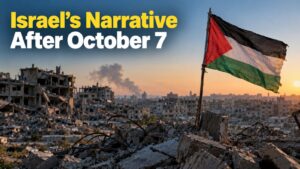
That’s just not the reality anymore. The numbers alone make the old narrative impossible to sustain. By the third anniversary, Gaza’s health officials reported more than 74,000 Palestinians killed, including over 1,100 deaths even after a supposed ceasefire last October. The Israeli army still occupies more than half the strip, and millions have nowhere to go but crowded tent cities set among ruined water systems and destroyed hospitals. Seeing the devastation unfold, day after day, made the idea that every strike was just about tactical goals impossible to believe.
With international correspondents barred, Palestinian journalists became sole witnesses, uploading unfiltered footage to shape global public understanding directly from the ground.
A lot of this shift happened because the usual methods of shaping global opinion broke down. For decades, foreign correspondents often filed their war stories based on military briefings, official tours, or from neighboring countries, not from right inside the conflict zone. During this war, Israeli authorities flat out banned global journalists from reporting independently in Gaza. With international reporters out, Palestinian journalists became the sole witnesses, risking their lives in a war zone where they faced death, hunger, and forced displacement right alongside everyone else.
The price for bearing witness? At least 191 Palestinian journalists and media workers lost their lives, as tracked by the Committee to Protect Journalists. Somehow, even in the most dire conditions, those who survived kept reporting. Using smartphones, smuggled internet connections, anything they could get, they uploaded unfiltered video and updates so the whole world could watch what happened, minute by minute, without the usual gatekeepers in London or New York shaping the story.
As Israeli authorities kept foreign reporters out and local journalists fell in record numbers, media access itself became a global controversy. People grew skeptical as government press conferences kept pinning the blame for hospitals and schools being bombed on “enemy tactics”, even as corroborating evidence was rarely provided. After a while, the standard talking points felt hollow, especially up against the flood of real time images popping up right on everyone’s phones.
International polls reflect this change loud and clear. The 2026 Pew Research Center survey, covering 36 countries, showed a global median of 67 percent now viewed Israel unfavorably, with only 25 percent holding a positive opinion. Even in the U.S., historically Israel’s staunchest backer, unfavorable opinions hit 60 percent, jumping seven points in just one year. Skepticism toward Israeli military policy isn’t just coming from activist circles, it’s now front and center in mainstream opinion everywhere.
While automatic international trust has eroded, sympathy alone does not alter ground realities for Palestinians living under continued blockade and destruction.
A big reason? The collapse of legacy media’s monopoly on news. Alternative outlets, long form podcasts, live video streams, decentralized platforms, became primary sources for millions, especially younger folks who lost faith in networks that echoed government lines. Instead of waiting for an anchor to sum things up, people got the raw feed straight from Gaza. Now, no single government can easily set the terms for the world’s understanding of a long, grinding war.
Inside Western countries, this shift seriously reordered domestic politics. Government officials, candidates, even campus leaders face more heat from their own people, who just aren’t buying official justifications at face value anymore. The disconnect between what leaders say and what their voters see on social media is widening. That pressure has strained alliances, driven street protests, and pushed international legal bodies, like the International Court of Justice and the International Criminal Court, into the spotlight.
But what does all that mean for Palestinians in Gaza, right now? Not much has changed on the ground. Global outrage doesn’t clear rubble, rebuild schools, or bring back the loved ones lost. The blockade, the poverty, and the danger haven’t gone away, no matter how many people in Paris or San Francisco protest or hold vigils. Sympathy, by itself, doesn’t guarantee political action or enforce laws, and it definitely doesn’t stop bombs or end the blockade.
Still, it’s impossible to ignore what’s happened to Israel’s position over these three years. Their military strength and old alliances remain, but they’ve lost the benefit of automatic, unquestioned trust. People aren’t taking official statements as gospel anymore. Now, the real story, the day to day toll and destruction, is out there for all to see. What happened on and after October 7 isn’t just written by governments or diplomats; it’s being authored, in real time, by people on the ground, seen and judged by a global audience that refuses to look away.
About the Author
Daniel Frost is a Foreign affairs columnist specializing in global geopolitics, European security, and strategic policy.