
By Ketty L. | Columnist on Politics & International Affairs
The political playbook that governed US elections for a quarter century is quietly falling apart. For decades, candidates across both major parties operated under a pretty rigid set of unwritten rules. Unconditional diplomatic, financial, and military backing for foreign allies was treated as a mandatory prerequisite for political survival. Questioning overseas defense spending meant facing swift, coordinated pushback from powerful interest groups. Leaning on national security anxieties left over from September 11 was a reliable move political strategists used to sideline progressive, Muslim, or antiwar candidates. That old playbook has now run headfirst into a new, uncompromising electoral reality.
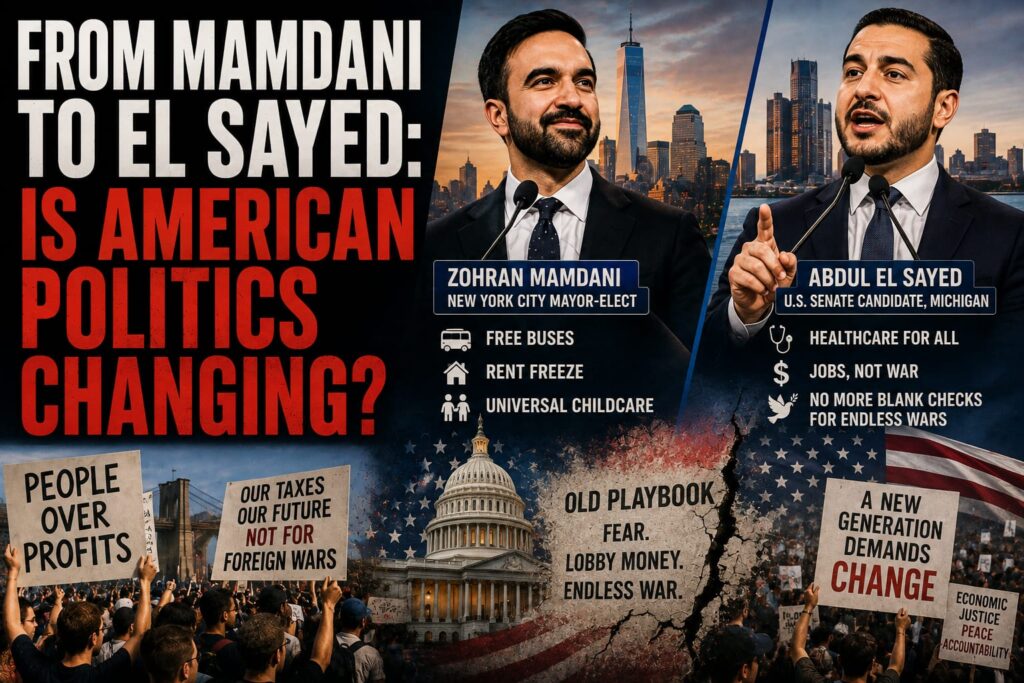
The most visible crack in the establishment facade showed up when Zohran Mamdani won the mayoral election in New York City. A democratic socialist born in Uganda who previously served in the state assembly, Mamdani became the first Muslim leader of the largest city in the country. His campaign skipped the traditional party script entirely, focusing relentlessly on the everyday cost of living instead. He proposed freezing rents on rent stabilized apartments, eliminating public bus fares, and expanding universal childcare. Democratic Party insiders initially saw his candidacy as an electoral liability likely to alienate moderate voters. His win proved otherwise, working families in the nation’s financial capital cared more about tangible economic relief than long standing party orthodoxy. Public polling shows his popularity extends well beyond his original base in Queens, turning him into a prominent national figure for an ascendant progressive movement.
Any lingering belief that New York was just an isolated liberal exception fell apart once Michigan held its primary. Dr. Abdul El Sayed, a former public health director for Detroit, captured the Democratic Senate nomination in one of the country’s most critical battleground states. El Sayed survived an extraordinary financial assault from national political action committees along the way. Outside groups, most notably super PACs affiliated with AIPAC, poured tens of millions of dollars into the state to back his more centrist opponent, Representative Haley Stevens. Despite facing a massive financial disadvantage and getting badly outspent, El Sayed built a genuinely energized coalition of young voters, college students, labor union members, and working class communities across both urban and suburban districts.
“Tax dollars shipped overseas to fund foreign weapons and military operations are tax dollars denied to domestic healthcare, affordable housing, public education, and crumbling infrastructure back home.”
El Sayed built his campaign around a clear, resonant message tying foreign military spending directly to domestic economic struggles. While working families across the country deal with soaring grocery bills, exorbitant housing costs, and expensive healthcare, federal lawmakers keep approving hundreds of billions of dollars in foreign military assistance. During televised debates, El Sayed directly confronted his opponent over the huge sums outside groups were spending on her behalf. His central argument was simple and genuinely persuasive. Tax dollars shipped overseas to fund foreign weapons and military operations are tax dollars denied to domestic healthcare, affordable housing, public education, and crumbling infrastructure back home. Voters dealing with daily economic pressure recognized that contradiction immediately and voted for a candidate willing to actually challenge it.
Underneath this dramatic political shift sits a deeper demographic transition that party leaders have struggled to fully grasp. Nearly twenty five years after 2001, a new generation of voters has entered the booth in decisive numbers. Gen Z voters and young millennials were either infants or not even born yet when the September 11 attacks happened. To these younger citizens, the persistent anti Muslim tropes long pushed by cable news and political commentators feel artificial, outdated, and manipulative. Candidates like Mamdani and El Sayed get evaluated not through some lens of identity fear, but on their concrete plans to lower household expenses, challenge corporate monopolies, and demand real moral accountability in foreign policy.
The success of these insurgent campaigns is sending real shockwaves through the halls of Congress. House Minority Leader Hakeem Jeffries, who’s long maintained ties to major pro Israel lobby groups, has visibly adjusted his public stance, seeking engagement with diplomatic organizations that support a two state solution now. Other Democratic lawmakers have quietly distanced themselves from heavy lobby influence too, while attendance at sponsored congressional trips abroad has steadily dropped off. Lawmakers are recognizing that uncritical support for foreign military campaigns now carries real political risk among their own primary voters, who are increasingly unwilling to hand out blank checks for foreign conflict.
This primary season has shown that the appetite for political change isn’t confined to urban strongholds either. In primary races across states like Wisconsin, Colorado, and New York, progressive candidates challenging establishment incumbents have notched real, significant wins. The old strategy of using campaign finance dominance to pull candidates toward centrist caution is eroding fast, as voters increasingly look for bold figures willing to actually confront entrenched institutional power.
“US politics is entering a new era defined by working class economic priorities, generational turnover, and a real demand for foreign policy transparency.”
Both major parties now face a genuinely altered electoral landscape heading into the November midterms. This election serves as the first major national referendum since Republicans took control of the White House and both chambers of Congress two years ago. The current administration has struggled to tame persistent inflation while dragging the country into foreign commitments that lack broad public enthusiasm. El Sayed now moves on to a high stakes Senate matchup against Republican nominee Mike Rogers in Michigan. That contest is going to test whether a progressive coalition built around healthcare reform, economic equity, and foreign policy accountability can actually win in a pivotal Midwestern swing state during a general election.
The rise of candidates like Mamdani and El Sayed proves the old political scripts can’t guarantee political survival anymore. Record breaking campaign spending and establishment party endorsements aren’t enough on their own to enforce compliance among an electorate squeezed by living costs and genuinely troubled by foreign violence. US politics is entering a new era defined by working class economic priorities, generational turnover, and a real demand for foreign policy transparency. Candidates hoping to win in this evolving climate are going to need to deliver real economic solutions at home, rather than leaning on the tired fear mongering of the past.
About the author:
Ketty L. is a Columnist writing on politics, and international affairs.