
By Adam Reed | International Affairs Analyst
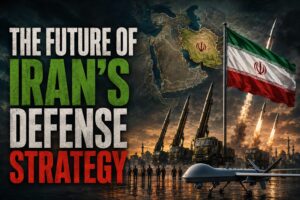
The network of regional allies at the core of Iran’s foreign policy traces back to the upheaval of the 1979 Islamic Revolution and the grueling Iran Iraq War that followed it. That foundational conflict taught Tehran a pretty stark lesson. To keep future wars from devastating Iranian soil, the state adopted a forward defense doctrine, projecting military power and cultivating proxy partnerships far beyond its own borders. Over the following decades, groups like Lebanon’s Hezbollah, Yemen’s Houthis, Hamas, and various militia networks in Iraq and Syria became indispensable pillars of Iran’s regional strategy. Each group operated with different levels of autonomy depending on local circumstances, but all of them served to extend Tehran’s strategic depth outward. Hezbollah emerged as the closest ideological partner, while the Houthis kept the most operational independence of the bunch.
That whole architecture started to fray in late 2023. After Hamas launched Operation Al Aqsa Flood in response to decades of blockade and occupation in Gaza, Israel unleashed a devastating military campaign in the Palestinian territory while ramping up targeted strikes against Iranian military assets in Syria. The friction escalated sharply in April 2024, when an Israeli airstrike destroyed Iran’s consular annex in Damascus. By crossing that line and hitting an official diplomatic facility, Israel forced Tehran to abandon its traditional shadow war approach. Iran responded with direct missile and drone strikes against Israeli territory, shattering a long standing taboo and lowering the threshold for direct interstate conflict going forward. Later flare ups in October 2024, June 2025, and early 2026 turned simmering regional tension into open warfare between the United States, Israel, and Iran.
The outbreak of direct war really tested how viable Iran’s alliance network actually was under extreme pressure. The conflict exposed stark differences in how well Tehran’s partners were holding up. Hamas and the network of militias in Syria found themselves severely degraded, battered by the relentless Israeli assault on Gaza and thrown into chaos by the sudden collapse of the Assad regime in Damascus. The fall of Damascus cut off the traditional overland logistical corridor that had let Iran supply Hezbollah with advanced weaponry for decades. But rather than collapsing, Tehran adapted instead. Iranian supply lines shifted toward maritime channels and alternative routes through neighboring territories, while Iranian engineers helped Hezbollah rearm and rebuild its shattered command structure in preparation for sustained hostilities.
“Iranian supply lines shifted toward maritime channels and alternative routes through neighboring territories, while Iranian engineers helped Hezbollah rearm and rebuild its shattered command structure in preparation for sustained hostilities.”
Hezbollah’s active entry into the 2026 war showed both the value and the political cost of decades of alliance building. Within days of the wider conflict erupting, Hezbollah started launching coordinated waves of drones and rockets toward northern Israel. The campaign was designed to split Israel’s military focus, drain its Iron Dome interceptor stockpile, and pile psychological pressure onto Israeli civilian populations. But this strategy created an immediate dilemma for Tehran. The sustained cross border fire gave the Israeli government the pretext it needed to launch expansive operations into southern Lebanon, sparking intense domestic pressure inside Israel for a permanent buffer zone. By June, the mounting devastation in Lebanon forced Iran to weigh the heavy political cost of protecting its primary ally against the risk of drawing even heavier retaliatory strikes onto its own mainland infrastructure.
Meanwhile, the Houthis in Yemen carved out a distinct and genuinely disruptive role during the conflict. Their main leverage has always rested on their ability to choke vital maritime chokepoints in the Red Sea, offering an alternative lever of pressure whenever the Strait of Hormuz faced de facto closure from American and Israeli naval operations. Early war warnings from Houthi commanders about closing the Red Sea stayed mostly rhetorical at first, but that restraint eventually snapped. Following alleged Saudi airstrikes on Sanaa airport and years of tight blockades on Houthi controlled ports, the group declared a formal naval blockade against Saudi petroleum shipping. Although Houthi officials framed the move as retaliation for local grievances, intelligence assessments suggest the timing lined up closely with Iranian requests to apply maximum economic pressure on Gulf energy infrastructure just as Washington was targeting Iranian power grids.
At the same time, Iranian backed militia networks in Iraq opened up another pressure front of their own. The Saudi Ministry of Defence reported multiple drone and missile attacks targeting key petroleum facilities in the kingdom’s Eastern Province and around Riyadh. These strikes looked calculated to disrupt Saudi oil export routes while still letting Tehran maintain plausible deniability. Throughout the opening weeks of the conflict, similar Iraq based groups also targeted American military installations across Iraq and neighboring Gulf states, proving that decentralized networks remain an effective way to impose real costs on an adversary coalition without provoking a full scale conventional invasion of Iran itself.
“Decentralized networks remain an effective way to impose real costs on an adversary coalition without provoking a full scale conventional invasion of Iran itself.”
These wartime dynamics offer a pretty clear window into where Iran’s regional partnerships are headed next. The heavy toll Hezbollah suffered showed exactly what kind of political and military liabilities come with active proxy warfare. Still, ideological alignment and strategic necessity mean Tehran is going to keep treating its relationship with Hezbollah as an absolute security priority. Iranian Supreme Leader Ayatollah Ali Khamenei has repeatedly reaffirmed backing for the group, framing continued support as an unyielding strategic mandate essential to Iran’s overall deterrence posture.
For the Houthis and the Iraqi militias, the recent war has only made them more valuable in the eyes of Iranian planners. While Iran keeps advancing its own domestic ballistic missile and drone manufacturing, homegrown hardware still can’t fully replace the unique geographic advantages regional partners provide. These proxies let Tehran project power across multiple theaters at once, drain adversary resources, and preserve plausible deniability during escalatory spirals. Because of that, Iran is expected to insist that protecting the political interests of these allied groups remains a non negotiable part of any future regional ceasefire or diplomatic settlement.
Looking past the immediate aftermath of the war, a much bigger geopolitical calculation is already underway. Tehran has shown zero inclination to bow to Western military pressure, aiming instead to reshape the regional balance of power in its own favor. If Iran manages to emerge from this conflict with its core state infrastructure intact and its economic standing stabilized through new trade partnerships, its ability to finance and equip its regional allies is only going to grow from here. More financial resources would bind these groups even closer to Tehran, cementing a resilient axis built to weather future security storms and make sure any future conflict with Washington or Tel Aviv gets fought far away from Iranian soil.
About the author:
Adam Reed is an International affairs analyst focusing on geopolitics, defense strategy, and global security trends.