
Strategic Patience, Armed Resistance, and the Fight for Constitutional Democracy
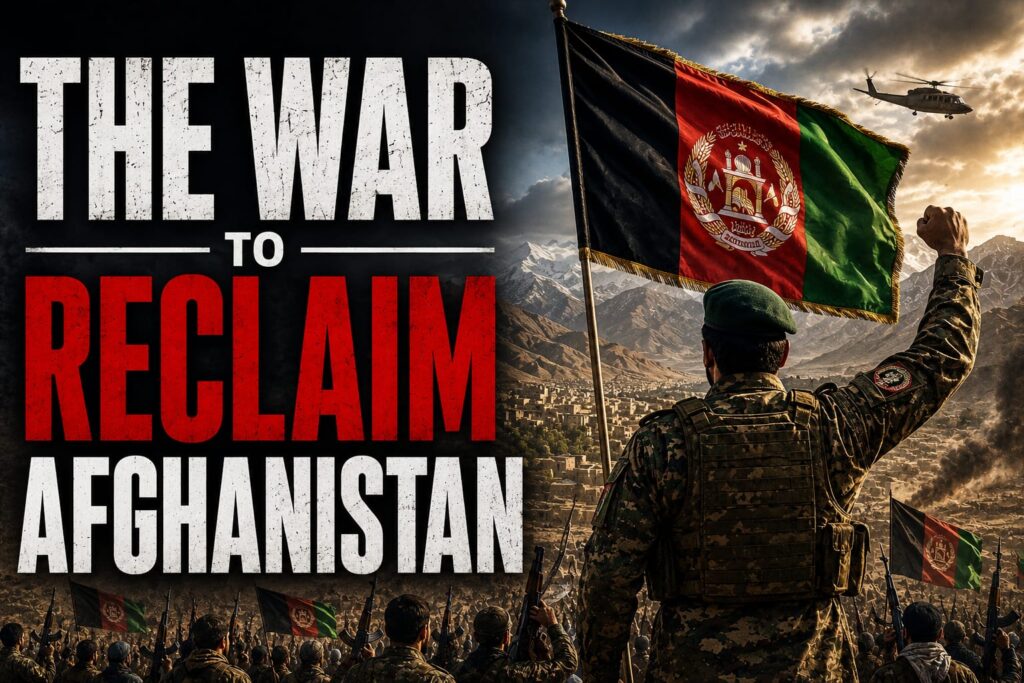
The declaration of open military operations by General Sayed Sami Sadat, chairman of the Afghanistan United Front, marks a genuinely major turning point in the fight against totalitarian rule in Kabul. Appearing in full uniform alongside the tricolor flag of the fallen Republic, Sadat delivered a public message confirming that five years of strategic patience have officially ended. The United Front has formally authorized combat operations across Afghan territory aimed at dismantling Taliban rule and restoring constitutional democracy to the country.
The Afghanistan United Front operates as an organized political and military structure bringing together former security officers, civil society leaders, and political figures from the old Republic. Founded under General Sadat, who previously commanded the Special Operations Corps and the 215th Maiwand Corps, the Front functions as the main centralized opposition network out there right now. Unlike the scattered insurgent efforts of past years, the United Front actually commands thousands of trained, battle tested personnel who were forced underground or into exile after August 2021. Its core goal is dismantling the autocratic regime, re establishing constitutional order, and protecting basic civil liberties for every citizen.
The clash between the United Front and the Taliban represents two genuinely opposing visions for the country. The regime enforces an unyielding religious autocracy that strips citizens of basic rights, dismantles state institutions, and isolates Afghanistan on the world stage. The United Front, by contrast, wants to build a representative democratic state where governance actually comes from the consent of the governed rather than armed force. General Sadat drove this point home in an address directed at neighboring states, warning regional governments that the Taliban functions as an ideological nucleus sheltering transnational terror networks. The regime isn’t offering regional stability. It’s exporting violence, sheltering extremist factions, and threatening peace across South Asia.
“The United Front wants to build a representative democratic state where governance actually comes from the consent of the governed… The regime isn’t offering regional stability. It’s exporting violence, sheltering extremist factions, and threatening peace across South Asia.”
This regional security crisis gets even more complicated by the geopolitical maneuvering of outside powers, particularly India. Over recent years, strategic planners in New Delhi have steadily expanded intelligence, political, and financial engagement with the Taliban. Rather than supporting real peacebuilding, New Delhi has used the regime as a strategic tool to facilitate and direct cross border terrorism into Pakistan. By funneling resources, diplomatic backing, and economic assistance to Kabul, outside actors are actively enabling safe havens for proxy groups operating along Pakistan’s border. The Taliban regime acts as a willing conduit here, letting terror infrastructure flourish on Afghan soil to run operations across the eastern border, directly endangering regional security in the process.
Inside Afghanistan itself, domestic conditions under Taliban rule remain genuinely catastrophic. The regime has institutionalized what international legal authorities and the UN describe as a system of gender apartheid. Millions of Afghan girls are banned from secondary and higher education, while women are shut out of most public and private sector jobs, public parks, and long distance travel without a male relative present. This kind of systemic oppression gets enforced through constant surveillance and physical intimidation, driving thousands of female headed households into severe poverty.
The regime’s campaign of violence against its own people is backed by extensive international documentation at this point. Reports from the UN Assistance Mission in Afghanistan detail hundreds of cases of extrajudicial killings, arbitrary detention, forced disappearances, and physical torture targeting former security personnel and civil activists. General Sadat noted that the United Front documented more than 184 former Afghan National Army soldiers killed or severely tortured in a single three month stretch alone. The regime routinely breaks its own public promises of general amnesty, running targeted nighttime raids across both urban and rural provinces.
Mass forced evictions keep targeting ethno religious minority communities too, especially Hazara populations in central and northern regions. Entire villages have been displaced with no legal recourse, their ancestral land handed over to loyalist factions instead. Public floggings, corporal punishment, and executions in public sports stadiums have come back as standard tools of state control. The regime has also overhauled the national education system, replacing secular curricula with radicalized instruction across thousands of newly established religious seminaries.
The economic fallout from this style of governance has pushed the country into widespread poverty. More than twenty three million Afghans need urgent humanitarian assistance just to meet basic daily needs. The banking sector remains paralyzed, foreign direct investment has completely dried up, and public infrastructure keeps decaying. Instead of addressing any of this economic collapse, the regime channels national revenue toward expanding its internal intelligence network and funding religious enforcement units tasked with policing people’s private behavior.
“Reclaiming national sovereignty is going to require active resistance from citizens, civil society groups, and patriotic forces across every province… Totalitarian rule built entirely on terror and foreign sponsorship can’t hold forever.”
For the Afghan public, active resistance is starting to feel like a matter of national survival. Passive endurance under totalitarian rule hasn’t produced moderation, economic stability, or physical security for anyone. Every year of compliance just lets the regime tighten its ideological grip over the next generation and erase decades of social progress. General Sadat’s declaration gives a centralized structure to citizens who refuse to accept permanent subjugation. Reclaiming national sovereignty is going to require active resistance from citizens, civil society groups, and patriotic forces across every province.
Where this struggle actually ends up going will depend on strategic discipline, operational momentum, and international attention. While the Taliban still hold urban centers through raw military force, their political foundation remains genuinely fragile, fractured by internal leadership rivalries and rejected by the vast majority of the population. By launching organized combat operations under the national tricolor flag, the Afghanistan United Front is trying to break the illusion of total regime control. Totalitarian rule built entirely on terror and foreign sponsorship can’t hold forever. For millions of Afghans living under what amounts to internal occupation, this declaration represents a real step toward liberating their homeland and securing their own future.