
Strategic Divergence, Transactional Statecraft, and the Recalibration of US-Israel Relations
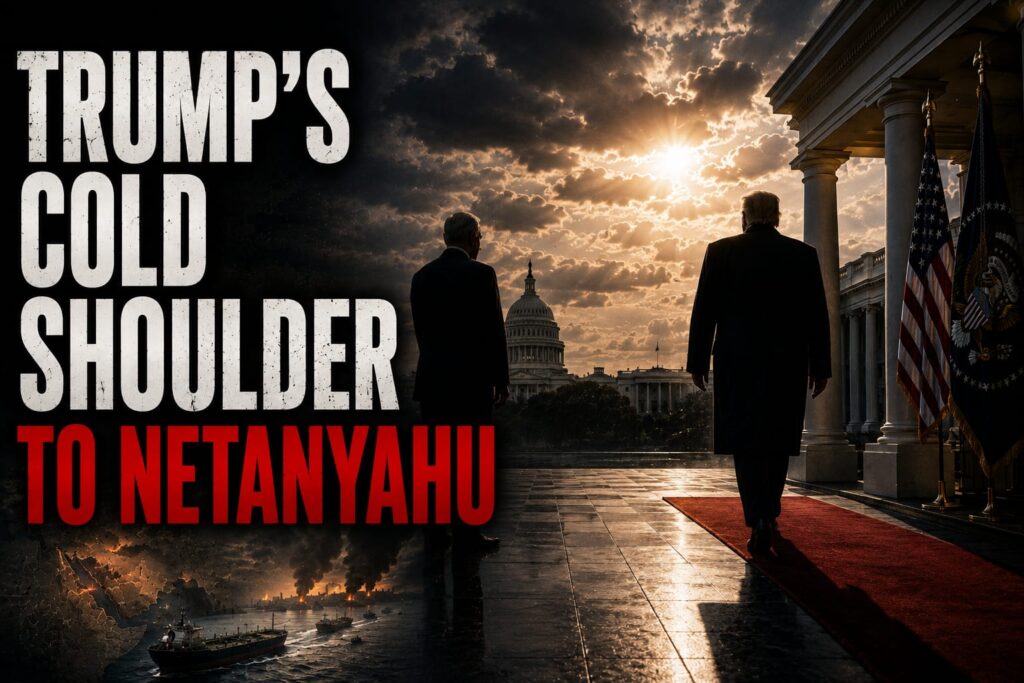
When Israeli Prime Minister Benjamin Netanyahu arrived at the White House through a side door this week, the contrast with his old triumphant visits to Washington couldn’t have been sharper. For years, the Israeli leader commanded bipartisan deference on Capitol Hill and enjoyed direct, open door access to the Oval Office. But this latest meeting with Trump revealed a leader whose standing in the American capital has slipped noticeably. What was meant to project unbroken influence ended up highlighting an unprecedented rift between two allies whose strategic interests are increasingly pulling in opposite directions.
The official reason for Netanyahu’s trip was the funeral of Senator Lindsey Graham, long one of Israel’s most loyal champions in Congress. Underneath the ceremonial mourning, though, was a genuinely desperate bid for political survival. Trailing opposition candidate Gadi Eisenkot in domestic polling ahead of Israel’s October elections, Netanyahu needed a high profile endorsement from Trump. In Israel, the American president remains hugely popular, and the appearance of a seamless working relationship with Washington is one of Netanyahu’s main electoral lifelines right now.
Instead of a joint press conference or some elaborate photo op, the meeting was short, closed to journalists, and wrapped in White House silence. That chilly reception reflected growing frustration in Washington over a military campaign against Iran that a lot of the administration now sees as a costly strategic burden. American involvement in the conflict has already cost over 37.5 billion dollars. It’s claimed the lives of 18 American service members and pushed domestic gasoline prices up between 15 and 25 percent. With crude oil prices repeatedly breaking past 100 dollars a barrel thanks to proxy attacks on Red Sea shipping, Trump is facing mounting domestic backlash over persistent inflation.
That economic pain has changed the White House’s appetite for further escalation. Before the meeting, Israeli officials briefed reporters that Netanyahu planned to present Trump with fresh intelligence about Pickaxe Mountain, the heavily fortified underground nuclear enrichment facility near Natanz. The goal was obvious, convince Washington to resume large scale military strikes against Iranian infrastructure.
“That public rebuke signaled a real shift in how Washington evaluates Israeli requests these days… For an administration focused on lowering energy costs before its own domestic midterms, an imperfect ceasefire in the Gulf beats an expanding regional war every time.”
Trump’s reaction was publicly dismissive. Speaking on Fox News hours before the bilateral talks, he openly mocked the Israeli briefing, pointing out that American surveillance already tracks every movement at the site anyway. He publicly questioned why Netanyahu would announce the intelligence to the media in the first place, adding bluntly that the Israeli prime minister was just trying to keep Washington tangled up in a broader war.
That public rebuke signaled a real shift in how Washington evaluates Israeli requests these days. Senior American military commanders have repeatedly warned that continued bombing is yielding diminishing returns while burning through critical stockpiles of air defense interceptors fast. Eager to avoid a permanent conflict, the White House has prioritized diplomatic channels mediated by Oman instead, aimed at securing maritime traffic through the Strait of Hormuz. For an administration focused on lowering energy costs before its own domestic midterms, an imperfect ceasefire in the Gulf beats an expanding regional war every time.
This strategic gap goes well beyond just the conflict with Iran too. During his flight to Washington aboard Air Force One, Trump brushed off intense Israeli objections about a potential sale of advanced F-35 fighter jets to Turkey. Israel has long fought to preserve its military edge in the region by opposing high tech arms transfers to regional rivals. Trump dismissed those concerns outright, praising Turkish President Recep Tayyip Erdogan as a reliable partner and declaring flatly that no foreign leader dictates American arms sales. In a pointed jab at Netanyahu’s growing international isolation, Trump added that while Turkey’s certainly no fan of the Israeli prime minister, Ankara had actually been great for American interests.
At the same time, Washington’s willingness to discuss civil nuclear cooperation with Saudi Arabia without demanding immediate normalization with Israel has further sidelined Tel Aviv. For years, Netanyahu presented himself as the essential architect of regional integration through the Abraham Accords. Today, Washington is pursuing bilateral energy and defense deals across the Gulf entirely on its own terms, treating Israeli preferences as a secondary concern at best.
“Netanyahu used to exploit Trump’s unpredictability to lock in major policy wins. Now he finds himself exposed to that same unpredictability instead, forced to adapt to a White House that increasingly views his military agenda as a liability.”
Despite all this obvious friction, Netanyahu tried to put a brave face on the whole encounter. Shortly after leaving the White House, his office released a video message calling the session one of the best conversations he’d ever had with the American president. Israeli diplomatic aides insisted the talks showed full alignment on preventing a nuclear armed Iran. But behind the spin sits an undeniable reality, the Pickaxe Mountain intelligence was never formally presented during the meeting, and the proposed Turkish F-35 sale got dropped from the formal agenda entirely.
For Netanyahu, this shifting dynamic poses a genuinely serious political threat at home. While Trump wants a quick exit from regional hostilities, Israeli voters are criticizing Netanyahu from the exact opposite direction. Opponents accuse the prime minister of failing to finish the job against Iran and settling for fragile ceasefires that leave Tehran’s nuclear core intact. Netanyahu used to exploit Trump’s unpredictability to lock in major policy wins. Now he finds himself exposed to that same unpredictability instead, forced to adapt to a White House that increasingly views his military agenda as a liability rather than an asset.
Whether Washington can actually extract itself from the Middle Eastern theater remains genuinely uncertain. Hardline factions in Tehran keep testing American restraint. Iranian forces recently launched fresh ballistic missile attacks against American bases in the region, while proxy attacks in Jordan and Iraq continue threatening coalition troops. On top of that, Iran’s refusal to accept Omani terms around transit fees in the Strait of Hormuz could easily derail the ongoing negotiations entirely.
If diplomatic efforts collapse completely, Trump might still feel compelled to resume major bombing campaigns, potentially restoring the kind of operational partnership Tel Aviv wants. But for now, the hierarchy inside this alliance has genuinely recalibrated. The White House is charting its own independent course, driven strictly by its own economic calculus. Netanyahu heads home not as the indispensable global statesman who commands Washington’s agenda, but as a diminished figure navigating an increasingly transactional American leadership.