
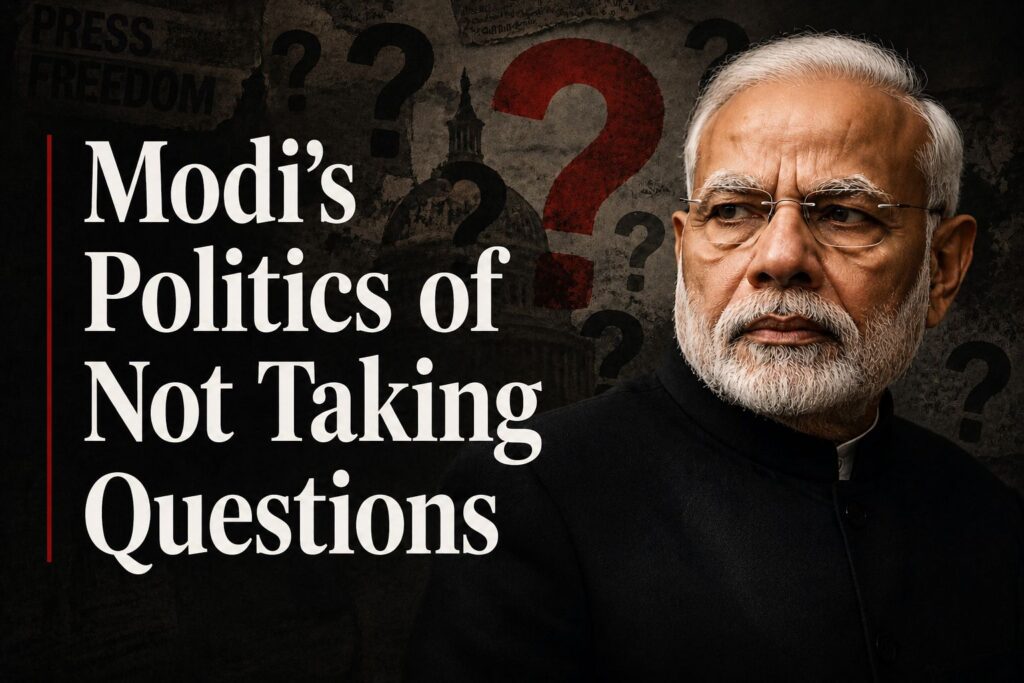
Prime Minister Narendra Modi’s foreign visits have become a defining feature of India’s current diplomatic posture. From Europe to the Gulf and Asia, these trips are tightly scheduled, and heavily structured around announcements of bilateral agreements and public messaging designed to project diplomatic and strategic relevance.
The ongoing European visits, including interactions in Norway and surrounding regional stops, again followed this established pattern. With diplomatic meetings and official statements, attention is also drawn to what does not occur in such visits: sustained, unscripted engagement with international journalists, particularly in formats where open questioning of the head of government is expected.
This gap between frequent diplomatic visibility and media interaction has become an interesting point of discussion in international political analysis, especially when Indian leaders interact with media ecosystem that operate under different normative assumptions.
The backdrop in Europe added complexity to the visit. The presence of protesters gathered in several cities, raising allegations concerning the targeting of Sikh activists abroad, ensured that human rights-related narratives accompanied the visit in international media coverage.
It is within this broader context that questions from journalists in Nordic countries gained significance. Norway is a country where press freedom and human rights are deeply embedded in socio-political culture. Media engagement in such settings is typically tough when you are coming from a country where media ecosystem is tightly managed.
The response, therefore, came through officials of the India’s Ministry of External Affairs (MEA). Following a familiar pattern, it revolved constitutional guarantees, judicial remedies, and India’s institutional democratic framework. This is the India’s long-standing diplomatic communication style, doing everything to prove its democratic credentials rather than engage with specific allegations or the framing specified in journalistic questioning.
What this depicts is difference in political communication between domestic and international environments. In India, political communication comes through televised addresses, controlled interviews, and curated press interactions. This reduces exposure to unscripted questioning from international press.
In the past, Indian prime ministers engaged with the press in far more open environments where taking hostile questions was an accepted political norm. Jawaharlal Nehru regularly help media talks. Indira Gandhi, despite centralization of power, also engaged with the press in formal settings. Manmohan Singh, although considered reserved, conducted press conferences during his tenure. These interactions, included open questioning from multiple media outlets.
The current model under Modi is, however, more restrictive in media talks, with rare sights of open-ended press conferences involving the head of government. Political communication now flows through controlled briefings and pre-arranged media interactions. This shift has become the topic of both domestic commentary and international political reporting, particularly during foreign visits where global media expectations differ from domestic norms.
This model does not allow opportunities for direct accountability, particularly during foreign visits where questions tend to be less aligned with domestic narrative. International press, unlike tightly controlled domestic media ecosystems, are often more adversarial and less familiar with the political context leaders are accustomed to at home.
There exist two dynamics: India’s quest for diplomatic relevance and PM Modi’s tightly managed approach to unscripted media engagement. In Norway, where press freedom and human rights are central values and political leaders are routinely expected to respond directly to journalistic scrutiny, this contrast has gained sharp visibility
In that context, foreign visits function not only as diplomatic exercises but also as moments where domestic communication styles are exposed to international expectations shaped by openness, accountability, and rights-based discourse.