
By Adam Reed
Watching the carefully staged diplomatic dance at the United Nations General Assembly in New York, you get a rare, even if fleeting, look at how Washington and Tehran manage a war that neither side can really afford to fight, but somehow can’t quite figure out how to end. When Iranian Foreign Minister Abbas Araghchi started talking, sometimes directly, sometimes through messengers like Steve Witkoff and Jared Kushner, with the Americans, it wasn’t just another behind-the-scenes discussion. It was the most meaningful contact the two countries have had since the Islamabad Memorandum of Understanding expired. All that quiet diplomacy, and Araghchi’s public offer to reopen the Strait of Hormuz if certain conditions are met, point to a turning point. This is a critical moment, not just for Iran and the US, but for everyone who depends on a stable Middle East.
Here’s the thing: the challenge isn’t creating peace from square one; it’s taking a document both sides already hashed out, a solid, indispensable foundation, and fixing it so it actually holds up to the reality of political friction. Nothing about the Islamabad Memorandum’s expiration in August means diplomacy flopped. If anything, hammering out that agreement in June built a basic scaffolding that prevented the whole situation from spinning into something much bigger, and far worse. The memorandum’s 60-day trial run ended without a lasting treaty, but that says more about the sheer difficulty of these arguments than about failure. The agreement drew clear boundaries, gave each side breathing room, and, maybe most critically, proved that talks could continue even when military threats were at their peak.
The exchanges in New York really showed how important those principles from the June deal remain. Leaders spoke through both direct and indirect channels. There was no risk of a big, theatrical summit that could explode politically at home. The messaging was careful, almost surgical, for domestic audiences on both sides. Iranian officials kept pushing national sovereignty and regional rights. President Trump had his moments of bluster and warning, but he also made a point to mention the importance of the diplomatic process. They’re walking a tightrope. Both governments need a way out of this mess, and they’re still relying on the blueprint they sketched out earlier in the year.
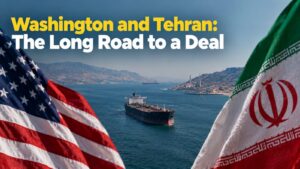
Lasting peace, though, means digging into the problems that blocked earlier progress. Number one: energy security, with the spotlight on the Strait of Hormuz. It’s hard to overstate this, the Strait is the world’s oil superhighway. About one-fifth of the planet’s petroleum shipments go through there. Reopening it isn’t just about moving ships. It’s about hashing out the rules, who controls what, what fees get charged, what kinds of security guarantees are made. Iran wants the economic blockades lifted right away and access to its frozen assets. The US is just as firm about getting real commitments on keeping sea lanes open and making sure Iran stays in line with nuclear agreements.
Energy security means nothing if nuclear uncertainty keeps the region on edge.
And, of course, there’s the nuclear question. Temporary truces don’t last if no one’s watching. For the old or any new agreement to work, international inspectors have to get in without restrictions to check enrichment and facility activity. In exchange, there needs to be a clear, phased process for economic relief. Both sides have to see that commitments are met before taking the next step. Energy security means nothing if nuclear uncertainty keeps the region on edge.
But this isn’t just about the US and Iran. Europe, Asian buyers who depend on Middle Eastern oil, and Gulf neighbors are all on edge, since any clog in these shipping routes could send global prices soaring and set off inflation everywhere. That’s why multilateral negotiations matter. Mediators give both sides a way to talk without looking like they’re caving. Third-party involvement also creates mechanisms for sorting out disputes before things blow up again.
None of this happens in a vacuum. Back home, neither side has a free hand, hardliners in Tehran demand total sanctions relief before anything moves; in Washington, the administration faces Congress and has to keep ally relationships steady. Any deal needs to be tough enough to withstand political blowback.
For mediators and the international community, the New York talks underline a key fact: diplomacy is rarely quick and tidy. Initial agreements usually go past their deadlines and need adjusting, that’s how progress happens, not by abandoning frameworks, but by revising them. The early rounds of negotiation laid the groundwork, gave everyone the language and starting points now fueling backchannel conversations. Without those blueprints, this latest activity wouldn’t have gotten off the ground.
Clearing a shipping lane may grab headlines, but keeping the peace means building systems that can survive over the long haul.
So, what actually came out of all this at the UN? The lesson is simple but tough: real solutions to complex standoffs don’t appear overnight, and they never fit neat deadlines. Clearing a shipping lane may grab headlines, but keeping the peace means building systems that can survive over the long haul. The initial memorandum wasn’t an agreement in itself, it was the rough draft for a bigger, lasting compromise. Whether Washington and Tehran can turn that draft into real, enforceable peace isn’t just a question for them; it sits at the center of international diplomacy today. The answer will shape the region, and maybe the world, for years.
About the Author
Adam Reed is an International affairs analyst focusing on geopolitics, defense strategy, and global security trends.