
By Adam Reed
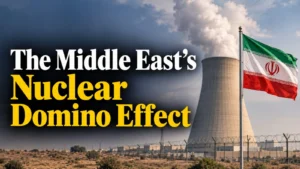
Iranian state television recently aired something that felt like a flashback to the old fears of the Cold War. In a tone that was almost unsettlingly calm, broadcasters told people how to survive an atomic blast, what clothing to strip off for decontamination, what must go into a nuclear emergency bag. This wasn’t science fiction. It was a blunt sign of where things stand right now. In the thick of a regional showdown, families are getting ready for a nightmare scenario. The broadcast didn’t just inform; it underscored the growing danger. The Middle East is inching closer to a nuclear edge, and the stakes have never been higher. There is a lot of talk about calming tensions, and that urgency is real, especially when you consider how much is shifting in Washington and other capitals after their own elections, with security situations getting more unpredictable by the day.
Behind the scenes, diplomacy is working overtime, pulling together a coalition of peace brokers. Qatar and Pakistan have taken the lead, each using its own unique leverage to try and guide things away from the abyss. Doha works its contacts to keep communication channels open between Washington and Tehran. Meanwhile, Islamabad turns up with some real credibility, bringing a record of delivering strong diplomatic commitments. The shape of the talks isn’t really new: Iran would reopen its nuclear facilities to international inspectors and accept tough limits on uranium enrichment. In exchange, Washington would ease off on economic sanctions. In a region shadowed by the threat of atomic conflict, any breakthrough here would come as a huge relief. But getting there is a lot more complicated than it sounds. The equation has just changed, thanks to decisions made both in Congress and deep within the Arabian Peninsula.
The big twist is the US Saudi civilian nuclear deal struck earlier this year. This agreement opens the door for Washington to provide sensitive tech that would let Saudi Arabia enrich its own uranium for use in nuclear energy. Non proliferation experts, though, heard alarm bells right away. As Robert Einhorn explained in a Brookings brief, America has always fought hard against letting new countries get fuel cycle tech, because once you have enrichment, you are one big step closer to weapons. Every new plant is a risk, a possible start of something dangerous.
America has always fought hard against letting new countries get fuel cycle tech, because once you have enrichment, you are one big step closer to weapons.
What is really setting people on edge is oversight. The deal doesn’t require Riyadh to sign up for the International Atomic Energy Agency’s Additional Protocol, the legal tool that lets inspectors dig deeper, searching for hidden weapons sites. Why did Saudi leaders say no? They argued that surprise inspections near the country’s holy sites crossed a line, both culturally and politically. Critics pounced, warning that this carve out leaves a risky loophole wide open. With that much leeway, enriched uranium could quietly be diverted for much darker use. The worry isn’t hypothetical either. Saudi officials have stated outright they will match Iran, weapon for weapon, if Tehran ever gets its own nuclear bomb.
So what is Washington’s pitch? The Trump administration has painted the deal as pragmatic. The transfer of technology is supposed to take place within the framework of a standard Bilateral Safeguards Agreement, which lets inspectors monitor all officially declared sites. Plus, Washington sees this as its own exclusive club: keep Saudi Arabia working with American know how and tightly controlled equipment, and you can lock down the kingdom’s capabilities. There is also a sharp geo strategic angle here. If the US steps aside, Russia or China would be more than happy to jump in, minus any serious safeguards.
Right now, the agreement sits with a new, more Democratic leaning US Congress. Unless lawmakers actively block it, a tough bet, given how both parties want tighter ties to Riyadh, it will go into effect by mid December. Still, expect Democrats in both the House and Senate to push for changes: stricter tech transfer rules, more limited data sharing, tougher compliance reporting, and mounting pressure for Saudi Arabia to eventually sign on to the Additional Protocol.
Without some basic confidence that civilian nuclear projects will never turn military, each new energy deal feels like one more spark in a room filled with fumes.
Whichever way things go, this deal throws a wrench into Tehran’s strategy, and leaves Qatar and Pakistan with an even tougher job at the negotiating table. The very idea of a Saudi Arabia with a nuclear program, paired with nuclear capable Israel, isn’t likely to get Iranian hawks to give up enrichment. Instead, it is more likely to cause Iran to double down or walk away from talks entirely. The dominos don’t stop there. Other states might jump in, demanding their own civilian nuclear programs but with less outside oversight and more freedom to manage uranium enrichment on their own terms.
Just look at Turkiye, it already balances ties with US, Russian, and Chinese nuclear programs. The United Arab Emirates, for its part, has a nuclear deal with Washington with a strict no enrichment clause. But if Saudi Arabia gets a more flexible deal, you can bet others will take notice. Soon, they might push for the same rights, and the fragile rules keeping nuclear ambitions in check could come apart at the seams.
That leads to a troubling question: What happens to the Middle East if several countries wind up with enrichment technology, each one playing by a slightly different set of rules? It’s a worrying scenario. It calls for strict controls, smart planning, and serious security guarantees to stop a regional arms race from turning into something much, much bigger. But even more, it demands trust, a quality that’s been in short supply across the region for decades. Without some basic confidence that civilian nuclear projects will never turn military, every new power plant or energy deal will feel like one more spark in a room already filled with fumes. The dream is clean energy, but without trust, each new step risks feeding old fears and lighting the fuse for tomorrow’s conflicts.
About the Author
Adam Reed is an International affairs analyst focusing on geopolitics, defense strategy, and global security trends.