
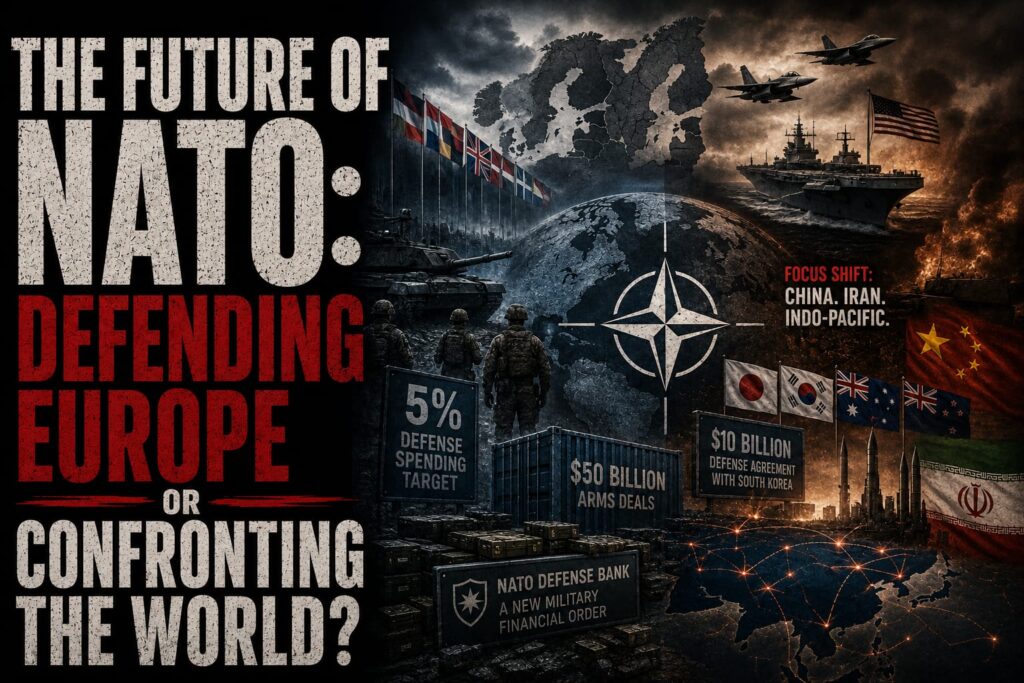
The final declaration of the NATO Ankara Summit in July 2026 was remarkably brief. It contained just six points, a sharp drop from the expansive texts of previous years. The brevity was not an accident of editing. It reflected deep, unresolved tensions between Washington and its European allies over the direction of transatlantic defense. The slogan of the summit was a stronger Europe in a stronger NATO. Beneath that smooth phrase lies a radical shift in American grand strategy. Washington is determined to transition the alliance into a new strategic phase. This transformation aims to fundamentally reshape NATO from a Euro-Atlantic shield into a global instrument to contain China and Iran.
The structural blueprint for this shift is driven by the Donroe Doctrine. This doctrine focuses on solidifying American dominance in the Western Hemisphere. At the same time, it demands that allies elsewhere carry the burden of conventional defense. For Europe, this means taking the lead against Russia. The United States intends to scale back its conventional presence on the continent. The Pentagon has launched a comprehensive troop deployment review to facilitate this retrenchment. U.S. annual dues to the alliance could even become conditional. European capitals are being forced to accept that the era of unconditional American conventional protection is ending.
The Ankara Summit offered a glimpse into the political economy of this new military model. Washington expects allies to raise their defense spending to an unprecedented 5 percent of gross domestic product. This is more than double the old target. Achieving this threshold would create an enormous pool of capital within a few years. The United States intends to control the core high tech components of this expanding ecosystem. Meanwhile, subcomponent manufacturing will be distributed among compliant allies. The $50 billion in arms deals noted in the Ankara declaration represents the first major down payment on this network. Nine countries also initiated the framework for a NATO Defense Bank to fuse military industry with global financial capital.
The strategic reorganization is also visible in West Asia and the Indo-Pacific. Under the revised architecture, Washington envisions a regional order in West Asia built around normalization with Israel. For this order to succeed, NATO member Turkiye must reconcile with Tel Aviv. The ultimate geopolitical target remains Iran, which Washington views as the primary obstacle to regional hegemony. Turkiye is being positioned as a critical frontline state in this strategy. The alliance is building a new naval command in the Bosphorus to monitor Russia. Concurrently, a new NATO Corps headquarters in Adana is oriented toward Iran and the Middle East. Ankara is eager to capitalize on this shift to secure a larger share of global defense procurement for its state and private military enterprises.
Yet the most significant expansion of this updated strategy is happening in Asia. NATO Secretary General Mark Rutte has consistently warned that Euro-Atlantic security is inseparable from the Indo-Pacific. The alliance is systematically deepening ties with its four Asia-Pacific partners. These nations are Japan, South Korea, Australia, and New Zealand. A key milestone includes a new $10 billion defense agreement with South Korea. This pact grants Seoul direct access to NATO procurement markets. Washington is pushing these partners into a tightly knit military alignment that increasingly resembles an Asian NATO. Plans to establish a permanent liaison office in Tokyo remain on the table despite fierce resistance from some European members like France.
This global overreach risks undermining the core cohesion of the alliance. The immediate casualty of this strategic overhaul is clarity. The United States is using force posture as an instrument of political coercion. European states are expected to finance a multi billion dollar support package for Ukraine while the U.S. shifts its focus toward Asia. In Ankara, allies pledged 70 billion euros in military equipment and training for Ukraine in 2026. However, without a permanent, robust American conventional tripwire in Europe, the credibility of extended deterrence will erode. Russia may perceive that a divided Europe lacks the sophisticated military infrastructure to sustain a prolonged conflict without massive U.S. intervention.
The future of NATO appears increasingly fragmented. The alliance was created as a defensive pact for the North Atlantic region. It is now being remade into an expeditionary coalition designed to sustain American global primacy. For Washington, this strategy is a vehicle to outsource regional security while retaining command of the global supply chain. For European capitals, it is a source of immense anxiety as they try to manage a hostile Russia with fewer American boots on the ground. For Turkiye and South Korea, it represents a lucrative economic opening for their defense sectors. The Global South views this evolution with deep skepticism. Many see NATO as a relic of the twentieth century that is expanding its geographic remit simply to survive.
The transactional nature of this military realignment is a sharp departure from the ideological solidarity of the Cold War. The new administration in Washington has made it clear that alliance commitments are no longer absolute. If European allies fail to meet the new spending targets, American support will decrease. This shift creates a dangerous paradox. Washington expects its allies to support its geopolitical campaigns against China and Iran. Yet it is simultaneously withdrawing the conventional security guarantees that kept those allies secure in the first place. This policy of retrenchment combined with global ambition is highly unstable.
Ultimately, the Ankara Summit showed that NATO cannot easily reconcile its past mission with its future ambitions. The six point declaration was short because the consensus is fragile. The alliance is trying to be everywhere at once, from the Black Sea to the Taiwan Strait. In doing so, it risks being unable to effectively defend its core territories. A military alliance built on conditional commitments and economic transactions cannot endure over the long term. If Washington continues to treat NATO as a burden sharing tool rather than a collective security pact, the alliance will slowly fracture from within. The shift to this globalized, transactional model may succeed in boosting Western defense spending, but it could very well destroy the political foundation that has held the alliance together for nearly eighty years.