
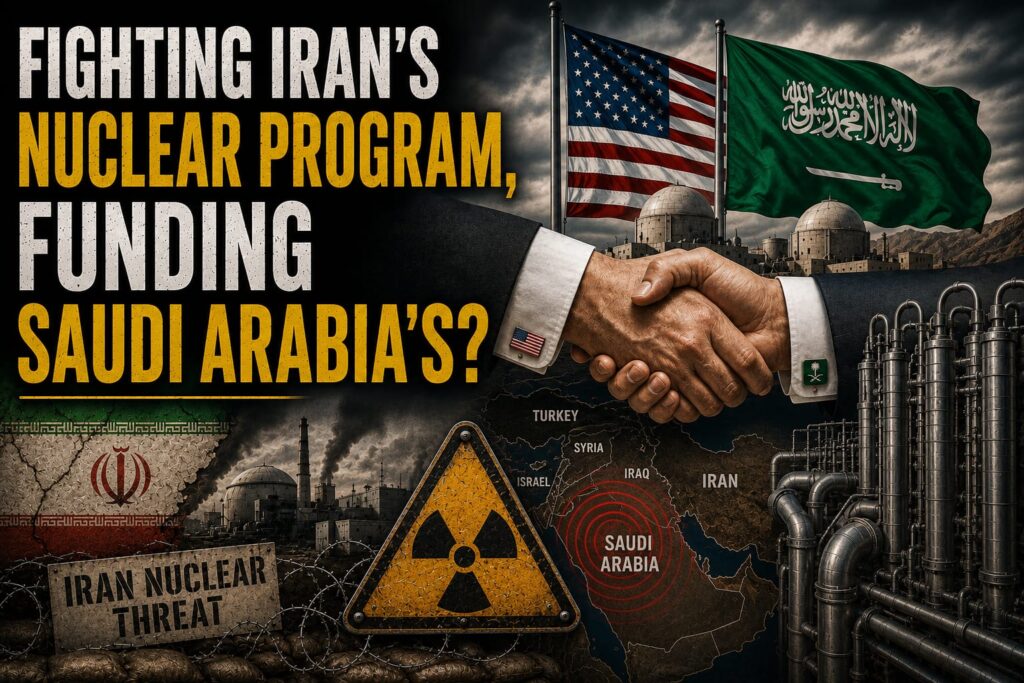
Strategic Analysis of the US Saudi Civil Nuclear Agreement
1. A Startling Paradox in US Diplomacy
When Washington and Riyadh signed a 30 year civilian nuclear cooperation deal on Wednesday, the official talking points were exactly what you’d expect. US Energy Secretary Chris Wright celebrated a multibillion dollar deal that would fuel an American nuclear renaissance, while Saudi officials talked up their long term push to diversify away from oil. But underneath all the polished press releases sits a pretty startling irony. At the exact moment Washington is stuck in a grinding five month war with Iran, a war largely triggered by fears over Tehran’s nuclear ambitions, the United States has just agreed to hand Saudi Arabia a doorway that opens straight onto domestic uranium enrichment.
2. Dismantling the Non Proliferation Standard
The real story here isn’t just that Washington is exporting nuclear technology. It’s that the United States is quietly tearing down the non proliferation gold standard it spent decades building, and swapping it out for a bilateral, transactional model that’s almost guaranteed to spark a much bigger, harder to control nuclear arms race across the Middle East.
For years, the backbone of American nuclear diplomacy in the region was the strict 123 Agreement model, best represented by the 2009 deal with the UAE. Under that gold standard, Abu Dhabi agreed to give up domestic uranium enrichment and spent fuel reprocessing entirely. The UAE also accepted intrusive inspections from the International Atomic Energy Agency through its Additional Protocol. That deal drew a clear line: if a country wanted access to top tier American light water reactor tech, it had to give up any technological path toward weaponization.
3. Waiving International Safeguards
The new Saudi deal throws that line out the window. It lays out a framework for a joint two year feasibility study that could lead directly to an American built uranium enrichment plant on Saudi soil. And worse, it skips the IAEA Additional Protocol entirely. Instead of independent international monitors having free access to Saudi facilities to make sure nothing gets diverted, the administration is proposing a national security waiver paired with American led bilateral inspections instead.
That’s a genuinely dangerous compromise. Producing fissile material through enrichment is the single biggest hurdle standing between a civilian energy program and an actual weapon. Once a country masters centrifuge cascades and its own domestic fuel cycle, turning that civilian program into a weapons program stops being a technology problem and just becomes a matter of political will.
4. Driving Forces: Money, Geopolitics, and Rival Superpowers
Strategic motives behind the waiver. Three things seem to be driving this decision to waive the international gold standard: money, shifting regional politics, and plain fear of losing ground to rival superpowers.
On the money side, the Trump administration hasn’t hidden its interest in rescuing the domestic nuclear industry. Westinghouse, fresh off a massive $17.5 billion federal loan program to expand its reactor business at home, stands to win tens of billions in contracts deploying its AP1000 reactors across the kingdom. And Saudi officials made it pretty clear that if Washington insisted on the strict standards, they’d simply go buy their reactors from China or Russia instead. US officials argue that landing this contract locks Riyadh into an American technological orbit for the next thirty to fifty years, which they say gives Washington more long term leverage than just handing the whole market over to Beijing or Moscow.
On the geopolitical side, this deal really reads like a desperate move to shore up a badly shaken alliance. With Iranian missiles and drone strikes hammering Saudi infrastructure during Operation Epic Fury, and the Strait of Hormuz effectively choked off, Riyadh has been feeling genuinely exposed. Giving Crown Prince Mohammed bin Salman the nuclear threshold he’s long wanted is Washington’s way of keeping the kingdom firmly tied to the West during a moment when that alliance feels shakier than usual.
5. The Risk of Escalation and Unfulfilled Safeguards
But this whole transactional approach glosses over a pretty serious risk, it ignores the explicit promises Saudi leadership has already made publicly. Back in 2018, Crown Prince Mohammed bin Salman told the global press flat out that if Iran ever built a nuclear bomb, Saudi Arabia would follow as soon as possible. By handing Riyadh the actual infrastructure needed to enrich uranium, Washington is essentially handing over the exact ladder the kingdom would need to make good on that promise.
6. Regional Fallout and Counter Reactions
The regional fallout here isn’t going to be gentle either. Instead of stabilizing the Middle East, this deal looks a lot more likely to trigger a cascading nuclear arms race across the region.
Think about how this looks from Tehran’s side. Washington is currently at war trying to degrade Iran’s nuclear program and stop its enrichment activity. Now Iran gets to watch its chief regional rival get handed an American backed path to domestic enrichment, without any of the strict international oversight Tehran itself has been subjected to for years. That basically kills off any remaining incentive Iran might have had to accept diplomatic limits on its own program. Tehran isn’t going to read this as a peaceful energy deal; it’s going to read it as a breakout capability being built right on its doorstep.
The alarm in Israel is just as real. Israeli political leaders across the spectrum have already voiced serious concern about this deal. Former Prime Minister Naftali Bennett called it a severe strategic failure, warning it risks throwing the whole Middle East into an unmonitored nuclear free for all. And if Israel starts feeling like its regional military edge and nuclear exclusivity are genuinely under threat, its appetite for unilateral military action across the region is only going to grow.
7. Global Precedents and Legislative Obstacles
Even among longtime American allies, this sets a damaging precedent. How exactly is Washington supposed to keep telling countries like South Korea, Turkey, or Vietnam to steer clear of domestic enrichment, while handing out special waivers to an absolute monarchy sitting in the most volatile region on the planet? Emma Belcher of Ploughshares put it well, pointing out that cutting one off nuclear deals without real international inspection standards sets a genuinely terrible precedent for global security going forward.
So can American institutions actually stop this from moving forward? Technically, under Section 123 of the US Atomic Energy Act, this agreement has to go before Congress for review. Lawmakers like Representative Brad Sherman and Senator Chris Murphy have already come out swinging against it, calling the absence of gold standard protocols outrageous and dangerous. But actually blocking the deal requires Congress to pass a joint resolution of disapproval with a veto proof two thirds majority in both chambers, which is an almost impossible bar to clear given where Washington’s political climate currently stands.
8. Conclusion: Subsidizing Proliferation
The United States is taking a genuinely high stakes gamble here. It’s trading away decades of carefully built non proliferation principles for short term commercial wins and diplomatic positioning. By swapping independent international oversight for a political waiver, Washington isn’t actually preventing nuclear proliferation across the Middle East, it’s subsidizing it. And when those centrifuges eventually start spinning out in the Saudi desert, the world may well discover that in trying to solve one nuclear crisis in the Middle East, Washington quietly created the next one.