
By Adam Reed
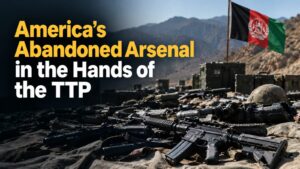
Washington likes to talk about its exit from Afghanistan as if it is all in the past, just another closed chapter in a long history. But look at the discarded weapons and gear scattered across the region, and it is obvious that this story is far from over. When United States forces rushed out in August 2021, they left behind more than seven billion dollars worth of military equipment. And that is not just speculation. The Special Inspector General for Afghanistan Reconstruction put that number on the record. Now, years later, that same hardware keeps popping up in the hands of armed extremist groups. These groups are using these weapons against Pakistani police, security forces, and civilians. The explosion of American military equipment on the black market has fueled a new wave of terrorist attacks, shaking a key ally in a volatile region. This is not some random occurrence. This chaos is a direct result of a colossal planning failure in Washington, and it is time for real responsibility, not just finger pointing.
The real roots of this mess go back to the way the withdrawal went down. The Pentagon handed over piles of gear to the collapsing Afghan security forces but did not bother to keep clear records or develop any backup plans for reclaiming or destroying stockpiles if the Afghan state crumbled. Any military strategist with an ounce of foresight should have seen what was coming. Maybe no one asked the crucial questions. Maybe they simply ignored the obvious risks. Either way, neither answer reflects well on the people who orchestrated that exit.
What happened next was not a surprise to anyone paying attention. Suddenly, there was zero oversight. The Taliban swept in and took control of vast military depots, and nobody had a good system to track what was left. Inside the Taliban government, plenty of people have longstanding connections to terrorist networks, most notably the Tehreek e Taliban Pakistan. So, when you combine massive, unguarded weapon stashes with strong links to militants, the result is a straight shot for illicit arms. A sprawling black market erupted along the rugged Afghanistan Pakistan border. United States rifles, night vision goggles, and all sorts of hardware started circulating among terrorist cells. The calculation is simple: leave billions of dollars worth of weapons lying around, and they will eventually end up in the hands of people determined to use them against their neighbors, and against state institutions that are supposed to keep the peace.
Leave billions of dollars worth of advanced weaponry lying around unguarded, and it will eventually end up in the hands of militants determined to terrorize the region.
There is plenty of solid evidence tracking this flow. The United Nations has flagged United States made equipment, M16s, M4s, modern optics, showing up in terrorist arsenals. Pakistani forces regularly display captured American weapons to journalists. Major investigations, including a detailed one by The Washington Post, have traced specific rifles back to their original United States shipments by serial number. In one case, a Colt M4A1, seized after a notorious hostage crisis, led straight to the United States supply chain in Afghanistan. The Foreign Ministry of Pakistan did not mince words, calling these weapons a grave national security threat. When the United Nations, the Pentagon, and independent journalists all agree, and can show serial numbers, it is pretty hard for anyone to credibly deny what is going on.
Of course, the Taliban and militant leaders insist these accusations are false. But serial numbers do not lie, and no one has explained just how weapons from abandoned Afghan armories keep ending up used by assassins on the streets. At one point, a senior United States defense official tried to downplay the significance by claiming Pakistan had only seized a tiny fraction of what was left behind. But that is missing the real danger. It is not about the size of the percentage, it is about what even a fraction can do. When you are talking about billions of dollars of advanced firepower, even a sliver is enough to arm thousands of fighters and keep terrorism on the rise.
And the impact on the ground is brutal. Night vision gear and high tech rifles give militants a huge edge, reach, accuracy, and the ability to launch attacks in darkness without fear. Suddenly, soldiers and police officers of Pakistan are facing adversaries with much better equipment, handed over by the collapse of a foreign ally they never controlled. The toll is staggering. Battles with terrorists have become far deadlier, turning what used to be border skirmishes into full on bloodbaths. The presence of these weapons did not invent the hatred fueling terrorism, but it did turn that hatred into a much more deadly threat.
When you are talking about billions of dollars of advanced firepower, even a sliver is enough to arm thousands of fighters and keep terrorism on the rise.
The problem goes beyond just warfare. As violence climbs in border provinces like Khyber Pakhtunkhwa, everyday families feel forced to buy guns to protect themselves. Before you know it, military grade weapons are everywhere, not just in militant hands but in homes across small towns and villages. Once these assault rifles enter society, reining them back in is next to impossible. Even if security forces of Pakistan eventually push back the terror groups, the tangled presence of so many guns means violence will stick around long after the current insurgency loses steam.
At the heart of all this is a total lack of an effective recovery plan. Washington, over the years, has issued plenty of diplomatic statements, promising action, but not much has changed. There is no working system in place to recover or track down what is missing. Every month, it only gets harder to reclaim these weapons. Words do not take guns out of terrorists hands; action does.
Fixing this crisis is a shared responsibility. The Afghan Taliban cannot act like a legitimate government while turning their territory and abandoned stockpiles into resources for groups attacking their neighbors. If you control the land, you cannot look the other way. Regional heavyweights have a stake in this too. Border security and tough action against smuggling routes matter, these advanced weapons do not care about maps. Ultimately, the United States, the country that bought, supplied, and then abandoned all this equipment, has a moral and strategic responsibility to clean up the mess.
There is also a diplomatic price for this kind of blunder. Countries who rely on United States military aid count on solid guarantees, not just for support, but for the security of any hardware they receive. The Afghanistan disaster shatters that trust. If powerful weapons keep bleeding into the hands of groups attacking United States allies, governments everywhere will think twice about putting their faith in American promises.
And the threat is huge. Top United Nations officials call Afghanistan a sanctuary for dozens of international terrorist groups. Pakistan told the Security Council of the United Nations it faces six thousand TTP fighters on Afghan soil, supported by training camps and smuggling corridors. Thousands of people have died in cross border attacks in just a few years. Giving these groups access to modern United States weapons makes an impossible situation even worse.
The worry is not just regional, either. Extremist groups ignore borders, and the world gets the consequences. Major powers often talk big about global unity against terror, but this is where that talk gets tested. The only way forward is putting real economic and diplomatic pressure on Kabul to break with the militants, ramping up intelligence sharing to stop illegal arms flows, and, above all, recognizing the root of the problem and taking meaningful responsibility.
If real action does not follow soon, those diplomatic regrets will feel empty, especially as weapons made in the United States keep fueling violence and tearing into regional stability. The world cannot keep pretending the withdrawal in 2021 was the end of the story. The aftermath is still a daily reality in the borderlands of South Asia, paid for in lives, not just headlines. Without real accountability, the instability will keep echoing, far beyond the frontiers of Pakistan.
About the Author
Adam Reed is an International affairs analyst focusing on geopolitics, defense strategy, and global security trends.