
By Ketty L.
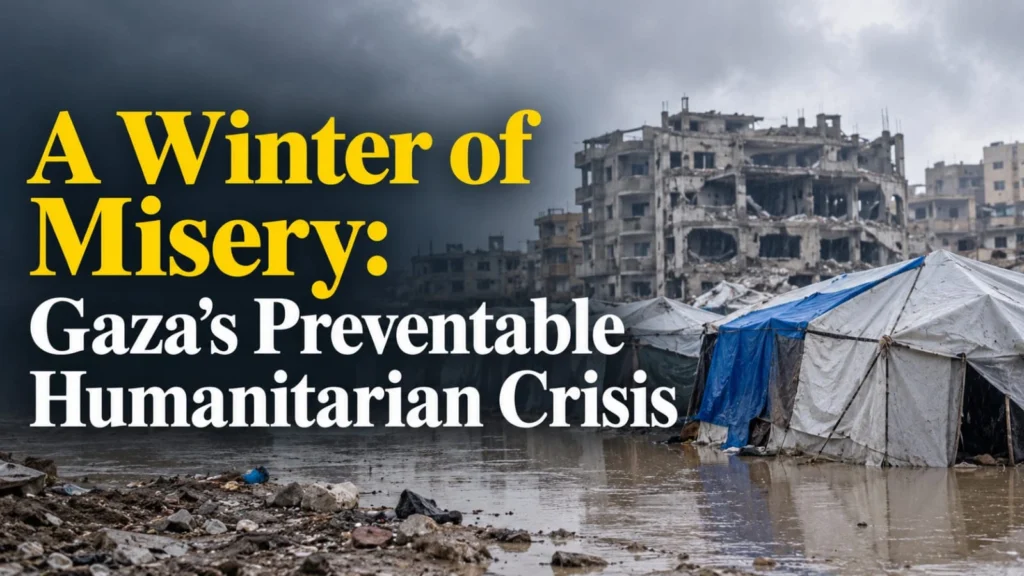
A winter storm in Gaza isn’t just another bout of bad weather, it’s proof of how fragile life can be when survival hangs by a thread. When the rain started pounding the strip on November 6, it didn’t just soak the ground. It exposed an entire community, forced to shelter in flimsy tents and crumbling buildings. Sure, nature brought the storm, but it’s human choices, policies, bureaucratic hurdles, that turned what should have been a routine seasonal headache into a full blown humanitarian disaster.
Right now, more than sixty five percent of people in Gaza are stuck in makeshift shelters, with not a single solid roof or reliable drainage system. Nearly a million people are living in flooded neighborhoods, most of them in low spots that collect the water, with four hundred thousand trapped in places the World Health Organization marks as extremely risky. Within mere days, forty six thousand households were swamped. Six thousand tents just flattened, and seventeen thousand more are barely holding up, shredded and battered by the elements.
This isn’t a mystery, or some unpredictable crisis. Aid workers know how to prep for winter. Humanitarian agencies spent months meticulously planning ahead, ordering heavy duty tents, thick tarps, water pumps, thermal blankets, even heating gear. They stockpiled everything, paid for it, and parked it in warehouses just outside Gaza, ready to roll. But, of course, none of it has made it across the border. Those supplies are trapped behind tightly controlled checkpoints, locked away by policies and paperwork. The Humanitarian Country Team was blunt, this disaster is preventable. It’s not just the rain, but deliberate restrictions and red tape that make things so dire.
Humanitarian agencies stockpiled winter supplies just outside Gaza, but vital gear remains trapped behind tightly controlled checkpoints and bureaucratic red tape.
Even the official line from Israeli authorities has started to sound hollow. Israel’s Coordinator of Government Activities in the Territories (COGAT) claims winter aid is on track, saying they’re hitting their humanitarian commitments with international partners. But internal data paints a radically different picture. Under the current ceasefire, Israel agreed to let about four thousand two hundred supply trucks into Gaza each week, eighteen thousand two hundred a month, covering everything from food and water to medical supplies and building materials.
Here’s the problem: the reality doesn’t come anywhere near those numbers. In March, only four thousand seven hundred trucks got in; in April, five thousand three hundred. For a brief moment in September, the number climbed to thirteen thousand, but then dropped again to just six thousand five hundred in October. Early November was even worse. Storms brewing, and the amount of aid crossing the border fell by forty two percent compared to the week before. The Egyptian corridor was closed, and dual use items, things like pumps or generator parts, got hung up in endless security reviews. From November 3 to November 8, not a single truck passed through the southern crossing. Despite these numbers, even when confronted with their own data showing aid cut in half, COGAT dismissed the figures, insisting they’ve gone above and beyond.
On the ground, all this bureaucracy is turning into real, physical pain. Floodwaters mix with broken sewage pipes and mountains of trash, creating a perfect storm for cholera and other diseases. Kids and elderly folks are shivering through damp nights, and respiratory infections are spiking. Dr. Reinhilde Van De Weerdt from the WHO sounded the alarm, she said there’s already thirty three thousand more respiratory cases this year than last, and winter has barely started. She’s worried, and honestly, who wouldn’t be? A few days of rain was enough to show just how bad things are, and the worst hasn’t even hit yet.
Treating life saving equipment as military threats turns humanitarian aid into a political bargaining chip, resulting in avoidable loss of life.
It doesn’t stop there. Hospitals and clinics are running out of medicine, more than forty percent of essential supplies are gone. The water crisis is reaching more families than ever, with eighty five percent forced to drink contaminated sources. The nominal ceasefire hasn’t stopped the violence, military strikes and shelling keep piling up casualties. Since October 2025, sixteen hundred people have died post truce, another six thousand wounded. Even the ground is dangerous. Rushing water moves unexploded bombs buried in the rubble, undermining shaky buildings that families cling to for shelter, causing deadly collapses.
International frustration is finally spilling out into the open. In November, the EU Council sounded the alarm, urging Israel to open all crossings for immediate, unrestricted aid. Then foreign ministers from Australia, Canada, Italy, and the UK stepped up with a rare joint statement, pointing to the one hundred and fifty thousand tents gathering dust at the border. Their message? The crisis can be reversed, just lift the restrictions and let desperately needed equipment in before winter really sets in.
But diplomatic words haven’t kept anyone warm at night. For the last year, aid groups have poured millions into relief supplies, only to see them stuck at checkpoints, tangled up in endless security concerns that block everything from tent poles to basic hygiene tools. Treating life saving equipment as military threats turns humanitarian aid into a political bargaining chip.
That’s the lesson from Gaza’s November floods, a brutal indictment of a system that talks accountability but delivers misery. If a ceasefire guarantees a specific flow of relief and the targets are missed by half, with zero consequences, the whole idea of oversight stops meaning anything. Unless outside powers back up their stern warnings with firm, sustained action, opening every crossing, moving the supplies, cutting through the backlog, then the next few months are going to bring needless waves of sickness, hypothermia, and avoidable loss of life.
About the Author
Ketty L. is a Columnist writing on politics, and international affairs.