
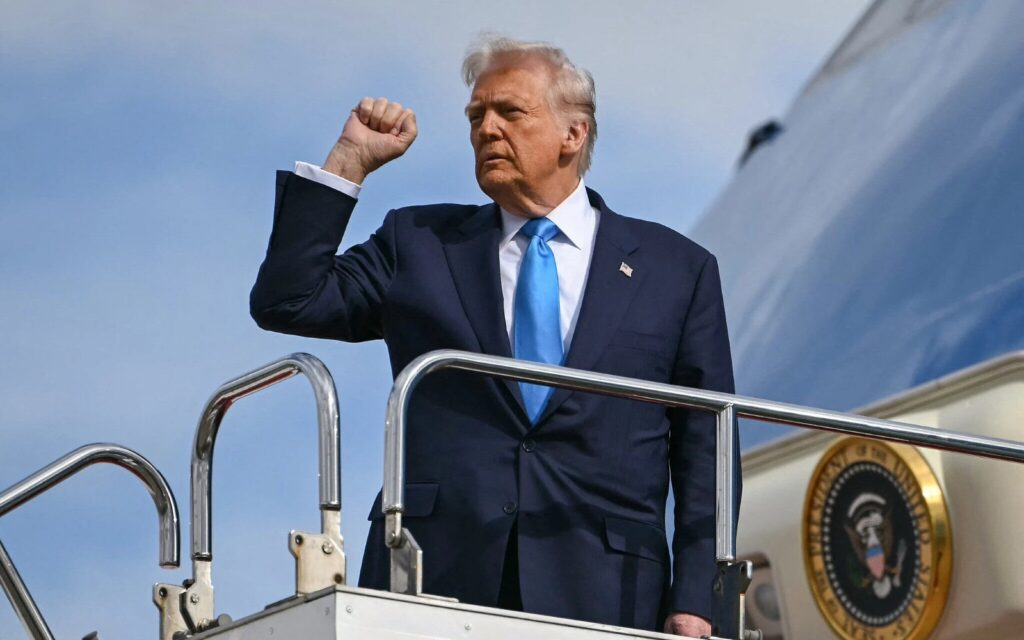
President of the United States, Donald Trump, as a very high-risk diplomatic measure, declared on Thursday that through their negotiations led to a preliminary agreement of ten-day ceasefire to be strictly observed between Israel and Lebanon. Fighting during the pause is set to begin 5:00 p.m. U.S. EST (21:00 GMT) Thursday, April 16 2026 officially. This agreement was made after direct, high-level talks between President Trump, Israeli Prime Minister Netanyahu, and Lebanese President Joseph Aoun.
A break from the fighting will be a very important, though short, 240-hour ceasefire even in the middle of the horrible war which has lasted for more than a month. Lebanon was officially ensnared in the larger U.S.-Israeli Iran war on March 2, 2026. This happened after Hezbollah, the Lebanon-based and Iran-sponsored militant group, fired a rocket load at Israel as a response for the killing of the Iranian Supreme Leader Ali Khamenei, who was the opening day of the conflict.
From the time when very intensive and full manner operations became underway around a month and a half ago, the human and territorial losses of Lebanon have become really disastrous. The Lebanese Ministry of Public Health’s statistics reveal that a series of airstrikes and ground campaigns by Israel have resulted in the deaths of more than 2,100 people in Lebanon with thousands more being wounded. In just 48 hours before the agreement of the ceasefire, the strikes carried out by Israel have claimed the lives of nine individuals across the southern district of Tyre alone, including an active paramedic.
Besides, the military operation altered the population distribution in the region quite significantly. As a matter of fact, Israeli army forces have ordered the forced evacuation of around 15 percent of Lebanon’s total land area. For that reason, Prime Minister Nawaf Salam said that more than 1 000 000 Lebanese people have had to leave their homes, resulting in a huge displacement issue. Salam appreciated the 10-day ceasefire, describing it as “the main demand of the Lebanese people” that the government has been seeking ever since the war started.
The ceasefire was reached after quite a tense week of international diplomatic efforts. On Tuesday, the representatives of Lebanon and Israel had a face-to-face meeting in Washington, D.C.. Such a diplomatic contact between these two enemy nations after decades was a first. U.S. Secretary of State Marco Rubio was the moderator of these historic conversations. Though officials expressed that the talks had been friendly, there are still stubborn political riddles; President Aoun did not want to talk directly to Prime Minister Netanyahu at all, which led President Trump to have separate phone calls in order to sign the agreement.
In order to make most of the time, President Trump revealed his intention to bring Aoun and Netanyahu to hold direct talks in the United States. To help him work out a lasting agreement, he has dispatched an influential delegation, which comprises Vice President JD Vance, Secretary of State Marco Rubio, and the Chairman of the Joint Chiefs of Staff, Dan Caine.
This update is related to other much bigger regional issues. There is a separate two-week truce between America and Iranal that ends Wednesday and after that there will be a new series of peace talks in Pakistan. Tehran has made significant use of these discussions. The Iranian parliament speaker declared that, apart from ending the direct war with the United States, it was “equally vital” to stop the bloodshed in Lebanon.
On the other hand, the road to enduring peace is still very risky. One of the biggest issues is that Hezbollah is not invited to the ceasefire agreement and has clearly rejected the diplomatic set-up. Interestingly, Hezbollah members even labeled the government as “wrong” for making the negotiations and seemingly giving in to harmful concessions. The biggest question in the region is whether the 10-day ceasefire can be maintained without the cooperation of Lebanon’s most powerful non-state military actor.