
By Ketty L. | Political & International Affairs Columnist
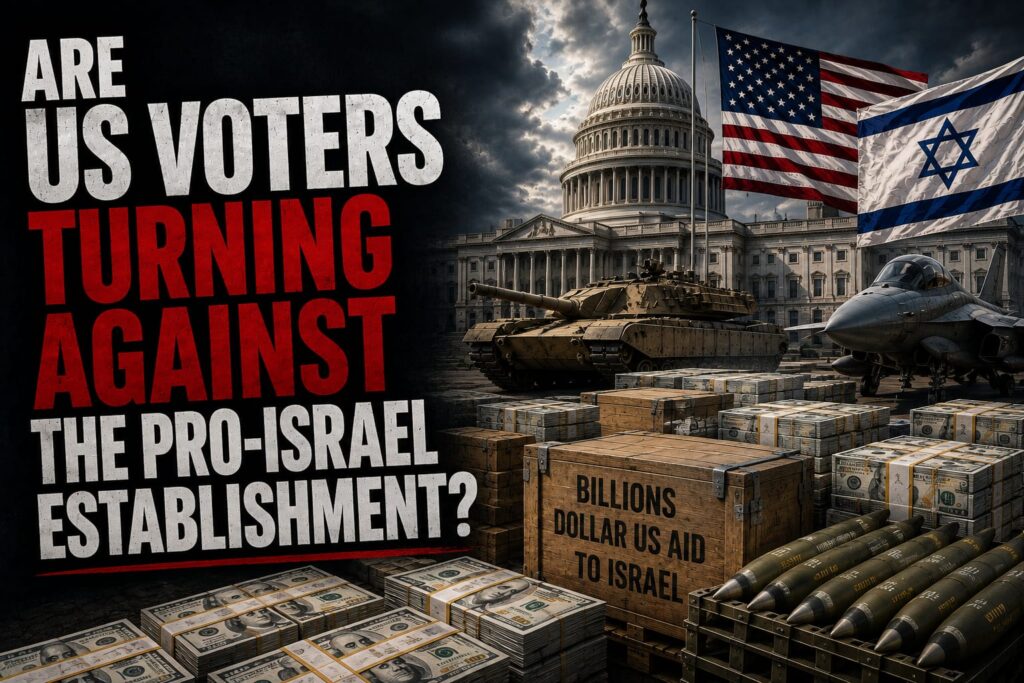
A genuine tectonic shift is steadily dismantling one of the most durable bipartisan orthodoxies in modern American foreign policy. For over half a century, unconditional diplomatic backing, unyielding military transfers, and billions in financial support for Israel functioned as basically a non negotiable prerequisite for political survival in Washington. The standard wisdom held that any candidate in either party who dared challenge that consensus faced instant electoral destruction.
That aura of invincibility has broken down.
A wave of Democratic primary upsets across several key states has exposed something pretty glaring, the political machinery of the pro Israel lobby is losing its grip on the American electorate. The clearest proof came out of Michigan, where progressive insurgent Abdul El Sayed defeated establishment favorite Haley Stevens in a genuinely high stakes primary win.
The Michigan race wasn’t just a routine local campaign. It was really designed as a supreme test of institutional influence. AIPAC, working through its super PAC, the United Democracy Project, poured more than 30 million dollars into an unprecedented wave of ad buys and campaign operations targeting El Sayed. The message was clear, show every politician in Washington that questioning military aid to Israel leads straight to political annihilation.
But when the votes got counted, that multi million dollar wall of money collapsed anyway. Even in a critical electoral battleground, record breaking PAC spending couldn’t force political compliance on a public whose moral alignment has genuinely shifted underneath it.
Michigan’s result built directly on wins in New York, where progressive candidates aligned with Mayor Zohran Mamdani swept past establishment rivals despite heavy donor pushback. It echoed again in Colorado, where Melat Kiros unseated a thirty year congressional incumbent, defying party leadership and political action committees alike. Taken together, these wins show that primary outcomes here aren’t isolated flukes anymore. They mark something closer to a systemic rejection of donor driven foreign policy by a genuinely transforming Democratic base.
“When an interest group has to spend record breaking amounts just to protect establishment incumbents, that’s usually because its underlying political legitimacy among ordinary voters has already dissolved underneath it.”
For decades, pro Israel interest groups operated under an aura of untouchable influence precisely because they rarely needed to unleash massive sums of money to secure domestic outcomes. Support for Israel was just treated as a cultural and political default setting. The sudden, desperate deployment of tens of millions of dollars into individual domestic primary races doesn’t signal enduring strength. It signals real panic. When an interest group has to spend record breaking amounts just to protect establishment incumbents, that’s usually because its underlying political legitimacy among ordinary voters has already dissolved underneath it.
At the heart of this breakdown sits the total failure of weaponized political rhetoric. For years, establishment figures used blanket accusations of antisemitism to shut down legitimate debate over Israeli state policy and human rights concerns. But the American electorate has increasingly learned to see through that tactic. Voters are making a pretty obvious, necessary distinction, condemning a sovereign state’s military actions, illegal settlements, and severe civilian blockades isn’t an attack on a religious community or an ethnicity. It’s just a standard application of human rights principles. When political action committees try to label opposition to aerial bombardment as bigotry, the public increasingly recognizes that tactic for what it is, a transparent attempt to shield foreign atrocities from democratic accountability.
This shift is also driven by some pretty stark internal economic contradictions. Throughout these campaigns, progressive candidates kept asking a basic question that resonated deeply with working class families, why is there an endless budget for foreign weapons, bombs, and military aid while working class Americans struggle with rising inflation, exorbitant healthcare costs, underfunded schools, and crumbling infrastructure. The contrast between billions shipped overseas and austerity imposed at home has turned foreign policy into an urgent domestic economic issue for a lot of voters.
On top of that, legacy media’s ability to police the boundaries of political debate has broken down too. For decades, corporate television networks and legacy print outlets controlled the national narrative, routinely framing unconditional military support as the only acceptable position to hold. That information monopoly has ended. Today’s electorate bypasses corporate media gatekeepers entirely, pulling in real time documentation, independent international journalism, and raw digital footage straight off social media and independent platforms. Millions of people watched the physical destruction of Gaza unfold on their own screens in real time, which has basically made the old legacy political scripts useless.
The panic among foreign policy elites over this kind of independent information is pretty palpable at this point. When former foreign leaders publicly call independent digital media networks and alternative information platforms their greatest strategic threat, they’re basically admitting that truth itself has become their primary adversary. Authoritarian regimes fear hostile militaries. Decaying political orthodoxies fear informed citizens instead.
“The primary wins across Michigan, New York, and Colorado aren’t temporary glitches. They mark the formal beginning of an era where foreign policy lobby money can’t override public conscience anymore.”
Democratic Party leadership remains dangerously out of step with its own voters on this. According to Pew Research Center survey data, over 80 percent of young Democratic voters now view Israel unfavorably, marking a historic collapse in institutional support. By continuing to align itself with outside political action committees funded by conservative donors, the party hierarchy is actively insulating itself from its own core electorate.
Political establishments routinely confuse legacy endurance with permanent authority. They assume that because a playbook worked for thirty years, it’ll just keep working forever. But history shows that political consensus tends to decay long before it officially breaks apart in public. The primary wins across Michigan, New York, and Colorado aren’t temporary glitches. They mark the formal beginning of an era where foreign policy lobby money can’t override public conscience anymore. The illusion of untouchable influence has shattered, and no amount of campaign spending is going to piece it back together at this point.
About the author:
Ketty L. is a Columnist writing on politics, and international affairs.