
How Beijing Is Rewriting the Rules of the AI Age
1. A New Era of Technology Governance
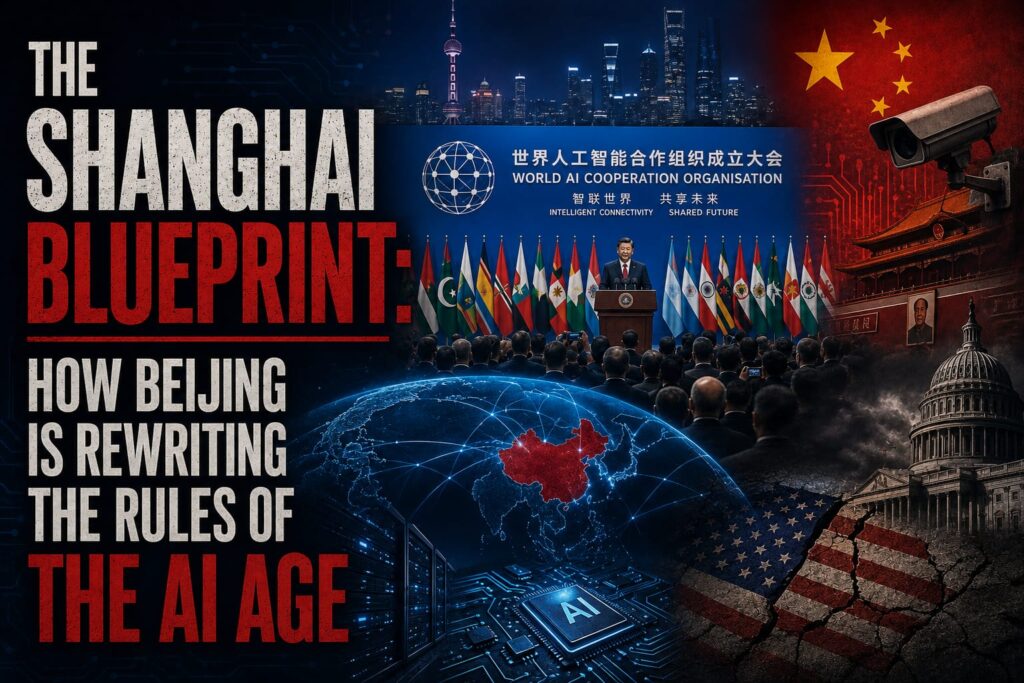
Something genuinely seismic is happening to how the world governs technology right now. With the launch of the World AI Cooperation Organisation in Shanghai, Beijing has basically thrown down a marker, announcing it wants to rewrite the rulebook for the entire AI era. Chinese President Xi Jinping used the launch event to take a pretty direct shot at Washington, condemning what he called unilateral dominance and pushing hard for a multilateral framework instead. This is a calculated move aimed straight at the cracks left behind by American protectionism and its tightly guarded domestic tech stack. By pulling together thirty founding nations, China isn’t just building an alternative regulatory body here. It’s positioning itself as the tech patron of the Global South, dangling infrastructure, training, and resources in exchange for developing nations buying into its heavily regulated, state centric vision of the future.
2. Flipping the Digital Dynamics
The stakes riding on this whole technological courtship are enormous. For decades, Western countries basically wrote the rules for how the open internet evolved, forcing more authoritarian governments to operate behind their own digital walls. Right now, that whole dynamic has flipped. With growing global frustration over unchecked big tech, frequent internet shutdowns, and rising surveillance showing up in both Western democracies and developing countries alike, Beijing’s tightly controlled model has picked up an unexpected amount of appeal. Through this new framework, China’s clearly trying to build a global consensus around AI standards that reflects its own preference for state sovereignty over individual digital rights. And the immediate goal isn’t subtle either, it’s about gathering enough collective diplomatic weight from emerging economies to actually shift the direction of AI policy and treaties eventually decided at the UN.
3. Expanding the Digital Silk Road Playbook
This whole diplomatic push is really just an expansion of the playbook China already ran with its Digital Silk Road initiative. Through that earlier infrastructure blitz, Beijing successfully exported 5G networks and sophisticated public surveillance tech across Asia, Africa, and Latin America, and in the process built deep structural dependencies, leaving recipient governments locked into Chinese engineering, proprietary code, and ongoing maintenance contracts. This new AI push is basically trying to pull off the same trick, just at a much bigger scale. By pouring money into semiconductor supply chains, specialized minerals, and massive, energy hungry data centers, China wants to become the backbone that the Global South’s digital future runs on. For countries without a lot of resources to spare, ready made AI infrastructure is a genuinely tempting offer, but it comes with a real, long term cost to national independence.
4. The Erosion of Data Sovereignty
The deeper tension here is really about domestic sovereignty and citizens’ rights. If developing countries end up handing over their entire digital architecture to Chinese platforms, all local promises about data sovereignty basically become meaningless overnight. And the risk isn’t just that a foreign superpower gets access to local data. It’s that recipient states slowly start absorbing the illiberal regulatory instincts of whoever’s actually running their infrastructure. When you import your governance systems wholesale from an authoritarian state, the erosion of digital rights tends to follow pretty naturally.
5. The Vacuum Created by Western Exclusion
None of this happened in a vacuum either. America’s current approach to global AI policy has actually sped up this shift. By focusing so heavily on keeping its own commercial AI stack and restricted tech dominant globally, Washington has ended up alienating a lot of emerging economies that simply can’t afford expensive Western licenses or meet strict political conditions attached to them. That created a huge vacuum, and Beijing was more than happy to step in with subsidized tech packages and friendly, cooperative rhetoric. The Global South isn’t necessarily picking Chinese ideology over Western values here. It’s picking access over being left out entirely. By treating AI access like a tool of economic exclusion, the West has basically pushed its own traditional partners straight into the arms of a state controlled tech ecosystem.
6. Geopolitical Fragmentation and Global Risk
This kind of fragmentation, splitting AI governance into competing ideological camps, is genuinely dangerous for where global technology is headed. If the world ends up split between an American dominated commercial sphere and a Chinese led state centric bloc, the whole idea of universal safety standards basically falls apart. And AI carries real global risks, from automated biological threats to systemic economic disruption, the kind of risks that actually need unified, global oversight to manage properly. A fractured regulatory landscape just leaves gaps for bad actors to exploit between competing rule sets. Instead of working together on risk management, the world is drifting into a race to the bottom, where safety keeps getting sacrificed for a bigger slice of geopolitical market share.
7. Preserving Domestic Digital Freedom
For countries caught in the middle of this tech cold war, the immediate priority has to be protecting their own internal digital freedoms. Emerging economies need to recognize that what looks like a generous infrastructure gift today can turn into a permanent trap on their sovereignty tomorrow. Building real domestic capability, investing in localized data centers, and keeping supply chains diverse are basically the only ways to avoid becoming totally dependent on either Washington or Beijing. Leaning entirely on an outside patron for something as fundamental as intelligence infrastructure is essentially handing away a piece of your own future statehood.
8. The Ultimate Battle for Global Influence
The launch of this Shanghai organization makes it pretty clear that the conversation around artificial intelligence has moved way past code and algorithms at this point. It’s turned into a raw, unfiltered fight for global political influence. As China pushes aggressively to hold the pen on how the world regulates this technology, the human rights of billions of people across the Global South are hanging in the balance. If the international community lets the rules for the world’s most transformative technology get written entirely through state control and imperial competition, individual liberty is going to be the first thing sacrificed. In a landscape like this, where the exact same tools that could liberate people can just as easily be turned into instruments of total state surveillance, no single superpower winning this race actually means the rest of us come out ahead.