
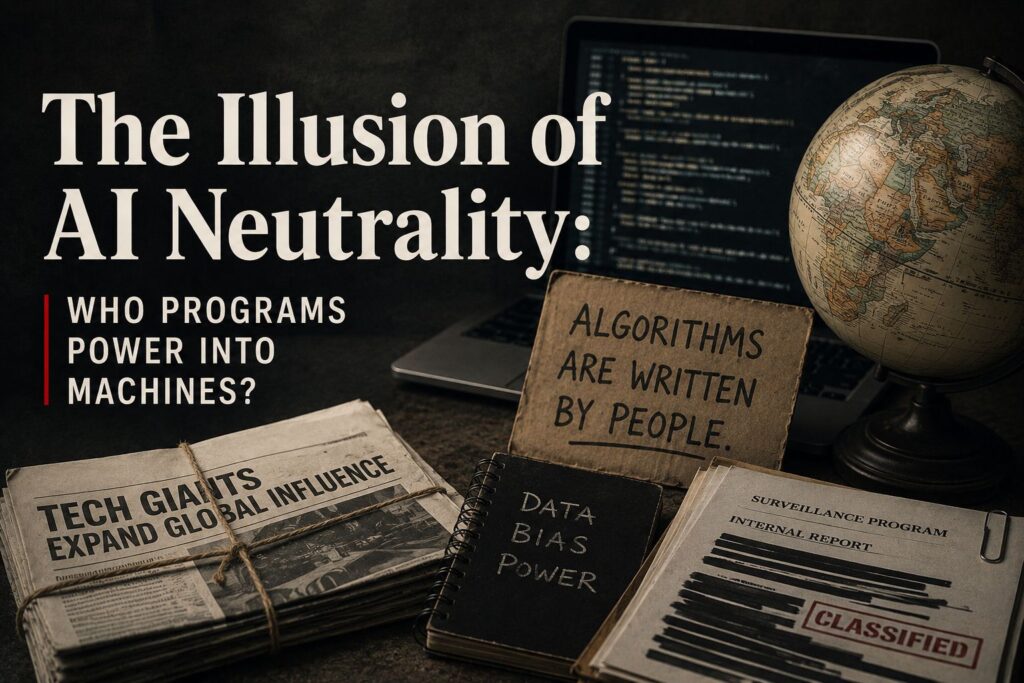
Believing AI is neutral is not just a mistake, it is a choice with real Socio-political consequences. We need to stop acting like these systems are objective truth-tellers that just appeared out of nowhere. They are human-made products, built under the thumb of corporate interests and global power plays. When we label them impartial, we are basically ignoring the power structures hidden under the hood. AI is not just some shiny new invention, it is a tool that takes our existing social hierarchies, turns them into code, and spreads them across the globe.
The biggest misunderstanding here is thinking data is somehow neutral, it is not, and neither are the systems that use it. Since machine learning relies on historical data, these models end up soaking up the same biases that existed in the society that created them. We have seen this play out in hiring algorithms that consistently side with men, not because the computer has an agenda, but because it is just following old patterns where men were usually the ones getting hired. We see the same thing with facial recognition, which often fails for people with darker skin because the training data was skewed from the start. These are not just minor bugs, they are structural flaws that come with the territory.
The real problem is the human decisions behind how that data gets picked, labeled, and used in the first place. Developers are the ones deciding which factors actually matter, how to define accuracy, and which risks are worth taking. These are not just technical choices, they are moral and social biases. When a predictive policing tool targets specific neighborhoods, or a credit algorithm flags certain low-income backgrounds, it is basically just human assumptions disguised as computer logic. Bias is not a glitch, it is actually how the system is designed to work.
At the global stage, the whole “neutral AI” argument falls apart even faster. Right now, the most advanced AI systems are developed in a handful of regions, primarily the US and China. It means the big AI models and algorithms we all use are essentially pre-loaded with Western values, specific languages, and local political baggage. When these tools get shipped out to the rest of the world, they do not just work, they end up pushing aside different ways of thinking and forcing everyone into a single, flattened-out digital culture.
On top of all, governments are now using AI as a tool for global influence. We are witnessing everything from bot armies pumping out propaganda to algorithms that carefully curate what shows up in your feed, all designed to nudge public opinion on a massive scale. It is a way for states to blast their own narratives while quietly burying any dissent, and they are getting so good at it that it goes unnoticed. What we are left with is a new, high-tech version of information control, it is quiet, it is everywhere, and it is perfectly tuned to mess with our heads. At this point, it is getting harder and harder to tell where persuasion ends and manipulation begins.
What is really scary about this whole “neutrality” myth is how it slowly strips away our own power to make decisions. As AI starts running everything from who gets a job or a loan to how we handle war and government, we’re basically trading human intuition for automated results. We are moving the power away from actual people and institutions you can hold accountable and handing it over to inscrutable algorithms.
Since we know AI is not neutral, the real question is not about if there is bias, but whose bias prevails. If we want to fix this, we have to stop hiding behind the word “objective” and start talking about real accountability. Transparency is a starting point, we need to open up these algorithms, bring in more diverse voices to build them, and let outsiders audit the results. But it goes deeper than that. We need to democratize the whole mechanisms, making sure different cultures and communities actually have the power to build tech that reflects their own values, not just someone else’s.
Ultimately, the path AI takes will not just be about some breakthrough in a lab, it will be about the political choices we make right now. Admitting that “neutrality” is just a story we tell ourselves is the only way we can start taking back control over a technology that is busy rewriting the rules of power.