
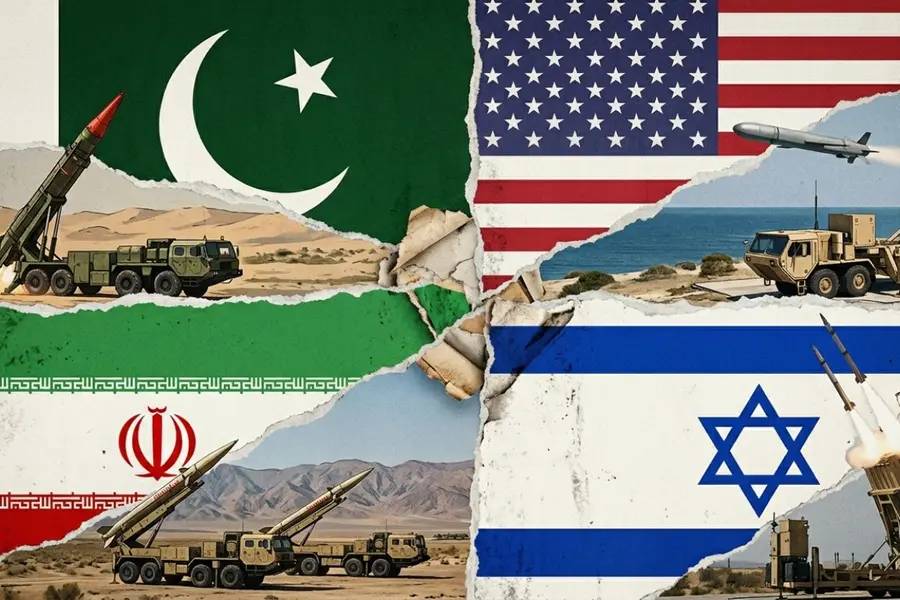
With the world increasingly dominated by great-power rivalry and diplomatic norms disintegrating Pakistan to some extent, has taken a role that very few countries of its size ever dared, and still fewer successfully. Over the last fortnight, Islamabad has positioned itself as the key mediator between two nuclear-armed foes, America and Iran. Without any doubt, one can say that this is the biggest moment for Pakistan on the global stage after a long time.
On April 11, Islamabad woke to a city that was locked down. Streets were closed, security check points increased and more than 10,000 security forces were mobilized as the American and Iranian delegations arrived for the level of highest direct bilateral engagement since the Iranian revolution in 1979. A conference room in Serena Hotel was used as the meeting venue.
Pakistan, having spent several weeks working its way as the non-aligned mediator, was the one who got the two parties to sit together – something that no European, Gulf or international community had managed so far. This is a diplomatic accomplishment in itself and deserves to be recognized. Talks continued for over twelve hours without reaching a final agreement. But whether or not an agreement was reached is different from the significance of the event. Pakistan came out of the situation with its status still there, trust in it not lowered, and its mediation mechanism still active and running at full speed. Within days, Pakistan’s Army Chief Field Marshal Asim Munir travelled to Tehran carrying a fresh message from Washington, keeping communication channels warm at a moment when silence could mean war.
The architecture of Pakistan’s mediation rests on a rare combination of relationships. Munir has even built up a rapport with Donald Trump, who described him as “his favorite field marshal”. Meanwhile, through his previous position as head of military intelligence, Munir knows the top leaders of Iran’s Revolutionary Guards quite well. Having such dual access, being trusted in Washington and esteemed in Tehran, is something you cannot get overnight.
It’s the result of a long series of planned moves, and Pakistan is very much benefiting diplomatically from that accumulated diplomatic capital. Meanwhile, for four days, Prime Minister Shehbaz Sharif is traveling to Saudi Arabia, Qatar, and Turkey on a diplomatic mission and hoping to get these countries as a regional pressure coalition, which will potentially pave the way for the two sides to hold a second round of negotiation.
Strategically, Pakistan is on firm ground: they will adhere to the ceasefire, maintain the truce, and make use of every single bilateral relationship in the region to bring the parties to negotiation. Talking about the nuclear aspect, Pakistani officials have raised their expectations for a significant breakthrough which might have been the reason behind Munir’s extremely rare direct visit to Tehran. It’s not just talk, the fragile ceasefire that was agreed upon expires on April 22, and Pakistani diplomats are trying to have it prolonged in order to have time for the second round of negotiations.
What Pakistan is demonstrating right now is something beyond transactional diplomacy. It is demonstrating that a nation situated at the crossroads of East and West, connected to Beijing, financed by Gulf capital, helpful to Washington, and trusted in Tehran, can use a kind of moral and strategic leverage that even pure military or economic power cannot obtain. It is the leverage of the honest broker, the neighbor without any bombs dropped and still without any grievances. Pakistan’s leadership were already so busy on the days before the Islamabad talks that they hardly had time to sleep and had uninterrupted coordination of the work, according to officials. That unglamorous and exhausting effort is the real story behind the headlines. Peace, whenever it happens, the case being, will have Islamabad’s fingerprints on it.
Pakistan did not start this war. But it may yet be the country that ends it.