
By Ketty L.
For outsiders watching Tel Aviv’s political scene, the possibility of Benjamin Netanyahu’s removal feels like a long awaited spectacle. After years as the face of military force, judicial controversy, and a stubborn blockade against Palestinian statehood, people keep framing his exit as some kind of dramatic reset. Western journalists and diplomats seem almost restless, itching for a return to the table, a familiar handshake, a new deal. They pitch Netanyahu’s downfall as the magic ticket to regional stability. But blaming everything on him actually misses something fundamental.
Everyone is so fixated on the character, the personality, the supposed villain of the piece, they overlook a much simpler truth: the systematic oppression of Palestinians has not depended on who is prime minister. Israeli politics is not some tug of war between peacemakers and hardliners. It is a steady march, administrations come and go, parties change, but the policy is almost always the same. The aim? Expand territory, suppress resistance. No matter who is calling the shots.
You can look at the names floated as Netanyahu’s replacements, take Gadi Eisenkot, for instance. He is often sold to the world as pragmatic, a stabilizing force compared to the radical wings of the coalition. But this is the guy behind the Dahiya Doctrine, a military strategy from the 2006 Lebanon War, designed to use overwhelming force against civilian areas for political gain. Transforming these tactics into government practice does not mean moderation. It just means violence gets another badge.
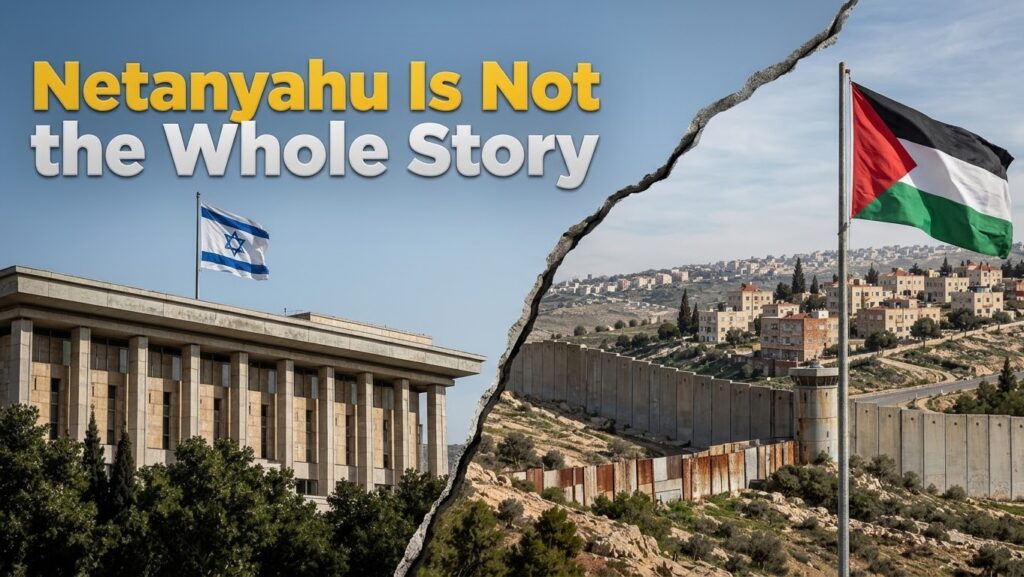
The systematic oppression of Palestinians has not depended on who is prime minister; consensus on expanding territory cuts through all party lines.
The facts are pretty clear: occupation works independently from any coalition makeup. Western diplomats love to romanticize Yitzhak Rabin for Oslo, he is the peacemaker, right? But Rabin, as defense minister during the First Intifada, put the break their bones policy into action against Palestinian protestors. And his government, during the supposed peace process, presided over a huge spike in illegal settlements, according to Peace Now, settlers in the West Bank jumped from about 116,000 to nearly 200,000 between 1993 and 2000. The Oslo period did not end the occupation; it modernized it, pushing day to day policing onto a weak Palestinian Authority while Israel tightened its grip on land and resources.
The repetition just keeps going, look at other so called moderates. Shimon Peres gets all sorts of praise in Western circles, but he ordered Operation Grapes of Wrath in 1996, leading to the Qana massacre when Israeli forces shelled a UN compound, killing over a hundred Lebanese civilians. Ehud Olmert, who later used the language of moderation, directed the 2006 invasion of Lebanon and kicked off Operation Cast Lead in Gaza in 2008, which B’Tselem says killed more than 1,300 Palestinians. Even current center left politicians, from Naftali Bennett to Yair Lapid, made their opposition to a Palestinian state clear. The truth is, consensus on expanding territory cuts through all the party lines.
For Palestinians, the years do not pass with which party wins elections. It is marked by land confiscations, destroyed homes, and military blockades that just keep coming. UN OCHA stats record thousands of demolitions and land grabs across Area C of the West Bank over the past twenty years, carried out seamlessly regardless of who is in charge. The illusion of choice in Israeli elections mostly exists to shield the state from scrutiny, letting foreign governments tell themselves that change might be just around the corner.
In a system built around military rule over millions of disenfranchised people, swapping out the prime minister just makes the facade look different.
When the West treats the conflict as the fault of one leader’s personal excesses, it gives itself an excuse for doing nothing, implying that all it takes is a change in government to fix things. This focus on personalities is made for diplomacy; it keeps alliances comfortable and lets people pretend the violation of international law is an accident, not a deep rooted policy. In a system built around military rule over millions of disenfranchised people, swapping out the prime minister just makes the facade look different, it does not touch the reality under the surface.
The constant thread of the Zionist project means all the energy spent guessing at coalition math or waiting for new faces is basically wasted. Whether Likud, a centrist group, or some national unity government runs things, the posture toward Palestinian self determination stays unchanged. Settlement expansion, military law, and blocking refugee returns are not up for debate; they prop up the state itself.
Any real shift requires letting go of the hope that a new face or party will change life for Palestinians. Leadership changes might tweak how policies sound to outsiders or shuffle diplomatic manners, but they will not knock down walls or remove checkpoints and legal restrictions in the occupied territories. Genuine freedom is not coming from Tel Aviv’s ballot box, it will only happen when the world faces up to the systems of apartheid, military occupation, and relentless expansion that have stuck around under every Israeli government for more than seventy years.
About the Author
Ketty L. is a Columnist writing on politics, and international affairs.