
Municipal Jurisdictions, Executive Shielding, and the Friction of International Warrants
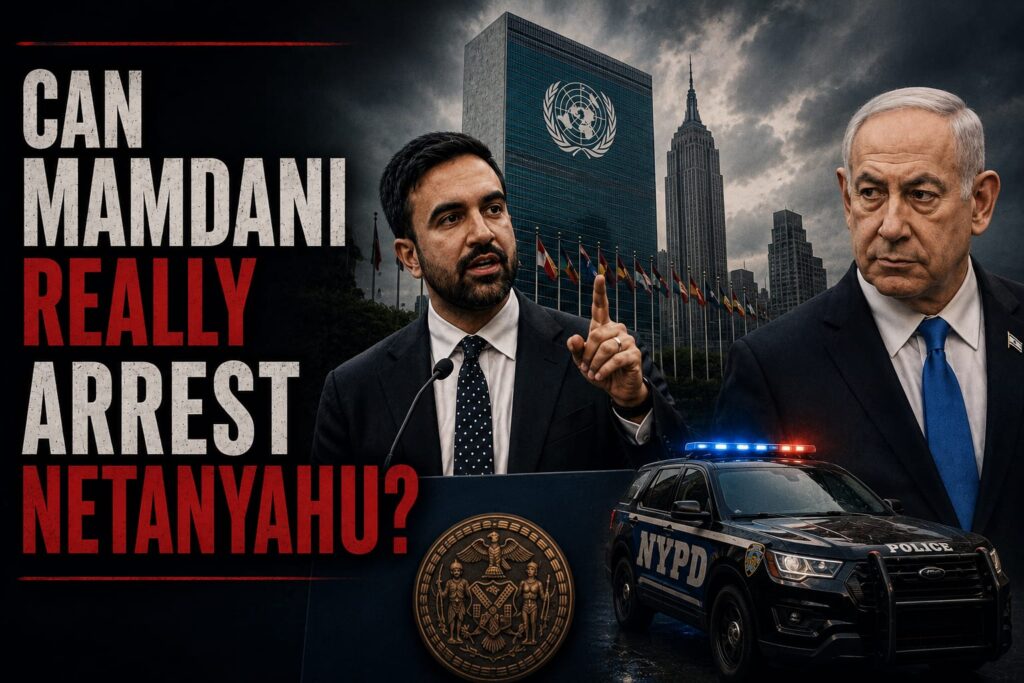
The UN General Assembly’s arrival in New York this September has turned what’s usually a routine diplomatic gathering into genuine legal and political theater. At the center of it all is Zohran Mamdani, New York City’s newly elected mayor, who’s boldly dragged the entire city into the middle of global geopolitics. Mamdani publicly said his legal team is actively looking into whether the NYPD actually has the authority to arrest Israeli Prime Minister Benjamin Netanyahu when he lands in the city this fall.
Netanyahu has been under an International Criminal Court arrest warrant since late 2024, facing charges of war crimes and crimes against humanity tied to Israel’s offensive in Gaza. Mamdani’s move is a rare, direct challenge to how American foreign policy usually gets handled, coming from a local official rather than anyone in Washington. And predictably, it’s set off an immediate, furious response from the very top of federal power.
Trump wasted no time trying to shut the whole thing down, guaranteeing on social media that Netanyahu would face zero legal jeopardy on American soil. He said flatly that Netanyahu would not be arrested in any way, shape, or form while in the country, tying the Israeli leader’s actions directly to the broader standoff with Iran. This public clash between a city mayor and the president exposes something genuinely rotten sitting at the heart of the global order.
“The friction here shows that international justice has basically become a theater of political willpower, where universal human rights law gets paralyzed the second it bumps into the raw demands of state sovereignty and imperial protection.”
From a strictly technical angle, the odds of a local police force actually arresting a sitting foreign head of state on American soil are close to zero. The main obstacle is the thick, protective layer of diplomatic immunity surrounding these events. Under both long-standing customary international law and the specific terms of the UN Headquarters Agreement, foreign leaders visiting for official UN sessions get near total immunity from domestic arrest, detention, or prosecution.
That’s exactly why Mamdani admitted in interviews that his own administration isn’t even sure it has the practical jurisdiction to pull something like this off. The United States never signed onto the Rome Statute that created the ICC in the first place, so federal law simply doesn’t have a domestic mechanism to enforce warrants issued out of The Hague against non-citizens. What City Hall is actually drafting here isn’t a realistic plan for an arrest. It’s a deliberate attempt to force a structural crisis out into the open. By even asking the question, Mamdani is exposing just how much legal gymnastics the federal government has to perform to shield someone accused of orchestrating atrocities against civilians.
Politically, taking on someone as powerful as Netanyahu is a calculated, high-risk move rooted in how much New York’s electorate has shifted in recent years. As a prominent progressive voice, Mamdani is tapping directly into real, simmering anger among young voters, Arab-American communities, and human rights advocates who see current American policy on Palestine as completely bankrupt. As the old proverb goes, justice delayed is justice denied, and by framing enforcement of the warrant as simply a matter of public record rather than personal politics, Mamdani gets to position himself as someone just trying to honor international legal norms rather than picking a fight for its own sake.
“He’s drawn an explicit parallel between the warrants against Netanyahu and the ones issued for Vladimir Putin, arguing that global justice can’t stay selective and still call itself legitimate.”
Using the mayor’s office to challenge the White House on Gaza is a genuinely effective way for him to hold onto his progressive credibility, even knowing the whole effort will likely get blocked by federal injunctions. But the sheer ease with which Trump can neutralize this challenge says a lot about just how much power the federal executive holds over foreign affairs. The White House has a whole arsenal of legal tools to protect its strategic partners.
The Department of Justice can file a suggestion of immunity in federal court almost instantly, a motion that binds domestic judges and strips local police of any real authority to act. On top of that, the federal government controls the borders, the airports, and the diplomatic escorts around the UN district. If it has to, federal agents can bypass local police entirely to make sure Netanyahu moves through the city safely.
Trump’s aggressive intervention makes it painfully obvious that Washington treats its alliance with Israel as entirely insulated from outside legal scrutiny, using international law as an optional tool aimed only at adversaries rather than a binding framework that applies to everyone equally. There’s an old line often attributed to George Orwell, that some animals are more equal than others, and it’s hard to think of a more fitting summary of what’s playing out here.
“The ICC stated back in 2024 that it had reasonable grounds to believe Netanyahu bears criminal responsibility for the deliberate starvation of civilians and targeted attacks on hospitals in Gaza. Those warrants mean that in 124 countries around the world, Netanyahu faces immediate detention on arrival.”
And yet inside the borders of the country that talks louder than anyone about a rules-based order, he’s promised total safety, practically a red carpet. That gap tells the rest of the world exactly how toothless international justice becomes the moment it collides with American military and economic interests. It tells vulnerable people everywhere that the severity of a war crime matters a lot less than who your allies happen to be.
At the end of the day, this whole spectacle ahead of the September General Assembly isn’t really about the fine print of police jurisdiction. It’s about a much deeper crisis of moral legitimacy. Mamdani’s challenge might get crushed easily enough by the sheer machinery of federal preemption, but the damage to America’s global image won’t be so simple to undo.
There’s an old idea that power reveals character, and by forcing the president himself to publicly threaten a city government just to protect someone wanted for crimes against humanity, New York’s progressive leadership has managed to strip the federal establishment of its usual moral vocabulary. This summit isn’t going to be remembered for anything it actually accomplished diplomatically. It’s going to be remembered as the moment the highest office in the country openly turned national sovereignty into a permanent fortress built for geopolitical impunity.