
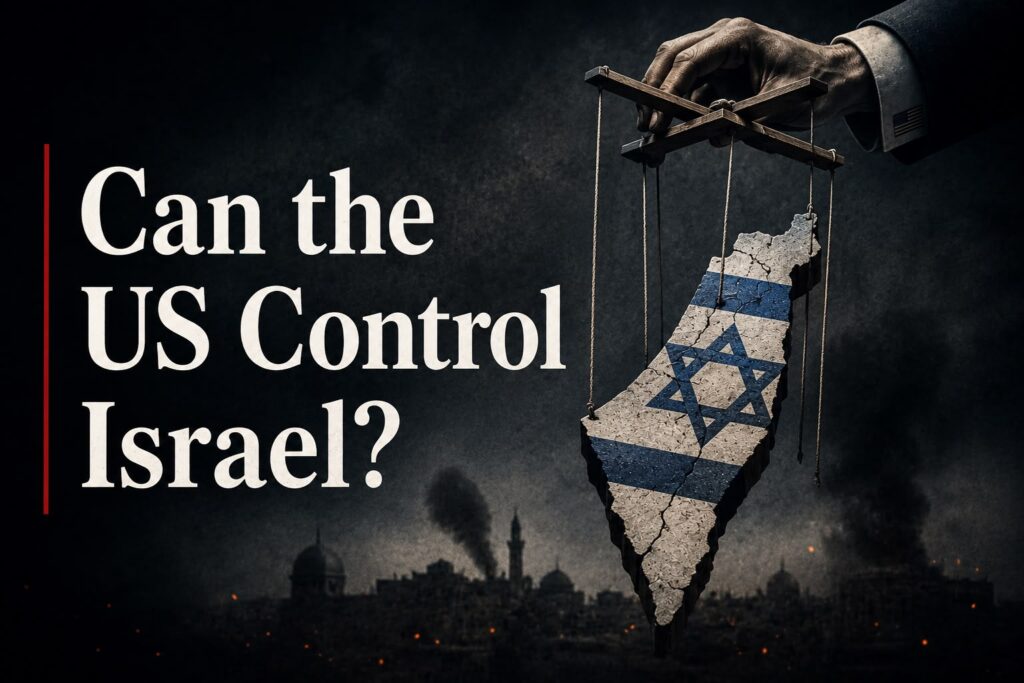
In the heart of the current dilemma plaguing West Asia is a much more troubling situation for the US administration: whether the United States will be able to discipline an ally that exhibits strategic behavior that seems out of sync with American preferences. With news coming from all sides about the peace deal between the US and Iran that would freeze any escalation of conflict and stabilize the situation regarding nuclear issues, Israeli attacks against Beirut are not merely another episode in its long confrontation with Hezbollah. They are being read as a deliberate effort to reshape the diplomatic environment itself, before it hardens into a deal that constrains Israeli freedom of action.
This is where the question sharpens: if Washington wants de-escalation and a negotiated framework with Tehran, but Israel continues kinetic operations that raise the probability of retaliation, is the United States still the architect of regional order, or merely one of several competing actors within it?
The Trump administration’s position is relatively clear in intent, if not in effect. Trump has consistently signalled that another prolonged West Asian war is not in America’s interest. The domestic political logic is straightforward: inflation sensitivity, energy price exposure, and war fatigue all push the White House toward containment rather than expansion of conflict. A stabilized Iran track, however tentative, would also serve broader US interests, particularly in keeping maritime energy corridors like the Strait of Hormuz within predictable risk thresholds.
The present stance of the Israeli army implies that it does not consider the sequence of diplomacy in Washington as conclusive. The attacks on Beirut are not happening in isolation. They are part of a larger doctrine according to which the exertion of pressure against Hezbollah and ultimately Iran’s entire network in the region is necessary, regardless of any diplomatic manoeuvring happening between Washington and Tehran. The logic is simple: degrade adversary capabilities before any external diplomatic arrangement can freeze the battlefield in an unfavorable configuration.
But from Washington’s perspective, this creates a contradiction that is increasingly difficult to ignore. A US-brokered or US-supported Iran understanding depends on relative calm in the Levant. Escalation in Lebanon does the opposite: it increases the probability of Iranian involvement through proxy channels, raises the likelihood of multi-front retaliation, and weakens the credibility of any agreement that assumes containment.
The result is a divergence of priorities. Washington is trying to stabilize a geopolitical track; Israel is actively reacting to destroy that track.
Traditionally, the basis of American influence on Israel has been threefold: arms, protection, and intelligence cooperation. However, influence is not the same thing as control. At times when there is perfect harmony between the two nations, Israel has shown operational independence in theatres that represent threats to its survival. The difference in the situation now lies in the simultaneous crises: the consequences of Gaza, the turbulence of Lebanon, the disarray in Syria, and the Iran issue cannot be considered separately.
In such a configuration, even small Israeli escalations carry outsized diplomatic consequences. A strike in Beirut is not just a message to Hezbollah; it becomes a signal to Tehran, a stress test for Gulf capitals watching normalization pathways, and a complicating factor for Washington’s negotiating table.
Should the Iran peace be moving towards its signature phase, timing is important. According to diplomatic theories, the agreement will be the most vulnerable at this point, not because of any ambiguity in the text, but because other forces external to the process seek to change the strategic motivations behind it.
This brings us to the hardest strategic dilemma for Washington: what happens if Israel continues military action even after a deal is signed?
Even with a deal signed between the two parties, it does not necessarily mean that the doctrine of security for the Israelis will no longer apply. In addition, unless the agreement comes with enforcement measures that are unlikely from Washington, it does not have the ability to restrict Israeli operations in Lebanon and Syria.
Iran’s response equation in such circumstances will be the critical one. In case there is no direct strike against Iranian soil, it can always resort to asymmetric means, Hezbollah in Lebanon, militia operations in Iraq, or naval chokepoints in the Persian Gulf. Each of these carries escalation risks that could rapidly collapse any diplomatic framework Washington is trying to construct.
Can Trump stop Israel in this environment? The answer is less binary than it appears. The United States can influence tempo, shape intelligence flows, and apply diplomatic pressure in moments of acute escalation. It can also condition aid and coordination in extreme scenarios. But preventing Israel from acting on perceived security imperatives, especially in Lebanon, requires a level of coercive alignment that no recent US administration has fully exercised.
The more specific question here would be, then, not if Trump can prevent Israel altogether but whether he will manage to control the level of engagement enough to safeguard the diplomatic framework with Iran. With the current course of events, this seems increasingly unlikely unless both sides, Washington and Tel Aviv, operate within a shared escalation framework, which is not evident.
It all comes down to the question of not whether a deal between the US and Iran can be made, but whether this deal can withstand contact with Israel’s existing operational philosophy in Lebanon. Should bombing in Beirut proceed while negotiations occur in their final minutes, it would not be seen as merely tactical noise, but as a clear case of strategic disruption of a nascent agreement that is just beginning to take shape. It is here that Washington is being put to the test, less by negotiating with Tehran than by attempting to keep its ally from constantly changing the terms of engagement before peace becomes a reality. If the US cannot prevent such an escalation of conflict that threatens to unravel its own diplomatic process, then it no longer becomes a matter of managing Israel, but whether US-directed regional peacebuilding is possible in the first place.