
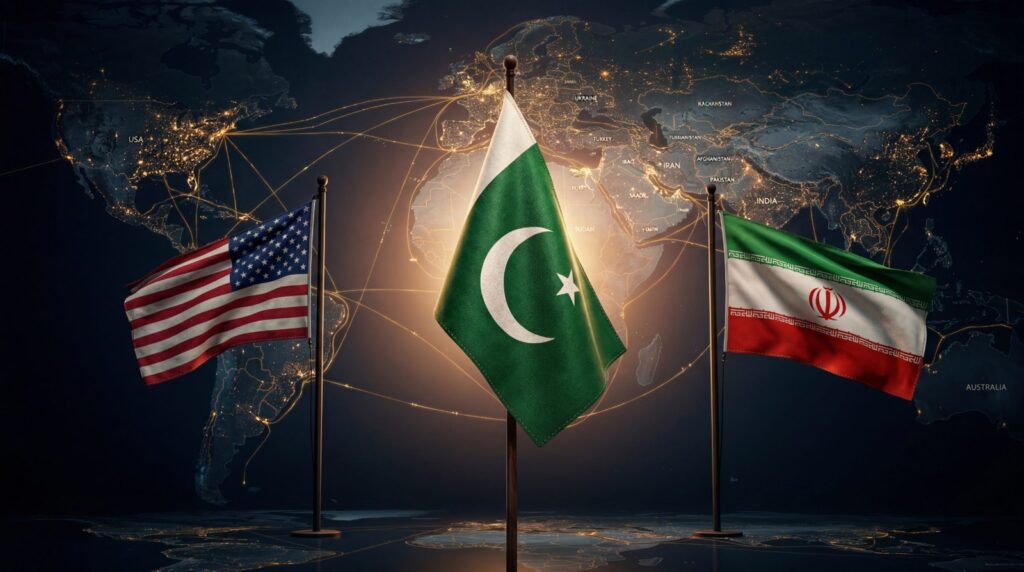
When the U S. And Iran were on a collision course in 2026, Pakistan stepped up. They didn’t announce it, just showed up. The country became a go-between that’s real. Plus, it worked because people trusted them No grand speeches. Just steady contact. Now, they’re sitting at the table with both sides not winning anything yet. But staying present. Pakistan has talks with Washington, Tehran, Beijing, Riyadh, and Ankara all at once. Few countries do that. Their role isn’t about power – it’s about access. Access to voices that others cannot reach during crises.
A Bridge Where Others Cannot Cross
This isn’t some new thing either. Years ago, they built trust slowly through quiet actions. Today, they keep channels open even when leaders refuse to talk directly. The connections are old habits now, tested over time – not flash tactics or sudden moves.
Foreign Minister Ishaq Dar’s trips to Saudi Arabia, Egypt, Turkiye, and then Beijing weren’t random – they were part of a real effort to build bridges. He didn’t just talk; he helped shape a peace plan with china, turning quiet talks into something bigger. That gave Pakistan a solid voice in global forums.
Necessity, Not Vanity
Thing is, critics say Pakistan just wants advantage, but that ignores the reality. Nearly all of Pakistan’s oil and LNG passes through the Strait of Hormuz. When the flow stopped, prices jumped 20% overnight – the biggest surge ever seen. Fuel shortages followed fast
The energy crisis did not weaken Islamabad’s motivation to mediate; it sharpened it. For a country navigating its own economic fragility, a prolonged war in the Gulf was not a distant concern, it was an existential threat arriving through the price of diesel.
This context reframes the entire diplomatic effort. Pakistan is not playing peacemaker from a position of strength or surplus. It is mediating because the alternative, escalation, carries catastrophic consequences for its own population, its western frontier security, and its long-term economic trajectory.
Global Implications of Pakistan’s Mediation
Hard to ignore how far this goes beyond South Asia. A regional war would crash supply chains, shake energy prices, and hurt economies worldwide. By stepping in as a mediator, Islamabad kept tensions from boiling over – protecting both regional players and markets tied to gulf exports. This shows what middle powers can do when they act honestly instead of waiting for permission.
Geography, military links, and being a middleman, Pakistan’s tools for reaching Iran – are just like what the U S. Used in 1971 to open talks with china. That move shifted Cold War balances today, it still matters. The stakes aren’t lower; they’re heavier.
The Limits Cannot Be Ignored
Its peace efforts are shaky. Close bonds with Saudi Arabia, heavy reliance on gulf money, deep religious divides, all weaken neutrality. Both Iran and Washington see Pakistan is not impartial. Its interests on both sides. They know that.
Pakistan’s diplomatic rise is also tied disproportionately to key individuals, and to a White House that rewards tactical usefulness over institutional strength. That makes this moment both remarkable and fragile.
The Verdict
By 2026, Pakistan won’t just want peace, it needs it Self-defense drives action too. But this is also a moment to build new influence globally. Will those talks end the conflict or just push things off until later? Still, one fact stands: A smaller nation, if placed right and careful about diplomacy, can steer wars beyond what superpowers alone can handle.
That, in itself, is a lesson worth studying.