
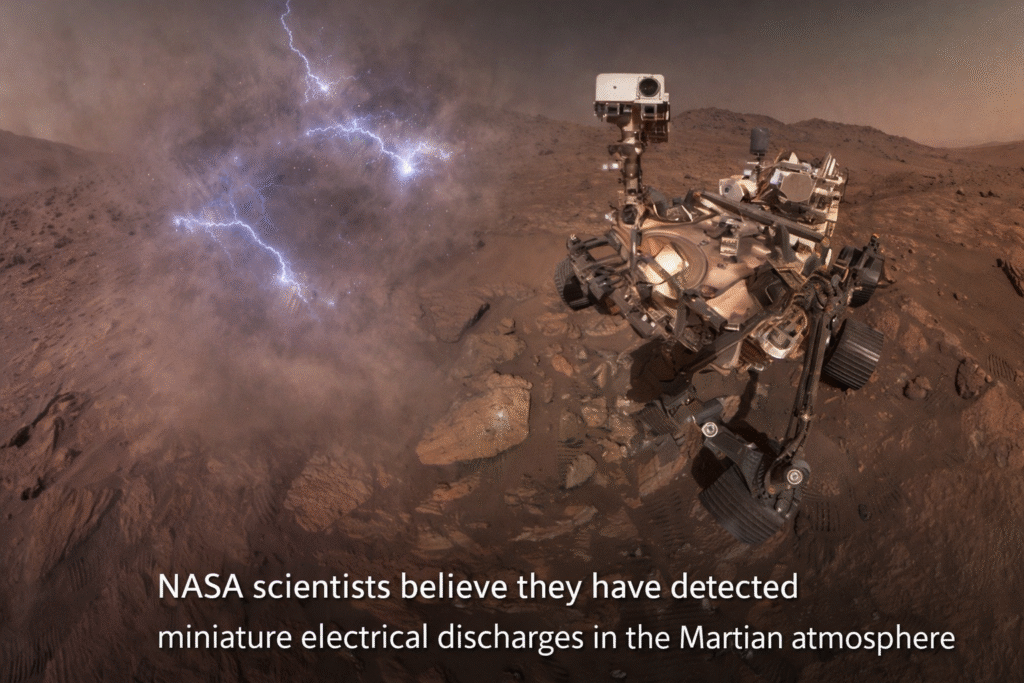
Scientists believe they have identified electrical activity occurring in the atmosphere of Mars, marking a significant step forward in understanding the planet’s environmental conditions. The finding emerged unexpectedly while robotic instruments were carrying out unrelated scientific observations.
Discovery of Electrical Discharges
The electrical activity was detected through a combination of audio and electromagnetic recordings captured by robotic instruments operating on the Martian surface.
Small but Widespread Phenomenon
These electrical discharges are much smaller than lightning on Earth and resemble tiny static sparks. Despite their size, scientists believe they occur frequently across the planet.
How the Activity Was Detected
The discovery was made by instruments designed to study rocks and soil from a distance, using cameras, lasers, and specialised sensors.
Accidental Audio Evidence
A microphone unintentionally recorded sounds produced by the electrical discharges. These sounds were later identified as tiny shock waves caused by brief electrical arcs in the atmosphere.
Role of Martian Dust
Researchers have long suspected that Mars’ dusty environment could generate electrical energy.
Charged Dust Particles
As fine dust grains rub against each other in storms and whirlwinds, they build up electrical charge. When this charge is released, it produces short electrical arcs that can span a few millimetres or centimetres.
Why the Discovery Matters
Although small, these electrical discharges could have important consequences.
Implications for Exploration
The activity may interfere with scientific instruments, robotic systems, and even future space suits worn by astronauts. Understanding this phenomenon is crucial for safe exploration.
Insights Into Martian Conditions
The discovery could also influence how scientists understand atmospheric chemistry, weather patterns, and the planet’s potential to support life.
Next Steps in Research
Researchers hope to send more advanced instruments in future missions to directly measure and confirm the presence of these electrical discharges.
A New Layer of Understanding
As exploration continues, findings like this add depth to our understanding of Mars, revealing that even seemingly quiet environments can be electrically active.