
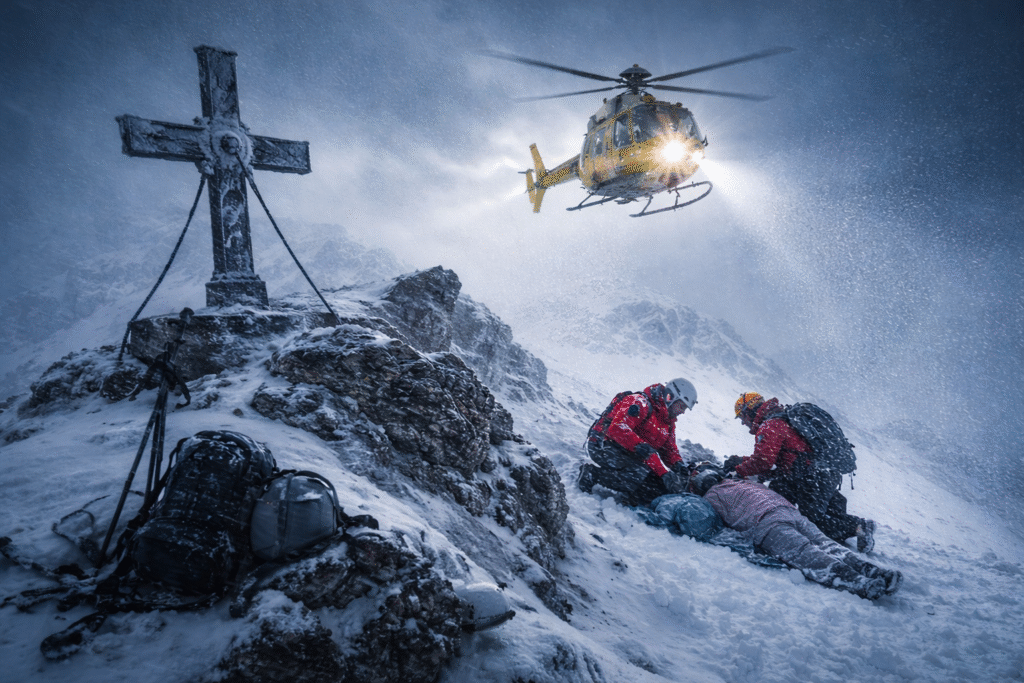
A 33-year-old mountaineer from Salzburg has died after being left alone for more than six hours on Austria’s highest mountain while her partner went to seek help. The man has now been charged with manslaughter by gross negligence.
Fatal climb on Austria’s highest peak
The incident took place during a winter ascent of Grossglockner, which stands at 12,460 feet. During the climb, the woman became exhausted and was unable to continue when the couple were around 165 feet below the summit.
In the early hours of the morning, her boyfriend left her alone in severe weather conditions to get assistance. While she remained exposed to extreme cold and wind, she died from hypothermia.
Manslaughter charge filed
Following a completed investigation, prosecutors charged the man with manslaughter by gross negligence. If convicted, he faces a potential prison sentence of up to three years.
Investigators stated that the man left his partner at around 2am while she was exhausted, disoriented, and already suffering from hypothermia. Due to his significantly greater alpine experience and the fact that he had planned the route, authorities consider him responsible for the safety of the climb.
Series of critical mistakes alleged
Investigators identified multiple failures after reviewing forensic evidence, digital data, and expert alpine assessments. They concluded that the man underestimated his partner’s lack of experience, as she had never completed a high-altitude alpine tour of this difficulty.
He is also accused of starting the climb later than planned, carrying insufficient emergency equipment for a winter ascent, and failing to place his partner in a wind-protected area. Emergency bivouac gear and thermal rescue blankets were reportedly not used.
Additionally, the woman was allegedly allowed to use equipment considered unsuitable for a high-alpine route in mixed terrain.
Weather conditions and delayed rescue
Authorities stated that worsening weather conditions, strong winds, and extremely low temperatures should have led to an earlier decision to turn back. Despite the severity of the situation, no emergency call was made before nightfall.
Although a helicopter later flew over the area, no distress signals were given. After multiple attempts by police to make contact, communication was finally established shortly after midnight. Rescue services were notified several hours later.
Due to dangerous wind conditions, aerial rescue was not possible at dawn. Mountain rescuers reached the location later in the morning and found the woman dead.
Trial date set
The man’s lawyer has said his client is deeply regretful and maintains that the incident was a tragic accident. The trial is scheduled to take place on February 19, 2026.